Showing posts with label pokemon. Show all posts

Tuesday, May 10, 2016

New Pokemon Starter Fun Facts! + Hello again!

It's been a while.

At first, I wanted to do more Jurassic World: the Game. I had a nice list of my favorites...but they added more, and the list changed.

So, what brought me back? Sun and Moon starters. Yes, Pokemon is my drug, at least in part due to its creature designs. Although the creativity off Gen VI was severely lacking (the Starters were way too repetitive for my tastes), the news of Gen VII's starters and Legends merits an entry of its own.

I don't have much to say on the Grass-Type owl, except "it's about darn time." Hoothoot and Noctowl have been the only owls in the Pokemon world for a long time. Owls spend a decent amount of time in trees, so Grass/Flying? Why not? Kinda wish more Pokemon used logic like that.

Source: Serebii.net. Official art. 


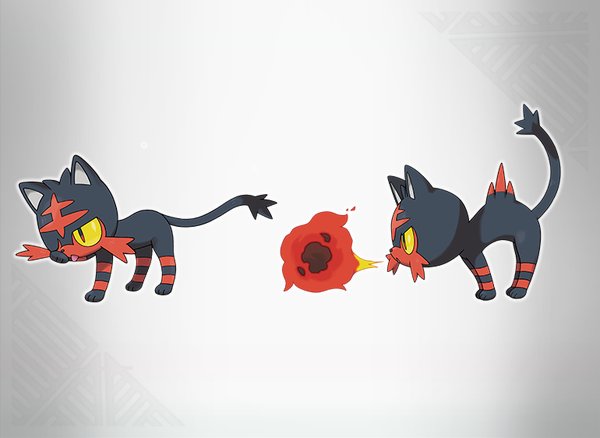
Now, things get interesting with Litten. For the unaware, there's been a theory that all the Fire-Type Starter Pokemon follow the theme of Chinese zodiac animals. So far, in order, we have a dragon (Charmander), monotreme "mouse" (Cyndaquil), chicken/rooster (Torchic), monkey (Chimchar), pig (Tepig), and...canine (Fennekin). While the Chinese zodiac does have a cat in its lore (as anyone into Fruits Basket knows), Litten is almost certainly our tiger as well.

I sense nitpicking. After all, not all striped cats are tigers, regardless of what the cats themselves have to say on the matter. Who's to say that this isn't a normal tabby cat, right?

The designers. No, really, there's a sneaky design hint that we're looking at a tiger in the making rather than your average tabby cat. You probably didn't even notice it unless you're from Asia already, or really into cats. You ready? Look at the mark on Litten's forehead.

Just look at it.

You done? Okay.


While we may think of both tigers and tabbies as striped cats, one of the least noticeable ways in which they are different involves the marking on their foreheads. A tabby cat has a distinct "M," which monotheistic religions usually cite as some type of divine blessing. A tiger has the symbol for "king." Have I mentioned before that the tiger is the king of beasts in China? While we could argue that the marking is still incomplete, the horizontal stripes versus the zig-zagging M is uncanny.

Source: NPS.gov 

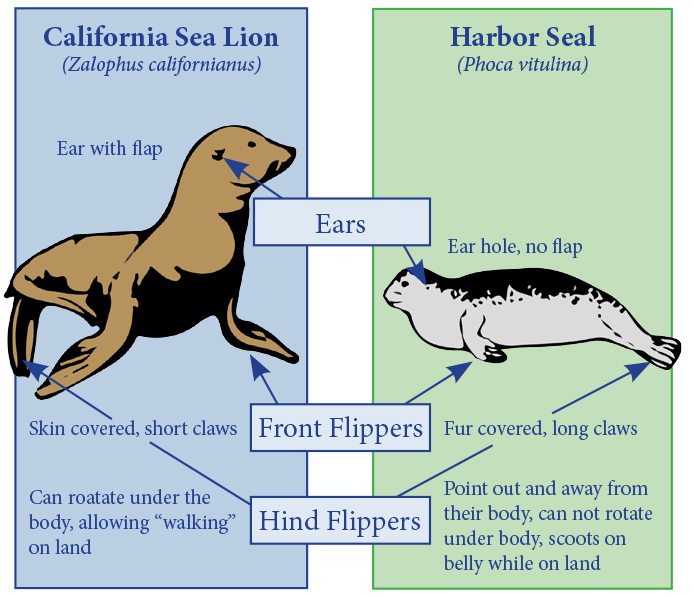
This isn't the only thing that fans missed. A lot of people glossed over that Popplio is not a seal - it is a sea lion. Despite having a Pokemon named "Sealeo" and Seel having flippers similar to those of a sea lion, we never had a sea lion Pokemon until this point. In a nutshell, seals are more marine (barely able to move on land, no ear flaps) while sea lions are more amphibious. The pinnipeds you see balancing balls are usually sea lions, not seals! What a clever idea for an amphibious Water-Type!

The lunar bat for Moon is awesome. Looks like the world's largest microbat - the kind of bat that has huge ears and uses echolocation. At the same time, I'd love a flying fox. I'd like every species on the planet to get its own Pokemon. Still a gorgeous, if impractical, design.

Source: KPBS.org 


Finally, yes, white lions exist. Though rare, they can be found in the Kruger and Timbavati reserves in South Africa. You can go squee about Kimba being real, now.


Sunday, May 17, 2015

Member's Night Special: Pokemon in Science!

Hello, it's been a while. Again, I keep intending to post things and never getting around to it. This, however, was too awesome not to post.

Go back through my blog archives. Find the "Who's That Pokemon?" tag. Now, imagine getting up close and personal with some of those creatures.

That was my idea for this year's Members' Night at the Chicago Field Museum of Natural History. Mind, our choices were limited to reptiles and amphibians (I do work in herps, after all), but it was still a fun set up. We will definitely be doing it next year, too, possibly with a few modifications!

Now, I have to admit that the flyers were a little misleading. Initially, we had planned for both more Pokemon and live animals (leopard gecko, tiger salamander, and/or Pudge the Frog - a painted narrowmouth toad (Kaloula picta)). I made fanmade Pokemon for the setup, which will be available for viewing on my DeviantArt account (kurokarasu.deviantart.com). For now, though, let's focus on the setup itself and some of the critters covered on it.


First off, I'd like to apologize for the relatively narrow spectrum, again. For those of you who got the guide, I'm sorry that we didn't have room for Tyranitar, who makes an awesome armadillo lizard, as well as a few other Pokemon we talked about in the ad, but simply couldn't include. The setup still got plenty of attention (nothing quite got my own ear like when a kid walking by yelled "Pokemon!" - that happened a lot), so we did some things right. (I had to correct the setup above, by the way: Tirtouga is the Archelon, Squirtle's kind of a sea turtle like that hawksbill, and that is definitely a Torkoal shell, up there.)


See those critters in baggies? That's what we do in the lab when we don't want to use jars to send things. I got to heat-seal some of these, and they encouraged more interaction with the animals than just having them in glass jars.

I didn't take a photo of this, but one of the stars of the show was a preserved axolotl. For the uninformed, the Pokemon Wooper's name comes from the Japanese word for the axolotl, "wooper looper." Pick your favorite funny-sounding word for the eternally-young, indestructible salamander!

One of the more creative displays from the older staff was a section on Haunter and a cleared and stained horned lizard. Although the idea was the creepiness of the transparent body, it's always worth mentioning that the horned lizard cries high-pressure blood at its enemies. Emos, meet your spirit animal. Alas, I apparently didn't get a good photo of this on my digital camera.


It's hard to say which of these three displays is my baby. Anyone who's known me for a long time knows that I have a huuuuge thing about Serperior being a Baron's Racer (Philodryas baroni), but will not deny that there's probably vine snake in there. The habu and Draco maximus up there were really well-selected, though; if you look carefully on the habu, you can even see its fangs.

Overall, this exhibit was just a ton of fun to design! Two teachers want me to design Pokemon-based lesson plans for their kids, and since ACen hit yesterday (and okay, fine, today) as well, I'm tempted to do a panel on Pokemon as it relates to natural science. It's not something a lot of people think about, and seems to be a hit on more than one front. 

Sunday, June 3, 2012

Unova Edition: The Snivy Hunt Continues.


Serperior has got to be one of the most frustrating entries on Bulbapedia. If it's a snake and has "green" or "royal" in the name, people instantly assume it must have some ties to Serperior, the final evolution of the Snivy family. The grass and vine snakes I will validate; there is one, however, that seems to have escaped the public's eye entirely. Hell, I didn't even know this snake existed until one of my kingsnake.com escapades:

From captivebredreptiles.uk forums.


Meet Baron's Racer (Philodryas baroni). It lives in Bolivia, Paraguay, and Argentina. Like most snakes, it eats small mammals and birds, as well as fish and amphibians. As the Greek name might indicate, it's arboreal ("likes trees") and can also be found around salt flats. It will flee before anything else, hence "racer."  Oh, and it looks a whole lot like a member of the Snivy family. Not dismissing the vine snake theory (which I admit is likely), but this similarity is just creepy. (Plus, if you're citing the royal python just because of the name, surely "baron" qualifies as well.)

Click around enough Baron's Racer pages and one will notice that they have a fair amount of natural color morphs. The wild versions come in green (like Snivy) and brown. Captive breeders have also been working on a bright blue morph (as they have with rhinoceros rat snakes as well). Hello, Shiny Serperior!

Japan definitely knows about this.


Baron's Racers, although not really harmful to humans, are technically rear-fanged venomous (as are some vine snakes). This means that they have some venomous fangs toward the back of their mouths. Symptoms of envenomation include localized swelling and inflammation, with symptoms progressing slightly upwards from the site. All symptoms ceased after 48 hours. Nothing to worry about, but, from personal experience (with a different snake, mind) still a little freaky. There have been no fatalities from Baron's Racers.


Along with looking like a Snivy, these snakes have one other neat trait: they can glide from tree to tree. This is an example of convergent evolution with the Chrysopeleia complex, also known as Paradise Tree Snakes. The Paradise Tree Snakes are native to Southeast Asia, as are the Ahaetulla vine snakes. There are quite a lot of such examples of convergence, including a rather striking one that I intended to cover earlier on this blog...but will salvage and polish up this coming week.

Baron's Racers are uncommon in the exotic pet business. They are not particularly hard to take care of, but not many people have them. The captive breeding age is about normal, with 3 years as the breeding age for females. The only reason they aren't more common is simply because not many have been imported. There are several good captive breeders, however, so please ask one of them if you want your own pet Snivy. Have a credit card or good ball python morphs ready; prepare to pay at least 150 USD and shipping.


(Interesting side-note: While working on a report, I found another bit to chew on relating to Serperior. Although Thai art is never explicitly cited as a source, the resemblance of a naga - a regal, jacketed snake- being eaten/vomited up by a makara to Serperior's own 'jacket' and stubby limbs is uncanny...and kinda disturbing. I'm probably just seeing things this time around, but the serpent devouring/vomiting is a pretty common recurring theme. This was just the first time I had seen it serpent-on-serpent. More here.)


C'mon, Bulba-people. Get your hands a little bit dirty in the exotic pet trade - or some good reptile books - next time a snake comes around. Maybe I'll have to make use of that account...

Friday, June 1, 2012

Who's That Pokemon- Unova Edition: Karrablast/ Escavalier

There are two Pokemon in Gen V that break all the rules of Pokemon evolution that we thought we knew:  Shelmet and Karrablast. While there have always been Pokemon that evolve via trading, these two only evolve when traded for each other. Then one must trade back to add the new Pokemon to one's Pokedex.


The result: Shelmet becomes a shell-less, super-fast ninja slug called Accelgor (wrap your brain around that), while Karrablast walks right into the slug's old home and resembles an insectoid knight called Escavalier (shown above). This is, believe it or not, based on a real thing:

Awesome photo by J. Konuma. Slender specimen.


Several types of ground beetle are specially-adapted to eat snails. The group to look at, Carabidae, has several members that can fit right into a snail's shell and eat the slug while it's still inside. They are flightless and found in many parts of the world, including Japan, Europe, and the Americas. Aside from eating snails, they will also eat other insects or fruit that happens to be lying around.


The carabid beetles come in two flavors: long and small-headed and large and heavy-headed. These are both effective when it comes to eating snails for completely different reasons. On one hand, you're slender enough to break into the snail, but have trouble cracking their armor; on the other, large-headed beetles can crush the snail in their jaws, but can't fit their heads into the shell as can their slender counterparts. There's an evolutionary tradeoff that relates entirely to eating snails and the physics therein. This has promoted differentiation among ground beetles. They're like the Darwin's Finches of the insect world.

We're almost glad Pokeymanz didn't make this one too realistic. Yes, Karrablast gets a diet plan and steals Shelmet's shell, but at least the pink squishy inside Shelmet lives. The slug gets to live a happy life as a ninja when traded over as opposed to being devoured. Be free, ninja slug. Be free.

Thursday, May 31, 2012

Who's That Pokemon - Unova Edition: Carracosta.

Gen V was not blessed with good fossil Pokemon. One of them, Archen/Archeops, is an Archeopteryx with a terrible ability that halves some of its stats when low on health. Tirtouga/Carracosta, the other fossil, is close to being a good wall and learns Shell Smash, the best stat booster in the game. It is never ever leaving the NU tier simply because, like all turtles, it is very slow.


But it's just a sea turtle, you say? Not that sea turtles aren't amazing creatures, but this turtle's a fossil. That means it's based off of an extinct turtle.  If we want to get really technical, Tirtouga is based off of the ancient Protostega gigas while Carracosta's got more aspects of Archelon ischryos - the largest turtle that ever lived. Archelon was more impressive, so let's hope Protostega fans don't get offended.


Archelon (only one species known) was a huge sea turtle that lived during the Late Cretaceous Period, the time when T-Rex and Triceratops were having epic battles on land and Pteranodon roamed the skies. There is a wide range of things it could have eaten depending on jaw strength - speculation ranges from squid to jellyfish to potentially being an omnivore.  The closest living relatives of Archelon are modern leatherback sea turtles. Most of them have been found in Wyoming and South Dakota.


Archelon was one huge turtle. The largest of them measures 13 feet (4 meters) from head to tail and 16 feet (almost 5 meters) from flipper to flipper. It weighed somewhere around 4,900 pounds (2,200 kg) when alive. Flash back to our turtle soup entry - that's a lot of soup.

Aside from sheer size, Archelon has one more distinctive trait: its shell is, in a way, incomplete. Modern turtles have their backbones fused into their shells, which are also bony - seriously, that whole shell has bone under it. It's like they have an exoskeleton. The Archelon had either leather or detatched bone covering its shell. Someone, somewhere, has probably tracked turtle evolution; it must be fascinating to see a netlike shell like Archelon's become solid over time.

Nobody knows how long individual Archelon lived. Supposedly, there was one that lived around a hundred years.  They may have either slept on the seabeds of North America or brumated depending on the weather. They all went extinct with the dinosaurs regardless. For now, we must make due with digital Archelon and sea turtles. Now if only I could get an Adamant one with awesome IV's... *Crosses fingers.*

Tuesday, May 29, 2012

Who's That Pokemon - Unova Edition: Cubchoo/Beartic.

Usually, I try to avoid doing the "usual suspects" on this blog. By "usual suspects," I mean animals that every tree-hugging organization and its grandma are pimping. This is limited almost entirely to large, carnivorous mammals (with the occasional giant herbivore), so it's pretty easy to think outside of the box. People already know most of those animals, so, wonderful though they may be, I tend to avoid them.


That said, it's really about time that this blog covered the inspiration for Cubchoo and Beartic: the polar bear.


Polar bears (Ursus maritimus) are giant, white bears that typically feed on seals, whale carcasses, and sometimes human garbage. Despite being born on land, they spend most of their time at sea, swimming and/or waiting for seals to poke their heads above water. They live only in the Arctic Circle, not the Antarctic, so any images you see of penguins and polar bears chillin' in the same place is completely fake. I'm looking at you, Coke.

American culture in particular has this weird dual stance when it comes to bears. On one hand, the bear - any bear - could rip your arm off with its claws, teeth, or both. On the other, awwwww, lookit those cute widdle ears and that fluffy-wuffy fur! And that little bobby tail! Never mind the hundreds of pounds of teeth, claws, and muscle. We find bears unbearably cute. By default, that makes them among the most marketable of the "usual suspects." (Pokemon actually addressed this side of bear-hugging in one anime episode featuring Teddiursa, but it's a minor point.)


Polar bears are the largest land carnivores period. They're twice as large as a Siberian tiger. Males are bigger than females, with the largest specimen weighing 1,002 kg - a little over 2,000 pounds in U.S. measurements. The paws can spread a foot from toe to toe in large adults. Did we mention that this bear has the most thoroughly carnivorous teeth of any bear? Watch this magnificent animal from a distance.

The polar bear is also warmer than your average bear.  Not only does it have a thick layer of fat like many animals that live in cold regions, but the bear has more fur than normal - even on the paws! The skin beneath the bear's translucent fur is actually black. No, I don't know what brave soul decided to shave a polar bear and find out what color the skin was for themselves, but they're probably missing a limb.


The polar bear is now officially on the "vulnerable" list, but may be too little, too late depending upon whom you ask. Oil drilling in Alaska, along with several other harmful environmental practices, is still perfectly legal. As one conservation group put it, "the bear's in the E.R., and they're just leaving it to die." Other people insist that the bear is in no danger at all. The polar bear's case is not something simple like "don't shoot the wolves" or "Chinese medicine kills tigers." There are a number of factors that will likely soon place the polar bear in the same situation as the scimitar-horned oryx: Only alive in captivity with an off-chance of being reintroduced to the wild. In the case of the polar bear, however, there will be no wild left for it to return to. Enjoy real-live Cubchoo like Knut while you can.


Monday, May 28, 2012

Bio-Art: Pokemon?

Look up at the title. Then look back down there.  Yep, it's time for another Pokemon-related theme week, this time "Who's That Pokemon: Unova Edition." It then occurred to me that some of my readers might not have a very good sense of what Pokemon is - either because they did not grow up in the 90's or because they're only familiar with the POS of an anime that the fans of the game are now stuck with. This entry exists for your convenience.

There was a bunch of cute...then, Gyarados.


Pokemon was conceptualized in 1996 by one Satoshi Tajiri. He wished to bring his childhood hobby of bug catching in the grasses of Machida, Tokyo to the youth of increasingly urban environments. He furthered the idea when he had a vision of a bug crossing the cable between two linked Game Boy systems. Of course, people also fight bugs in Japan, so taking tradeable monsters to those heights was a logical conclusion. Since then, it has evolved into a massive franchise that eats other monster franchises from the inside-out like a cute, cuddly virus, all the while being crack in Pikachu form.

I'm a little on the fence about whether Pokemon is bio-art or not. It's more like an obscure training tool for budding field scientists mixed with monster battling. It's based off of real things that happen in nature, but it's gotten so fantastic that one wonders whether it can still be considered science (or even pseudoscience). Aside from things like breathing fire and manifesting things like levitation, however, Pokemon is actually pseudo-scientific. Pokemon really boils down to collecting data, selective breeding, and getting a real kick out of doing it all with cockfighting monsters.

It's a chicken, I tell ya! A fighting chicken!


Let's put aside the monster battling aspect for a bit. When one focuses on the catching and breeding aspects (which intertwine according to the best of trainers), Pokemon suddenly becomes less fantasy and more science. The anime is absolutely horrible at presenting this side of things, so we'll have to pretend it doesn't exist for the bulk of this entry. Instead, we'll focus on the games.


Each of the games start with a professor explaining the world they live in. In this world, people live in harmony with super-powered animals called Pokemon - "Pocket Monsters" if you happen to live in Japan. They will go on to explain that people play with Pokemon, keep them as pets, or, most popularly, battle with them. In the first few minutes of the game, you meet this professor again, and are presented with something called a "Pokedex" that records information on the Pokemon you've seen or caught. Bear in mind that seeing something grants only its image in the Pokedex; you have to actually catch a Pokemon to get its data in your Pokedex.

To recap: The real goal of this game is to collect live specimens and data for a professor. Welcome to the thankless work of an intern! 


The mini-series Electric Tale of Pikachu goes into more depth of what it might be like to live with Pokemon than any other adaptation - even the original games. Pikachu, the cute little rodent mascot of the franchise, gnaws on wires just like a real rat or rabbit. Trainers (read: ten-year-olds) have to take a competence test to handle superpowered monsters. The Pokemon in this mini-series actually bleed in battle and otherwise look kickass. If you want to get your friends hooked on Pokemon, start here or with the games. Period.

One would think that the relationship between monster battling and science stops there, right? Wrong! A lot of Pokedex entries have semi-detailed biological information. For example, Pikachu's electric sacs are in its cheeks. Flareon has a fire sac that lets it breathe fire. Spoink's heart stops beating if it ever stops bouncing on its swirly tail. There is an explanation for why Latias can take human form, but I don't quite buy it, and it's kinda creepy how interested she was in a relationship with Ash in Movie 5.

Pokemon are also breedable, meaning that if you have a compatible male and female, you can breed them into even more efficient fighters. There's a whole system of Pokemon genetics that affects how good a particular monster is. No two Pokemon are exactly alike.

Pokemon are among the few battling monsters that actually have genetics. These come in the form of Individual Variations (IV's). Until Gen IV (HeartGold and SoulSilver, to be precise), it was not easy to breed good IV's onto the offspring; one had to, to quote a friend of mine, "pray to the random number gods" in order to get a good Pokemon before that. Since IVs are now linked to personality traits ("characteristics"), it could be argued that we're now breeding for temperament as well. It's just like with real animals, only color changes are now completely uninheritable (which makes NO sense).

Although I may debate whether or not Pokemon relates directly to our science, Pokemon certainly has its own science - a science in which dragons, strange growth stages, and psychic powers are all more or less commonplace. It's based off of a hobby that most of us should do more often: Go outside and look at all the wonderful animals. It's such a shame that Tajiri's plan backfired; now, more people know about Pokemon than the backyard critters they were based off of. Let's fix that right now, shall we?

Tuesday, November 22, 2011

Creature Feature: Diictodon.

Sometimes I laugh at Bulbapedia. The people there must only look at names once before adding origin trivia to an entry. A royal/ball python looks nothing like Serperior, even though it has "royal" in the name. I admit that finding what was most likely the true basis for that Pokemon took time, but man oh man, is the knowledge of the general public limited if they take Bulbapedia as god.

(For those of you who are curious, look up a snake called "Baron's Racer." The only reason I know that snake exists is because I found it on kingsnake.com. There's also probably some vine snake in there, but hi, Snivy line!)

That's part of the reason I made this blog: Maybe this is a tiny bit of an overstatement, but in general, it does not look like people are curious enough to look up things for themselves. I could spend hours just Googling things that are mildly intriguing, then making them into blog entries for the general public to enjoy.


For this entry, let us look at one of the oldest entries in the Pokedex: Nidorino (magenta, male)/Nidorina (blue, female). They are both plain Poison-Types and were the first Pokemon to sport biological sex and gender. (Yes, those two terms are VERY different according to the scientific community.) Most people would be in general agreement that the two Nidoran base forms resemble rodents with extra spikes, but look closely at Nidorina in particular. No extant mammal has a body structure quite like that. Those pointy teeth don't look too rodent-y, either.

Know what, though? An extinct proto-mammal did. Ken Sugimori did not pull Nidorina's design out of nowhere; before the dinosaurs existed, there was a creature called a Diictodon.

Mwahaha!


Diictodon (a genus, mind) were among the many synapsids (mammal-like reptiles) that lived during the Late Permian (255 million years ago). They had small, tusklike teeth and beaky skulls. So that those of you who only know dinosaurs do not get confused, this was before the Triassic Period, the first period to feature small dinosaurs. Fossils of these not-mammals are found in Asia and Africa, with the great majority of South African fossils being Diictodon. Like the Nidoran line, however, they were only distantly related to mammals when all was said and done.


Diictodon were small, burrowing mammals that would not have stood knee-high to a human. They had short, stocky limbs with five fingers on each hand.  Insofar as fossil records can tell us, they were social animals, but not colonial like prairie dogs. (A few Pokedex entries also mention Nidorina burrowing.) They probably lived, ate, and burrowed like gophers.


Besides the obvious Pokemon analog, Diictodon have had a small presence in popular culture. They were featured in Walking With Monsters as well as Primeval. In Primeval, they were chewing up electrical cables inside a hospital, and the crew managed to send all but two of them back to their own time. The remaining two were kept as pets along with the show's other mascot character, Rex. They were first described as "beaver-things," which makes me wonder why no one has yet to update Bulbapedia with their presence. Really, it's been over ten years since Red and Green and we still haven't realized that the Nido family is full of synapsids?

Monday, August 29, 2011

Bio-Art: Ken Sugimori's Advice: Go to the Zoo!

SO sorry. Classes are starting soon, Splice didn't finish downloading (I'm a baaaad girl), and I'm on edge because one of the classes I was REALLY looking forward to got cancelled. It's official: I'm not a scholar, I'm a knowledge junkie. There's a difference.

Here's something interesting I found to make up for it.


Way back when Gen V first started, there was a huge rift in the fanbase. Some people loved the new designs; others hated them. An interview from March 1 reveals that Ken Sugimori took his co-workers to the zoo to help inspire the Generation V designs. He used the experience to expose his design team to different animals.

This should be standard protocol for all monster designers.  We do not care HOW much you like dragons. If you have no experience around real animals, your designs will always feel subpar. The real magic of monster design is making your creatures come to life. You cannot do that without seeing different animals and enjoying them as living things.

So, sci-fi and fantasy creature buffs, how about it? Go to the zoo one day. Bring a notepad and/or a camera. We promise that you will come home with at least a hundred ideas in your head. (This blog is for a rainy day when one cannot get to the zoo, but still seeks inspiration from the natural world. K? K.)

And yet this was still the first Pokemon designed for Gen V. Shows where things are going.

Sunday, August 15, 2010

Old News is Bad News...

...that needs to be stopped. Now.

While trying to prove Lucario's popularity (without resorting to furry porn), I came across a news article that made me die a little inside. Then I sucked it up and realized that, hey, this was what my blog was all about.

British children can more accurately identify 150 species of Pokemon than their own native wildlife. Granted, Britain does not have the most stunning wildlife in the world (the last British thing I did was the coot, remember?), but that's still a pretty depressing figure.

"An experiment involving 109 primary school children aged between four and 11 found that by the age of eight most were able to name 78 per cent of the 150 Pokémon characters such as Pidgeotto, Pikachu and Jigglypuff. The same age group could manage correctly to identify only about half of the pictures of animals and plants, such as "beetle", "deer" or "oak tree", displayed on cards shown to them by the scientists."


Holy carp. HOLY CARP. I mean, I grew up on Pokemon, too, but I knew what a deer was. I knew what a beetle was. I knew what an oak tree was. Maybe I was just extra-inquisitive, but this is sad.

Normally, I would praise Pokemon for encouraging conservation in its own bizarre way. After all, most Pokemon are based off of something real, even if that something is not organic. (For example, Bronzong is based off of an actual style of Japanese bell. I got a real kick out of it after my trip to the Ueno Museum.) You'd think that this would encourage awareness...

...of Japanese wildlife. Recently, they have given some other regions of the world a shot, but from what I have heard, Japanese children are more educated on the creatures of the world than those of Western nations anyways. It's the system's fault, but it's not; especially with the internet being as helpful as it is, it does not take a genius to Google, say, "Raticate" and learn that it is based off of a very specific water rat. Most people are getting only part of the fun of Pokemon.


I choose you!

This makes me sad for ALL the same reasons that Avatar suicides did: You are completely missing the point if you take the real world for granted.

Look, I like fantasy stuff, but I love the real world just as much. Animals do come in blue and purple. There are some immortal creatures and some with two heads. There are some creatures that you can cut; like those brooms in Fantasia, they will reproduce into identical individuals. I have found myself looking at real faeries in the woods on several occasions.

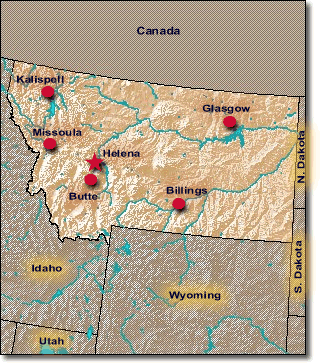
There is no saying that one cannot have an adventure in the woods, a park, or one's own backyard. Eragon is a good example; its setting is not based on the terrain of New Zealand or anywhere else exotic. It is based on the author's own experiences in his home state of Montana.


Unrelated to Hannah.

Montana. REAL special, right?

Pokemon has the same feel going. I used to catch bugs for kicks. It is based off of a REAL thing that people do with REAL animals.

Know what else it does, though? To catch the 'mythical' Pokemon (which are hardly mythical, nowadays), you have to work your way up. Catch what's around you. Maybe, if you're lucky, you will see Raikou in the grasses BUT you have to raise rodents, owls, pigeons, and bugs before you can handle it. Y'know, just like how you'd have to handle cats before you could handle tigers. Let's not even get into dragons and creatures that embody time and space; those would be a BITCH to handle. Does that resonate with anybody nowadays?

I fear for the world's future. There's nothing inherently wrong with Pikachu and his pals, but there is an increasing trend toward responding to a fake world better than the real one. At this rate, we are not going to have a world left.

Enjoy it while you can.

(X-posted on Card Games in Hell.)