Showing posts with label caribbean. Show all posts

Tuesday, July 23, 2013

Creature Feature: (Drunk) Vervet Monkeys.

There are a lot of awkward things about humans. The feet and spine are far from ideal for a biped. We can eat meat even if we really shouldn't. For some reason, liquor has been a part of human civilization since forever. If the Aquatic Ape Theory is a thing, why not a Drunk Ape Theory?


OK, fine. Those aren't apes, they're vervet monkeys (Chlorocebus pygerythrus).Vervet monkeys are small monkeys native to the Eastern coast of Africa. Some populations also exist on Saint Kitts, Barbados, and Nevis as a result of the African slave trade. They eat mostly vegetation. Oh, and given the chance, they will also indulge in liquor. It's not uncommon amongst primates, really. Evolution is a thing!

These particular vervet monkeys are residents of Saint Kitts Island in the Caribbean. Since their introduction, the monkeys have taken to the drinks offered at Caribbean resorts. Scientists studied the monkeys for two years. They found shockingly close parallels with human behavior that, aside from signs of blatant drunkenness, would not be obvious to the casual observer. The ratios of, say, drinkers to teetotalers are exactly the same between the vervets and humans, for example. The drunken monkeys also seem to be the popular ones, but don't give yourself alcohol poisoning trying to prove this one in humans.

Hi, I'm Lori, and my monkey's an alcoholic. Disclaimer: this ranch probably does not give its monkeys booze.


But wait! These monkeys are pretty cool when they aren't drunk, too! They have hypertension and anxiety disorders exactly as found in humans. They are also among the few animals in nature who are actually spiteful, destroying the food sources of competitors instead of consuming it themselves. Primates: so much like us, in all the wrong ways. Your mileage may vary.

Vervet monkeys are also very vocal. They are among the few non-human animals to have something resembling words: specific alarm calls for specific predators. They have a different call for snakes than they do for eagles, a different call for eagles than baboons, and so on. I don't think anybody has tried to test the effect of liquor on these calls, but it would be funny to see.

Sunday, May 5, 2013

Creature Feature: Cuban Iguana.

Tip: You can tell how loose a state's animal laws are by how awesome their zoo is. If the reptile house in San Antonio was any indication, there were indeed some loose laws and low paperwork for venomous snakes. I did not expect to see this in the reptile house, either, and since a friend of mine's a big iguana fan, here goes:
Screw sourcing, I took this one.


The lizard lounging above is a Cuban iguana (Cyclura nubila), currently listed as "vulnerable" in terms of conservation. It is primarily an herbivore. This iguana lives in the rockier parts of Cuba, and is closely related to the Cayman Blue Iguana. It does not give a single flip that its island is communist, and walks around Guantanamo Bay quite freely. How fortunate that lizards can still enjoy the island because it's an island.

Cuban iguanas have some weird things about them just by being iguanas. All iguanids have what's called a "parietal eye" on top of their heads. It's a white dot that can detect light and shadow. The iguana's third eye is very active; their real eyes also have red scleras. There's more: their herbivorous diet, in this case, is supplemented by roundworms instead of the multiple stomachs and bacteria that ruminants have. This is just general iguana stuff- bet you didn't know they were strange by default.

Now THAT is eye-popping! Source.


Another weird thing: these iguanas are immune to cacti. Not just "they eat the stuff without getting pricked" - Cuban iguanas thrive around cacti. They make their nests in cacti, probably because other animals will avoid it. The cactus serves as a fortress complete with food. It's hard to get better than that.


Bizarrely, the Cuban iguana is probably the only reptile which has been viewed positively by the U.S. government. In a case concerning the legality of goings-on at Guantanamo Bay, attorney Tom Wilner pointed out that one could be punished for killing a Cuban iguana on-base, but torturing people was A-OK. Interesting argument, and props for looking it up. Not many lawyers would care about iguanas, even if they were endangered. Nicely done. 

Luckily, there are plenty of captive-bred Cuban iguanas. Most of the ones in the pet trade actually come from a feral population released south of Puerto Rico. Zoos breed them all the time. There is literally no need to take these guys off of Cuba, which is a good thing, considering humans, cats, dogs, and swine are responsible for the decline of the native population. They'll make a comeback; maybe the next leader of Cuba will be a lizard. ;)

Tuesday, March 5, 2013

Creature Feature: Streamertail Hummingbirds.

What lovely weather we are having in Chicago. Over 6 inches of snow, and having to shovel it, gives me perfectly logical ground to question one's reasons for wanting to see IL in the winter. Without getting too grudgy, let's switch to something happier and summer-y, shall we?


This is a male streamer-tail hummingbird, or doctorbird in Jamaica. It is part of the rare genus Trochilus, which is exclusive to Jamaica. Depending on who you ask, there may be just one species (Trochilus polytmus) or two. One of the few differences is bill color: they come in red and black for your convenience. Regardless, this little birdie is the national bird of Jamaica.

If you want to see some really unique avian physiology, look into hummingbirds. Not only are tiny birds like that absurdly cute by themselves, but some, like the streamer-tails, have almost unbelievable proportions. As in many birds with fancy tails, the streamers are exclusive to males. They are almost twice as long as the actual bird! Again, only the males have this plumage.

This is the only bird that, to my knowledge, has mating plumage that sings. The tailfeathers of this hummingbird hum. As with the regular "hum" in hummingbirds, this is just done by the vibrations of the oddly-edged feathers. It's not like these things are trying to woo a woman with autotune. That'd just be silly.


A rather interesting note: the streamer-tail hummingbird is the only hummingbird to ever do anything in a Bond story. In For Your Eyes Only, the first line mentions the "streamer-tail or doctor hummingbird" as the most beautiful bird in Jamaica, if not the world. Comment below whether you think it is or not; I'm genuinely curious who would win an avian beauty contest.

Sunday, September 23, 2012

Creature Feature: Queen Conch.

Picking up shells on the beach is fun. You aren't supposed to do it, but it's fun anyways. Often, one gets so preoccupied in the shells that the original owners get ignored. For example, ever stop to wonder what's inside a conch shell?


Scary drawing a la Wikipedia. True to life.


...An eldritch horror, that's what. Say hello to the queen conch (Lobatus gigas / Strombus gigas), one of the most alien-looking snails ever. It is native to the Atlantic waters from Florida down to the top part of South America. Thankfully, it is an herbivore and only eats various types of seagrass - particularly turtle grass.

Fear factor 1: Queen conches are big.  They can get up to a foot (30cm) long after just a few years. Adult queens weigh about 5 pounds - way more than a paperweight. The expected lifespan of a single conch is 20-30 years, but age 40 is suspected. Oh, and they breed readily, too.

Found here. Will reappear in my nightmares.


Fear factor 2: Look into its eyes. Along with being huge as with the rest of the snail, queen conches have the most developed eyes of any gastropod. They have a fully-functioning lens and gold iris. It's like they have a vertebrate eye on the end of each stalk. Not even gonna mention that it's got a snout that looks an awful lot like a tentacle between those eyes. Nope.

Queen conches are popular snails. They can be found as captive-bred specimens in the exotic pet trade. They're treated as a delicacy in the Caribbean. Over-harvesting has upped their protection level on CITES, but they aren't endangered (yet). The good news is, this alien-looking snail (snailien?) is no threat. It is, in fact, perfectly edible so long as you mind the laws. Totally puts a new spin on shell-hunting, doesn't it? 

Thursday, July 19, 2012

Creature Feature: Cayman Blue Iguana.


If my entry on blue raspberry did not make it clear, it's really rare to find blue things on land. It's just not a color that rolls well on land. Most mammals can't even see blue. As many of you following this blog well know, however, reptiles skew the natural expectations of color so much that blue should be no surprise.

From Telegraph.co.uk.


The blue iguana (Cyclura lewisi)  is one of the relatively few naturally-blue creatures out there. It is also called the Cayman Island iguana; for those of you who have no idea where that is, Grand Cayman a large island in the Caribbean. These iguanas can only be found on that one island. Just like green iguanas, these iguanas are mostly herbivorous.

Aside from being blue, blue iguanas are pretty neat creatures. They can live well into their sixties, making them possibly the most long-lived of any lizard given the right conditions. Their eggs are among the largest of any lizard. They are also capable of seeing ultraviolet wavelengths, but have poor nighttime vision. Neat.


The iguana's probably wondering what Jack Sparrow is doing on his island.

Blue iguanas also have a more or less working third eye. Their parietal gland is capable of seeing light and dark- simple, but functional. The only other creature with a third eye anywhere near that good is the tuatara - a reptile so bizarre it has its own category. Perhaps the association of lizards with spiritual enlightenment wasn't too far off; after all, few animals can hold the claim to a working third eye.

The blue iguana is probably one of the rarest reptiles in existence. Only 15 individuals were recorded in the wild in 2003. The reasons for this are entirely the fault of European colonization: one, feral cats and dogs apparently have a thing for iguana meat, and two, cattle farming decimated the iguanas' natural habitat. There are several non-profits devoted to its preservation, along with a few captive breeding programs. Look forward to more on that that in October most likely. For now, know that the population is recovering. It's still one of the most endangered animals on Earth.

Thursday, March 17, 2011

Creature Feature: Scolopendra gigantea.

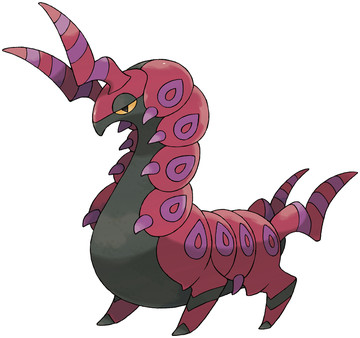
Centipedes are one of those bugs that freak non-entomologists right the fuck out. Most people kill them on sight, knowing full well that they are poisonous or just because they're centipedes. They are not overgrown pillbugs like millipedes (at first glance); one look and you know that a centipede is nasty. Out of all the designs in Pokemon Gen V, NOBODY would expect a giant centipede to be popular.


For whatever reason, Scolipede, a deer-centipede hybrid, has stolen the hearts of people who do not ordinarily like bugs. It has a design reminding us that Poison can actually be a pretty cool type, has awesome stats, and goshdarnit, myriapods deserved something better-looking than Drapion. If only more Pokemon players knew that real Scolopendra gigantea were just as popular with arthropod fans.


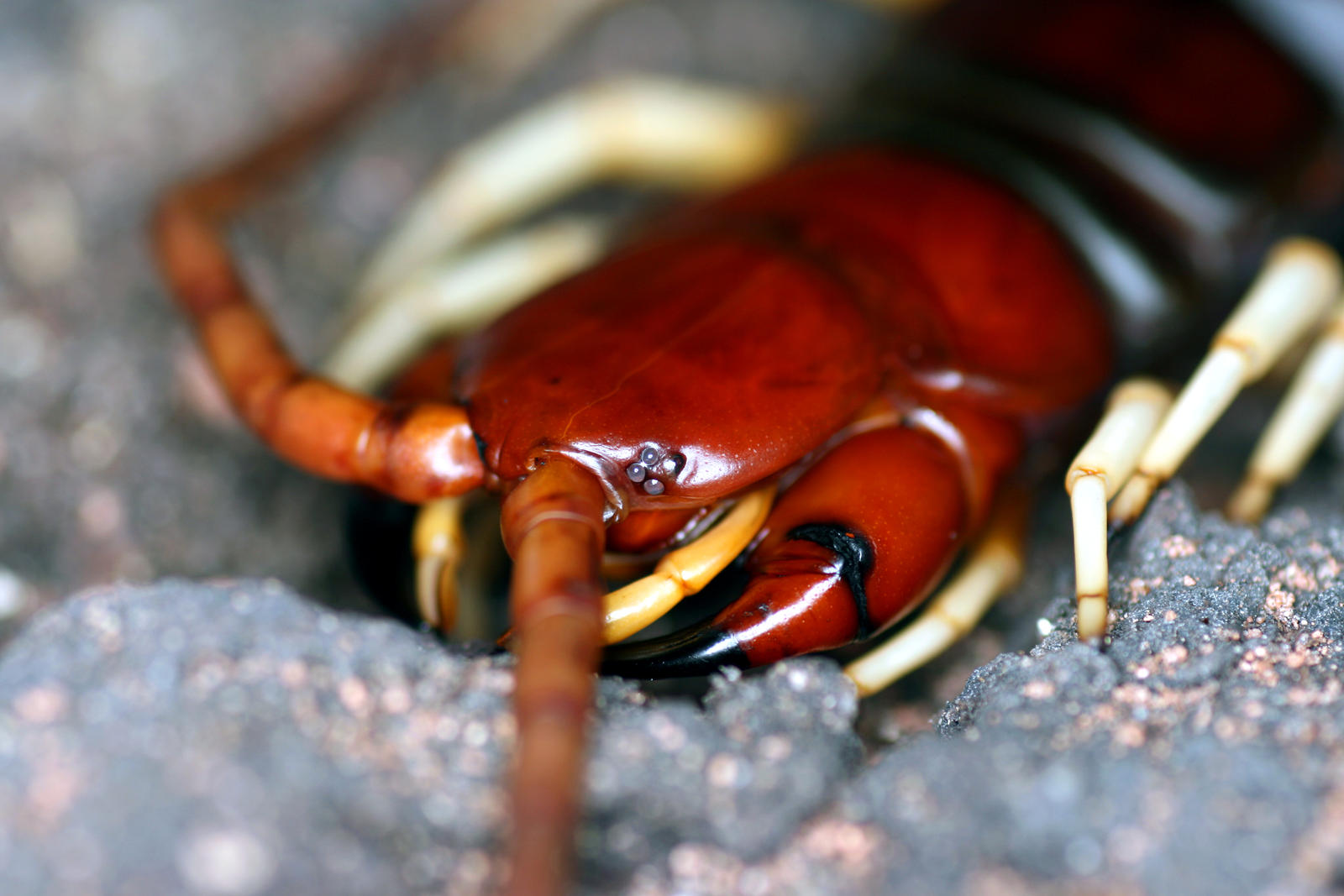
Scolopendra gigantea is exactly what it sounds like: A giant centipede. It can grow up to 12 inches (30 cms) long.  S. gigantea is native to South America (specifically Peru and other northwestern countries) and Jamaica, Trinidad, and Hispaniola. If the next Pirates movie features giant centipedes, you know why.

All centipedes are carnivorous, but S. gigantea exists to remind us that centipedes were once giant land terrors. It is one of the rare centipedes that eats vertebrates at every meal. Frogs, lizards, birds, rodents, and even three distinct species of bat are all on the menu.


S. gigantea does, of course, have a potent venom cocktail designed to work on things with spinal cords. Those pincer-like claws, officially called forcipules, deliver a mix of numbing chemicals (including serotonin, histamine, and acetycholine), proteases, and a cardiodepressant. Victims feel chills, fever, and weakness after being bitten. Not fatal, but still sucks.


People who keep giant centipedes as pets have got some serious balls. Feedings can be pretty darn intense; as with falcons and snakes, one likely needs to handle dead rodent carcasses. Even a single drop of venom on one's skin can cause a reaction, so wear protection when handling one. A giant centipede is still of the better venomous animals to keep as a pet.

Now, if you will excuse us, we have a killer Scolipede to train.


Tomorrow: By the way, what's Remoraid based off of?

Friday, February 11, 2011

Creature Feature: Cuban False Chameleon.

1You have probably heard the old saying, "If it walks like a duck, quacks like a duck, and swims like a duck, it's a duck." Generally, if one animal behaves and looks a lot like another animal, the two animals are probably the same species.

Again, if only nature made things that easy.


This alien-looking lizard is called a Cuban False Chameleon (Chamaeleois genus; also Anolis barbatus, "bearded anole"). It is found only in Cuba and resembles a cross between a chameleon, an iguana, and a space monster. It is so obscure that Wikipedia does not even have a page on it.


The Cuban False Chameleon walks like a real chameleon and has bulgy eyes like a real chameleon, but is not a true chameleon. It, like the "chameleons" common in Florida, is an anole - a type of lizard related to iguanas. It cannot change color like those little anoles, and overall behaves much more like an iguana when it is not swaying like a twig.

Cuban False Chameleons are lazy. If you own a CFC, it will spend most of its time on a branch, staying as still as the wood itself. These lizards are not very active; their sluggish nature plus excellent camouflage means that predators will have a hard time picking one out. It also means that they are fairly easy to take care of, even though they are rather large for anoles.


Wood, lizard, or lizard made of wood? 

Good luck finding a CFC if you want one as a pet. They can get rather pricey; after looking around a little, one can expect to pay upwards of 300 USD for one lizard. In the wild, they eat snails, insects, frogs, and young birds; they can eat insects specially sold for lizards in captivity. Cool lizard; decide for yourself whether it is worth 3 paychecks for yourself.


Tomorrow: Yet another overlooked felid!