Tuesday, December 6, 2011

A Wizard Did It: Mind Control.

If you click around enough on the internet, you will eventually find yourself in the mire called "conspiracies." If the people who make these posts are right, then we are all being slowly brainwashed by the New World Order government, starting with CIA brainwashing and ending with a slow meltdown into consumerist zombies. It's all according to what the reptilian aliens who puppet our governments want, you see.

Of all the things above there, you probably guessed by the title that exactly one of them is confirmed. The conspiracy nutjobs are onto something. You read that right, folks: There is confirmed evidence that, at least at one point, the CIA actually perfected the art of honest-to-goodness brainwashing.


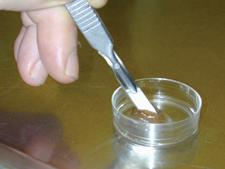
Look up how we're being brainwashed and you'll find out about something called Monarch brainwashing. This is not that. In the 1960's, supposedly around the same time Monarch stuff was perfected with LSD, Dr. Jose Delgado conducted experiments using brain implants in different animals. As seen above, he stimulated the hypothalami of mammals such as cats and bulls. He found that such stimulation could turn rage on and off at a moment's notice. It was handy and uncanny, but, due to ethical concerns, the experiments were never performed on humans. At least, that's what they want us to think.

Then the government outdid itself. Controlling rage was not enough. More recently, starting in at least 2005, a new project came to light: ratbots.
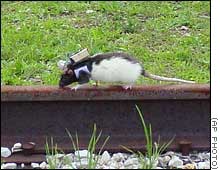


Ratbots are exactly what they sound like: Rats controlled entirely by humans via radio and computer signals. They look like they're wearing cute little backpacks. They are really more wired than that; probes have been placed in the rats' brains to stimulate certain areas. There are exactly two psychological buttons that need to be pushed to make the rat an automaton: One that processes signals from the rat's whiskers and another that taps the reward center.

Think about how simple that is. Even though the scientists making the ratbots cited practical uses such as treating neurological disorders, spinal chord injuries, and using the rats to detect mines, the far more insidious purpose definitely crossed the scientists' minds. The article from Rense.com, featuring conglomerate thoughts from various newspapers and societies,  puts it best:
""Could it be used, Big Brother-style, to control human behavior, consumer spending, or even worker productivity?" asked the Humane Society in a recent article.
 
"What if some future implant, billed as a medical miracle, was also secretly encoded to direct thought, getting a person to think like Big Brother, or to work harder for managers at corporate control, or to follow the orders of Mephistopheles?" asked The Boston Globe in a recent editorial. "What if Madison Avenue got a piece of the supposed beneficial chip to direct the consumer to buy the expensive spread or the new cereal?""
 
Of course, these rats are totally being used for non-sinister purposes. They are definitely not one of the reasons I have a cat.  Nope. 

Monday, December 5, 2011

Bio-Art: Lizard Boy.

I missed out on doing mind control for this week's Bio-Art column. Shame; it was supposed to go nicely with 'A Wizard Did It," but it slipped my mind and will be done tomorrow instead. I have found something slightly less scarring at my local video store: A movie called Lizard Boy.


The plot of Lizard Boy is simple: In an attempt to spread his inept sperm, a scientist named Gino engineers a lizard-human hybrid named Carlo. Carlo grows up quickly into a highly intelligent reptoid guard dog with a preference for human blood. It is not long before he goes on a killing spree. Making reptilian-human killing machine was the whole point of the government-funded lizard hybridization project all along, and it fails miserably in the end (when Carlo kills both FBI agents and himself. Spoiler). 

My own personal love of reptiles aside, what grabbed me was a quote on the back of the cover saying that the movie questioned modern science and the future of genetic engineering. Despite all that I will say about this movie from this point on, I have to give it some credit for doing significant research into its subject matter. Everything about the glowing pigs and Komodo dragons being capable of virgin birth is 100% true, guys. It's not meant to scare you. Really.

Despite being advertised as a Jurassic Park-ish flick, this movie will not scare anybody beyond those stunned stupid by how silly it is. JP made us get the point by making us wet our pants. Lizard Boy is so silly it's hard to believe it's making a point at all. Don't let the cover fool you.

First of all, watch this movie while stoned. Or drunk. Or under the influence of something. There are enough pot scenes in this flick that it was clearly written and produced while stoned off of one's ass. Hell, the main character's wife even ditches him because smoking pot ruined his chances of making babies with her. So, yeah, don't watch this sober. It clearly wasn't intended to be seen that way. Being under the influence of friends also counts. Watch this to laugh at it with people.

The lizard gets stoned. Yes, really.


If you happen to be sober, however, you will notice the acting fail (although they're trying!) and, well, general stupidity of most of the characters. Unless they were trying to make a killing machine, they would not have a giant, spliced Komodo dragon (which is RARE in a lab setting, by the way) waiting to be unleashed. The only guy who realizes this decides to make a hyper-intelligent human hybrid that *GASP!* reads the more obscure works of Shakespeare. They make the people in Sotoba look smart, and the doctor there thought that fang marks looked like bug bites. This cannot be taken seriously at all. The bad SFX and makeup do not help its case.

THIS is scarier.
 

If these people are being serious, they have failed miserably. If, however, they were trying to make a perfectly silly movie about how perfectly silly science can be, they've succeeded. Rent/download it for a night when you will have friends over to crack jokes about it with. It deserves to be put on the same pedestal as Birdemic and The Room for being so bad it's good.

Sunday, December 4, 2011

A Wizard Did It: Growing Body Parts.

Losing body parts can be one of the most traumatic experiences in a person's life. Even with skin and organ transplants, there's a chance of rejection. Alcohol killing brain cells isn't cool, either. Also...oh, hell, you came here for the freakish science. I may as well cut the lead-in and show you what you came here to see: A mouse with an ear on its back.


This mouse is one of many comprising its appearance to give humans missing bits and pieces. It's hairless and has its immune system compromised such that it will not reject foreign tissue. Although the masters behind the mouse claims that it will live a normal mousey life, given the reduced immunity, we highly doubt that. It will, however, have popularity among evangelists as a harbinger for the end of the world.

The ear and several other body parts can be grown on biodegradable scaffolding. This is harder than it sounds; specific chemical signals are required to make cells grow. There are no stem cells required; instead, all the bits are harvested from cadavers, which may be better or worse. Once they are re-started, however, everything from ears to arteries can be effectively grown in a bioreactor. Or on a hairless mouse. 

The names to know for this form of tissue engineering are Boston's Bob Langer and Joseph Vacanti, now widely hailed as the fathers of growing tissues in the lab. (There is also a Chinese scientist questionably copying them.) Other scientists refined the processes, creating fancy things like bioreactors that simulate the body even better than a petri dish. There are even ways to make body bits grow in 3-D environments thanks to NASA. Oh, and despite harvesting corpses, the Vatican says this process is OK.


We just hope that cutting off body parts or some such does not become a sick fashion trend. Amputee fetishes are bad enough; now that parts can potentially be regrown, who knows what people will be trying out as edgy trends next?

Catgirls are always an option. No exceptions.

Saturday, December 3, 2011

A Wizard Did It: Super-strength.

OK, we're cheating a little on this one. Wizards don't usually have super strength - if anything, their STR stat is usually very low, meaning that a hit from that nasty-looking staff will only cause eight hit points' worth of damage at best. It's still a superpower, and definitely worth covering this week.


Das Uberboy - real name unknown -  was born with muscles that would make Schwarzenegger cry. He is currently an eleven-year-old child living in Germany, hopefully beating up school bullies who would otherwise steal kids' lunch money. He's been lifting 6.6-pound weights since the age of 5; we sure hope he has a sense of justice!

Das Uberboy is among the rare specimens of humanity to exhibit double muscling. The gene for myostatin is just plain gone in this kid. Genetically, there is nothing to stop his muscles from growing. Remember bully whippets and Belgian Blue cattle? Same thing, only in humans. (Hell, given that his mother and grandfather were athletes, this may well have been inherited in the exact same way.)

Just to remind you, whippets usually look like little greyhounds.


Scientists are currently interested in Das Uberboy so that they may cure diseases that affect muscle such as muscular dystrophy. Das Uberboy may also explain why some people are naturally stronger than others. Legal performance enhancers are also a possibility. There are, however, some worries about satellite cells, which may create a muscular 'burnout' and deplete muscle later in life. How many people using this will be REALLY worried about the long term, again?

A loooong time ago, Friedrich Nietzsche talked about Das Ubermensh. This child was probably not what he had in mind, but Das Uberboy is still cool. Alas, there are very few pictures of the boy, so please make due with this article.

Thursday, December 1, 2011

A Wizard Did It: Pyrokinesis.

 Many people consider making fire one of the most important discoveries of humankind. After the invention of fire, we could endure cold nights and cook food that might otherwise kill us. Fire has also been important in warfare, causing massive damage and making people flee the area lest they get singed.  It's also flashy; even though we have mastered the art, pyrotechnics remain a staple of stage shows. The first person to handle fire must have been thought of as a wizard.

Second only to our admiration of fire is our desire to control fire.  We don't just mean turning on a stove - we mean the ability to create fire just by thinking about it. Matches and camphor just aren't enough anymore. We want to answer that "need a light?" situation without carrying such items around. The bad part is, for that, you'd need magic.


Qigong master Zhou Ting-Jue may as well be the next prophet. He was born in 1934 and has been practicing martial arts since he was seven. Eventually, he was let in on some of the more spiritual secrets of Chinese culture, including qigong, which is like very intense yoga. After decades of qigong, he can heal the sick, adjust his weight at will, and, apparently, heat things so hot that he may as well be setting them on fire. All of this is done solely by controlling his own energy flow.

Mind, heating things to the boiling point is not quite pyrokinesis. It is still pretty close. That towel was steaming.  He probably could ignite a match or move a candle flame by pure force of will if he really wanted to. He would have more credibility than any YouTubers claiming to be the Human Torch.

Unleash the power of the sun!


Disclaimer: The supernatural powers of qigong are still under debate, even with spectacular individuals such as Zhou around. This does not mean that one should not give it a shot. Pyrokinesis aside, qigong is very good at reducing stress, improving mood, and keeping one in good physical shape. It does not promise giant ki blasts, but hey, results may vary.

Even so, ki mastery is NEVER like this.
 

Wednesday, November 30, 2011

A Wizard Did It/"They Actually Eat That:" Semi-Living Steak and Disembodied Cuisine.

If you are reading this, chances are you know a vegetarian. We aren't being picky, here - anyone who avoids meat of any sort is some type of vegetarian. One of the reasons they will most likely cite in their reasons for vegetarianism is that eating meat is cruel to animals...which, given how most meat is farmed, is perfectly reasonable.

"Depressing" doesn't even begin to cover it.
 

The question is, what's the alternative? It's not like there's some magical product of science that is, in a way, cruelty-free...


...oh, wait. There totally is. Sort of.

Although not mass-marketed (as far as we know), the Tissue Culture and Art Project has made meat grown in a petri dish several times. The Semi-Living Steak, for example, was a culture of pre-natal lamb meat (don't get me started with "life begins at conception"). The sample was from an animal that had not yet been born; your mileage may vary as to whether this process solves the cruelty issue or not. The meat was grown on an edible polymer. Regardless of how it was grown, meat is meat; insofar as I can tell, the scientists tried to eat it. It was made in Harvard's Tissue Engineering and Organ Fabrication Laboratory, so you know it's good. Nothing says fresh like an Ivy League college!


That steak was just the beginning. The real big, bio-engineered meat project TC&A made was Disembodied Cuisine, an art installation shown in France (2003). Semi-living frog steaks were cultured, then eaten in a "nouvelle cuisine" -style dinner. Live frogs were there to laugh at the French people watching. (The frogs were later released into a botanical garden, presumably still laughing.) The whole thing was designed to spit in France's face; of all the European countries, nobody hates engineered food quite like the French. Small surprise that most people spat it out.

These projects were not just freaky food. Even though the meat itself was cultured, several animal products were used in their formation. There are still victims, but the public does not really know about them. We dream of a victimless utopia in which there is no suffering at all, but then what? The food chain still needs to exist on some level.We hate to say this, but animals suffer plenty in nature, too. This 'meat' is intentionally ironic. Most news crews missed the joke.

Tuesday, November 29, 2011

A Wizard Did It: Levitation.

What would you give for a flying car? Or to fly like Superman? Or...hell, making anything fly would be pretty cool. Alas, unlike Arthur Weasley or anyone else from Potterland, we are unable to make cars, or much of anything else, fly. Shame on us.


Remember where we parked.


Kidding! Science has actually found ways to make things levitate. The flying cars from The Jetsons are coming soon! WE PROMISE!

There are several ways that science can make things levitate, including sound and wind, but the favorite method uses magnets. The most common way that scientists levitate things involves superconductors in a process called diamagnetism. Diamagnetism creates a little sandwich of similar magnetic fields, making the two repel. This process has been used most famously with a very confused frog, but also grasshoppers, various minerals, and mice. That's right: After mice, we will become very close to levitating humans.


As for the flying cars, we already have flying trains. There are several trains around the world dubbed "maglevs" because they levitate using super-magnets. (For those curious, the JR-Maglevappears to be the only one still running.)  Maglev creates another magnetic 'sandwich' in which a criss-cross of magnetic fields keeps the train stable and slightly above the ground. It's not quite diamagnetism, but still levitating with magnets. Not only does this keep the tracks really clean, it reduces the amount of energy necessary to run the trains. It's a win-win situation.


For those of you into parapsychology, levitation does sometimes happen to people...only they are (usually) unable to control when and how. It is often embarrassing when it happens. As an example of how unpredictable things can get, poltergeist activity can often be linked to unconscious telekinesis from teenage girls. It's that random if it ever happens.

Although some people may have the power to levitate objects and/or themselves, there is a good chance that 1. they are faking it (like almost every yogi in India) or 2. the power is extremely spontaneous and difficult to record. There has only been one recorded, controlled, and repeated test of levitation, and even that has been put under criticism. You're better off ghost hunting if you really want to see levitation or any sort of telekinesis in action.