Showing posts with label The Human Freak. Show all posts

Tuesday, August 23, 2011

Myth Week: Werewolves.

Against my better judgment, I one day went onto Transfur. For those of you curious about seeing how creative furries can be, they have the transformation sequences there divided into scientifically-described species and classifications. Impressive!

Unfortunately (and unsurprisingly) wolves dominate over all other species on the entire site. So much for creativity.


Wolves have a strange, mystical hold over the minds of "nature lovers." I use that in quotes because many people who claim to love nature, particularly wolves, see it through even rosier glasses than I do. People claim to love wolves because they're wild, but, in their minds, wolves are just puppy dogs with bigger teeth, complete dominance over their food chain, and just enough human characteristics to make them idealized, furry people.

This mindset has been around for ages. Generally speaking, if a place has wolves, they have some form of werewolf- a creature that can shift between human and wolf either freely, by moonlight, or with a special ritual. Some unfortunate souls, such as Lycaon from Greco-Roman legend, get turned into wolves by an outside force. Regardless of how it happens, the idea of a person getting turned into a wolf remains a strong motif in folklore.


But is it really possible for any sort of shapeshifting like that to occur? Short answer, no; long answer, we haven't done it yet, but there are some cases where it's easy to see where werewolf legends might have come from.

The most subtle explanation for transformation, especially during the full moon, is a possible  psychological change that occurs as the moon reaches full light. This is the origin of the term 'lunatic.' There is some debate over whether this "lunar effect" exists or not, but if nothing else, more people are prone to noticing strange things during that time. There are also some other weird things that happen in humans during lunar cycles such as, ah, menstruation.

More true than you think.


For those of you looking for something crazier than a man's exaggeration of his wife's PMS, you're in luck: Lycanthropy is a diagnosable mental disorder. Clinical lycanthropy (therianthropy for non-wolves) is a psychological condition in which someone believes that he or she has been an animal at one point. Wolves are far from the only creatures represented by this disorder. Even bees and frogs have been reported from patients with clinical therianthropy.

No insanity involved, as far as we know.
 

Remember the amputee who said that her body just didn't feel right with all her limbs? It's like that, only people feel that they are really becoming animals. The right sections of the brain fire off and everything. There are also a few nutballs who think that having sharp eyeteeth makes one a werewolf, but that's an unrelated delusion called "stupidity."


Finally, we have the most obvious real-world explanation for werewolves: Hypertrichosis. Unfortunately, this blog already covered this strange accelerated hair growth during The Human Freak. Read more about freak show "werewolves" here!

Saturday, November 13, 2010

The Human Freak: Tree Man.

The video really speaks for itself this time:


Dede, AKA "Treeman," is slowly becoming an Ent. The technical term for his disorder is "epidermodysplasia verruciformis" or "Lewandowsky-Lutz dyplasia," but those just don't have the same ring to them as "Tree Man."

Whatever you want to call it, it is a heritable, recessive mutation that turns off the body's immunity to human papillomavirus, the same virus that causes warts in normal people. If you want to get really specific, it is caused by a malfunctioning EVER1 or EVER2 gene; nobody knows what those genes really do, but they probably have something to do with zinc regulation.


Dede's problems started when he accidentally cut his knee and got a few warts on his foot. He left the warts alone like most of us would because eh, what harm could warts do? Before he knew it, the growths started spreading across his body, resulting in the half-man, half-tree monstrosity you see before you.

Mind, that bark is not actual, botanical bark. It is a horny growth caused by a special vulnerability to the human papillomavirus. For people with Dede's affliction, the warts grow into keratinous growths resembling tree roots and bark.


Not an actual victim. Real tree-people do not have leaves.

Dede is not the only person in the world with this disorder. There was a Romanian man discovered with this disorder in 2007, the same year that the documentary with Dede was produced. In 2009, another tree man, also from Indonesia, met with Dede in what had to be the first meeting of walking trees ever.


There is no cure for this one, but, as with some of the deformities this week, there are temporary solutions. Dede has had 95% of his warts removed via surgery and skin grafts, but they will grow back. One scientist is also trying vitamin A on him. Several other chemicals have been tested, but thus far, there is no way to totally cure this odd immunodeficiency.

Thus concludes The Human Freak. Hope you enjoyed this little venture into Homo sapiens sapiens!

Friday, November 12, 2010

The Human Freak: Elephantiasis.

Warning: The following entry contains a link to some manparts. Shut up. You can see them on Wikipedia, too. 

Up until now, we have covered diseases and disorders that, for the most part, you cannot get. You either have them or you don't from the day that you are born. If you don't already have increased aging or fused legs, good for you. You can induce hypertrichosis if you like, but that's your call, not mine.

This is unlike everything else that I have covered so far in that it can happen to anyone. It is not genetic. It is not induced by drugs. All you have to do is get bitten by the wrong mosquito to end up like this:


The Taiwanese woman above is currently dealing with elephantiasis. It is so named because, yes, the end result resembles an elephant's foot.

If you're a guy, this disease will also swell your scrotum in a way that a sketchy drug you ordered online might. Yeah, your junk is going to be ENORMOUS, but it will also be filled with worms. NOT IN THAT WAY, I mean actual worms.

Picture linked here is NSFW. If you don't like male genitals, don't look.

The scientific community is honestly more interested in what this disease does to a man's junk than what it does to anybody's leg. That's sad.

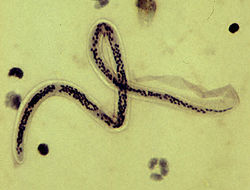
Most forms of elephantiasis are caused by roundworms of various species (Wuchereria bancrofti, Brugia malayi, and B. timori), to name a few. These live in pretty much every tropical-subtropical region in the known world (i.e. you are bound to find ONE of them in the area if you ever want a tropical getaway). The larvae travel by mosquito. Their destination is the human lymphatic system.

It is not entirely certain whether the swelling in the legs and genitals is caused by the worms themselves or by the human immune system's response to the worms. Whatever the case, the bulging is like a beacon to mosquitos that says "bite me." They take a few larvae out of one host and stick them in another while sucking some blood in the process. (If you think this sounds like the botfly, it sort of is, but the botfly is at least motile on its own in one stage of life.)


There is no cure, but damn if people are not trying with this one. They have put out antibiotics, an anti-worm drug called albendazole (which looks like something from Taco Bell, but is a potent vermicide), and started mapping the genome of one of the worms in an attempt to cure this. You hear a lot of talk about cancer, arthritis, etc., but although a million scientists are working on those, I have not seen such a fervent movement towards completely wiping out a pathogen since smallpox. These people not just trying to treat the symptoms - they want the worms dead, dead, dead.


Kill on - oh, wait, we can only see these things under a microscope.

Or you could, y'know, eradicate the people harboring the worms in those parts. They are a vital part of the creature's life cycle. The mosquitoes FAR outnumber the humans and will keep reproducing even if humans are not around, but the worm needs humans to work. You want to stop elephantiasis? Stop humans. (Yes, I realize how callous that sounds.)

Thursday, November 11, 2010

The Human Freak: Hutchinson-Gilford Progeria.

Even without knowing Greek, you have probably heard of "old kids" - people that are really in their single digits, but look like they should be in a home. It was hinted at when Bart Simpson got a driver's license and said that he had "that disease that makes you an old man" and claimed that he took too much medicine to reverse it. It sounds like BS, but "old kids" really do happen.


"Progeria" is exactly what it sounds like: Early aging. Growth and weight gain are limited from day 1, and the face looks smaller than usual. Like regular old people, progeria victims experience hair loss. The end result looks either like an old person or a real version of the stereotypical alien.


Stack up all the progeria symptoms together and you get E.T.

There are actually a number of diseases that can cause accelerated aging by a failure to repair DNA, but progeria is not among them. Instead, it is caused by a simple switch of one nucleotide (cytosine to thymine) at one specific point, making a defective Lamin A protein. Think about that the next time you take a biology exam; one nucleotide wrong and you wind up an old man.


It is also not heritable like those other diseases for one simple reason: The people with progeria never live long enough to have kids. The mutation occurs spontaneously in all forms but one (and that is a subtle inheritance, not like the family of wolf people). Progerians rarely live beyond 13 years of age. Most of them die from heart attack, stroke, or other such diseases.

There is no cure for progeria. You can treat some of the symptoms, but ultimately, this was yet another case in which Mother Nature said "no." Sorry, but if you have this, it is fatal. Growing older is never a good thing.

Wednesday, November 10, 2010

The Human Freak: Microcephaly.

(TERRIBLY SORRY that these next few entries are late; I have had HORRIBLE luck with assignments this past week.) 

Y'know those weird shrunken heads that you see in occult shops and such? Wouldn't it be weird if somebody was born with a head that small?


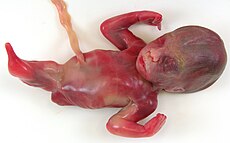
It happens. People with microcephaly have small heads. As in, they're tiny compared to a normal person's. Basically, after a certain point in life, their heads simply stopped growing. This is caused by some disturbance in the growth of the nervous system and may or may not be apparent at birth. The face often gets too big for the skull, causing wrinkles and sags that even Botox will not cure.

For those of us with normally-sized heads, don't worry; you have to be born with microcephaly to get it. People blame the usual culprits: diabetes, alcoholism, and radiation as well as rubella and chickenpox for microcelphaly. I bet this is the first time you have seen chickenpox on a blog page about a related disease besides shingles.


Given how much chickenpox sucks, the other two adventures must be something special.

Humans like big heads. A big head usually means that somebody is smart or at least healthy. People with microcephaly not only look like freaks, but also will not live very long: they are retarded, to put it bluntly, and often have seizures or other neurological disorders that shorten their lifespans. 

This does not stop them from being sported as freaks throughout North America and Europe. They are more ritualistically stigmatized in India (as "rat"-people) and Pakistan, being either exiled to monasteries or just plain exiled. No offense, but this particular microcephalic does look quite a lot like a rat:


Hey, humans already reproduce like rodents.

Tuesday, November 9, 2010

The Human Freak: Hypertrichosis.

If mermaids are not up your alley, how about werewolves?


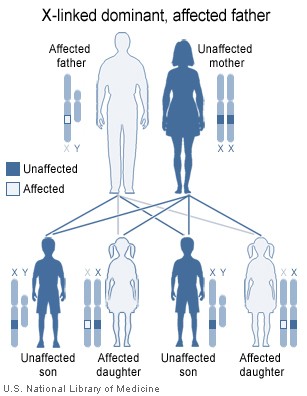
 Kidding, kidding, that guy was not bitten by a rabid wolf or anything of the sort. There is a condition called hypertrichosis that causes hair to grow abnormally over one's body. It can be inherited genetically in several ways, but can also be triggered by eating disorders, cancer, or drug abuse. It is more common in women, especially in one form that is carried on by the father (X-linked). It can be misidentified as hirsuism, the disorder that causes beards in women and children; that is simply caused by a high testosterone level. So, yeah, the full spectrum of furry fetishes will be covered this week.

 
He looks more like a pig than a wolf, here. Not a patient, by the way, just an actor with makeup.


Humans are weird as all-get out when it comes to hair. Not only are we mostly naked as animals, we have at least three different types of hair. Even the lice think we're weird - humans are the only mammal to not only have two different types of hair, but two different types of matching lice. Hypertrichosis is diagnosed and named based on what type of hair got overgrown; languo hair (a type of hair typically shed in the womb) is sometimes present on offspring with genetic hypertrichosis. 

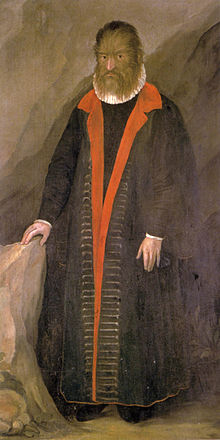
Hyperthrichosis is a fairly recent disorder. Although there are legends of beast-people around the world, the first formally-recognized case was that of Petrus Gonzales in 1648. That's pretty late, given that we have records of Siamese twins since ancient times.


 The Wookies are among us.


Like I said earlier, yes, hypertrichosis can be hereditary. There have been whole families of werewolves. In Burma, one family had four generations' worth of hairy members. All of the hairy people had perfect teeth, but all of the ones with fur had dental issues. Weird; it's the other way around in dogs.


Now let us never speak of the Chinese Crested again...even though some of them still look ALIVE.

Unfortunately for furries, this disorder is rare. There have been only 50 recorded cases since the Middle Ages. When it is found, it generates quite a lot of hubbub; people with this condition can  become very successful "beast-man" freaks. You can still get fur through drug abuse, but I am not about to encourage that.


These kids do not even need Halloween costumes. They can trick-or-treat any time of the year.

Unlike Siamese twinning or sirenomelia, nobody has ever died of hypetrichosis; they just make really, really good wolf-people for movies and handing out Halloween candy. Despite the social stigma that comes with being hairy, these people can lead rich, fulfilling lives. Depending on how severe the case is, one might even be able to fulfill the childhood fantasy of joining the circus. Hey, it's better than risking your organs in some expensive surgery.

Monday, November 8, 2010

The Human Freak: Sirenomelia.

It's hard not to like mermaids. We have all seen The Little Mermaid at some point (you in the back, don't lie), and inaccuracy to the original story aside, it was an okay movie. If you have not seen it, a mermaid named Ariel wants nothing more than to leave her ocean home and be with a human prince named Eric.


He was vain enough to get his own statue...not really a good sign. Ditch him while you can, girl.

But y'know what Ariel's problem was? Humans are bipeds. (They also have lungs, but that's another issue entirely; complex marine biology has no place in a Disney story.) That is the problem that people with sirenomelia have. You're not crazy; this disorder did get its name from the tail of a mermaid:


Please don't make me Google this again.

Sirenomelia, also called Mermaid Syndrome, is a condition in which a baby's legs are fused together into a single appendage resembling a mermaid's tail.  It is 100 times more likely to occur in identical twins than in any other sort of birth; otherwise, it has the same likelihood as Siamese twins.


I'll take the two-headed goat from yesterday, thanks.

Besides having deformed legs, people with sirenomelia also have bad organs. The system containing the bladder and kidneys is often highly damaged in sirenomelia victims. Some of them also have very weak hearts. Surgery may or may not be possible on a case-by-case basis; fixing it is not a simple matter of just tacking another leg on. Nature has said "...yeeeaaah, sorry, humans are supposed to have two legs" pretty clearly.

[Millions of deformed babies + one morbidly obese survivor who died anyways = Kuro could not Google any more pics. GO LOOK FOR THEM YOURSELF, sorry.]

Survivors of sirenomelia are rare. I mean rare as in "Wikipedia only mentions three," and one of those three has already passed on due to another disease. It takes top-notch care and hours of surgery to have a baby with sirenomelia live past two days, let alone two years. Even then, the three survivors were lucky enough to not have some of the complications associated with the disorder. The longest-living sirenomelia victim was born in 1988 and is still kicking with new, albeit weak, legs. One really has to wonder if the surgery is worth it; another victim in Peru, though living, suffered severe trauma (to the point of losing her speech capabilities) and still has 10-15 years of surgery and rehab to go.

Contrary to what Disney told you, mermaid stories RARELY have happy endings. Even the original Little Mermaid sucked balls for Ariel. (Also, NOW do you see why I object to limb fusion, furries?)


In the original story, the Prince ditched her for a chick whose legs WEREN'T fused at one point, and she had to do a good deed every day for 300 years (and then some). You know, for kids!

Sunday, November 7, 2010

The Human Freak: Siamese/Conjoined Twins.

Everybody has heard of Siamese twins. Siamese twins happen when, for whatever reason, two people are literally joined at the hip or some other location from birth. They are so named because P.T. Barnum had a Siamese pair of conjoined twins (Chang and Eng Bunker) in his show for a good long while. I would call them "conjoined twins" from here on out, but since when has political correctness ever caught on?


Sorry, guys. 

Siamese twins go way back before P.T. Barnum, of course. The earliest reports of Siamese twins come from Peruvian pottery dated from 300 C.E.  They have a loooong history in Europe; a pair of Armenian twins were deemed an act of God, Mary and Eliza Chulkhurst of England were the first named conjoined twins, and a French couple put their conjoined girls on display in Paris for all eight months of their short lives. Barnum is not the only one who liked showing this off; the record of conjoined twins is remarkably well-documented, especially in Europe. They pretty much make news whenever they happen (1 in every 50,000-100,000 births; somewhat higher in Southeast Asia and Africa).


One of them likes Starbucks, the other likes Caribou. How DO they share a body?

Despite the condition's publicity, nobody is really sure what happens to Siamese twins in the womb. There are two competing theories as to what causes the fused bodies: In the "fission" version, the fertilized egg simply does not completely divide; in "fusion," the egg completely separates, but because stem cells seek similar, the twins' stem cells bind to each other. Occam's Razor says that the simplest solution is probably the correct one, and incomplete fission sounds hella simpler.

Speaking of fission, it is not always a good idea to separate Siamese twins. Remember how I said that conjoined twins can be joined anywhere? No kidding; although the popular place is usually somewhere on the body, Siamese twins can be merged in any number of places. Some of them are attached at the skull, making surgery exceedingly difficult; others have one twin as a parasite, i.e. the one twin CANNOT survive without the other. Many of the times, they share organs. These different types of twins all have very long Greek names that I will not hurt your brains with and, usually, have bitchingly complex surgeries to match. The survival rate of Siamese twins is approximately 25%.


By the way, this can happen in animals, too. There are a few stories floating around about a duck with six legs or snakes with two heads. Polycephaly (that is, multi-headedness) is most common in turtles and snakes, but can theoretically occur in any animal species. There are also a lot of fake PhotoShop jobs of such things. When it is real, it's the same deal as Siamese twins.

Only a multi-headed dog would look more like a chthonic horror.  Those exist, by the way.

The Human Freak.

This next week will cover an animal so freaky, so bizarre, it takes an entire week to cover it. It spreads like a plague. It reproduces like a rodent. It is intelligent, an omnivore, and can be found all over the world. It threatens to destroy the entire world if we do not do something about it.

What is this animal of ultimate horror? Look in the mirror. Yes, I'm talking about you - Homo sapiens sapiens.

Humans are the most terrifying of all animals on the planet. We have killed more species than all the predators in the world put together. The biggest threat to the status quo of the world is overpopulation; even though we have a nine-month gestation period like cattle, we have become SO successful that the Earth will not hold us all as long as we keep reproducing. That's what made Soylent Green plausible.


AAH, it's got TRANS-FAT!

Perhaps the most disturbing part of this is that nature doesn't give a sh*t. Humans are not vital to the ecology. Anywhere. We try to justify our existence in various ways, but there is really no reason that a species should be so successful that it unbalances nature's scales. Trust me, nature would be just fine if humanity died - she'd probably be better off, if anything.


This guy would probably have gone extinct a lot sooner if humans had not thought him cute and cuddly.

This week will be devoted to the deformities, parasites and viruses that show the freakish side of Homo sapiens sapiens. These are the specimens that you see preserved at Ripley's Believe It Or Not! or in traveling freak shows. We wish we were not covered in almost arboreal warts or joined with a twin at birth. We can laugh and gawk at those people because, hey, it did not happen to us.

It could. Brace yourselves for High Octane Nightmare Fuel in a shot glass.