
Since the giant sloth entry, I've realized something: Xenarthrans are actually very, very cool mammals. They're weird enough that science is tempted to classify them separately from everything else with a placenta. They have wicked-looking claws and funny dietary habits.
Oh, and some of them are so cute they could be magical girl pets that aren't Kyubey. Yes, I know about Kyubey.
Isn't it adorable? That's a Pygmy/Silky Anteater (Cyclopes didactylus). Silky anteaters are native from Mexico into northern South America. It is a nocturnal, arboreal creature (could've fooled me with the good photos). As per the name and general grouping, it feeds mostly on ants.
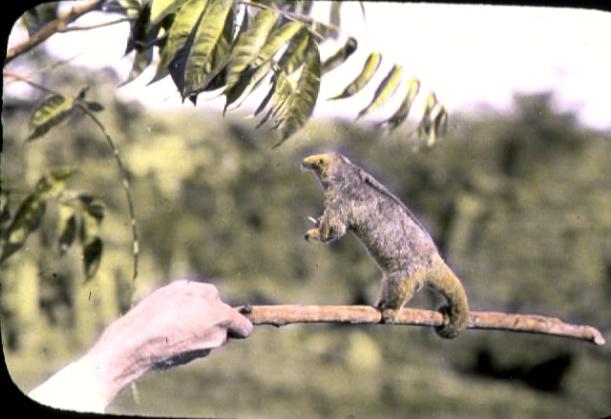
The Silky Anteater is the smallest anteater in the world. At most, it is a foot and a half (450 millimeters) long. It has a prehensile tail, soft fur, and other traits that make it look like it should be a stuffed animal. Other than its size, it thinks it's a bigger anteater. As the pic above shows, Silky Anteaters will stand on their hind legs and raise their claws when threatened, even though it looks silly coming from something so cute. Those claws can probably do damage to things that aren't ten times bigger, though.
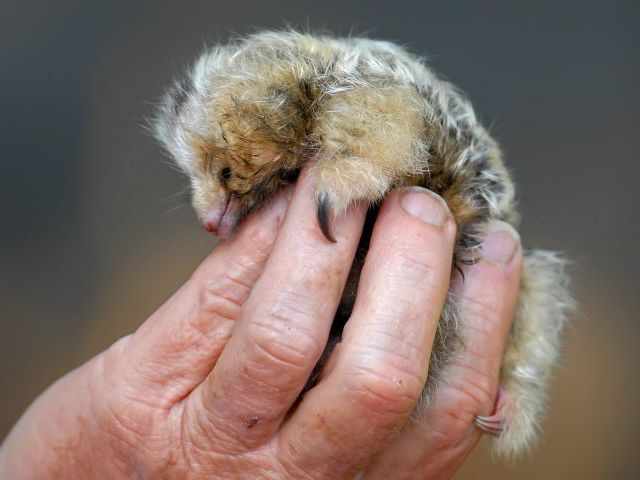
At that size, the Silky Anteater has a lot of predators. Harpy eagles, the largest eagles in the world, would love an anteater to go. The anteater thus spends most of its day curled up in the tops of trees, looking very much like a seed pod. Of course, when we do find them, we find this furball adorable.
And now, for the section you've all been waiting for...yes, you can keep anteaters as pets, Silky Anteaters included. This does not mean that an anteater is for everyone. They require a lot of attention, a snazzy enclosure, and, believe it or not, walks. Aside from ants (which can be lapped up on walks), anteaters like a variety of greens, including spinach, avocados, and thyme. They'll even eat blue cheese! Avoid sugar, however. Anteaters apparently love to play, so try finding some vids on YouTube if you think anteaters suit your fancy.
Oh, and some of them are so cute they could be magical girl pets that aren't Kyubey. Yes, I know about Kyubey.
Isn't it adorable? That's a Pygmy/Silky Anteater (Cyclopes didactylus). Silky anteaters are native from Mexico into northern South America. It is a nocturnal, arboreal creature (could've fooled me with the good photos). As per the name and general grouping, it feeds mostly on ants.
The Silky Anteater is the smallest anteater in the world. At most, it is a foot and a half (450 millimeters) long. It has a prehensile tail, soft fur, and other traits that make it look like it should be a stuffed animal. Other than its size, it thinks it's a bigger anteater. As the pic above shows, Silky Anteaters will stand on their hind legs and raise their claws when threatened, even though it looks silly coming from something so cute. Those claws can probably do damage to things that aren't ten times bigger, though.
At that size, the Silky Anteater has a lot of predators. Harpy eagles, the largest eagles in the world, would love an anteater to go. The anteater thus spends most of its day curled up in the tops of trees, looking very much like a seed pod. Of course, when we do find them, we find this furball adorable.
And now, for the section you've all been waiting for...yes, you can keep anteaters as pets, Silky Anteaters included. This does not mean that an anteater is for everyone. They require a lot of attention, a snazzy enclosure, and, believe it or not, walks. Aside from ants (which can be lapped up on walks), anteaters like a variety of greens, including spinach, avocados, and thyme. They'll even eat blue cheese! Avoid sugar, however. Anteaters apparently love to play, so try finding some vids on YouTube if you think anteaters suit your fancy.


