Showing posts with label xenarthra. Show all posts

Tuesday, April 16, 2013

Creature Feature: Glyptodon.

Cool though MonHunt may be, the majority of its monsters are reptilian. This tends to be a running theme with monsters in general; insectoids and reptiles are strange enough to scare most people, so, with the oddball exception of wolves, mammals don't show up in many horror movies. Maybe it's about time we fixed that.

Source: Wikimedia Commons.


Well, here's a strange mammal for you! It's a Glyptodon, and was native to South America in the Pleistocene Epoch. That's the same time when all the mammals we know and love, including people, were in odd, freakish proto-forms. Luckily, we're petty sure this one's an herbivore. There were four species in the genus, each of which can be identified by the patterns on the shell.

Armadillos are already strange little things. This is a prehistoric armadillo- that usually means it's bigger and even freakier. Glyptodon was about the size and weight of a Volkswagon Beetle. Let that sink in a minute: an armadillo the size and weight of a small car. OK, minute over.

Unlike modern armadillos, Glyptodon did not have a flexible shell. Its shell was so rigid that its spine was fused to the thing, much like a modern-day turtle's. Glyptodon was capable of tucking its armored head and tail over its vulnerable underbelly, making itself an unappetizing rock of a mammal. This is considered convergent evolution, as ankylosaurs and turtles share similar adaptations.

One thing we aren't sure on concerning this beast is its face. There's a space in its skull for a nose, but we aren't sure what kind of nose it had. The best guess is a tapir-ish trunk. Soft tissue doesn't preserve well, so a proboscis like that is a legitimate guess. Have fun seeing it in your nightmares.

The Glyptodon probably went extinct because of humans. As we've said before, wherever humans live, megafauna tends to die. It's nothing personal - it just tends to happen. Since humans were around for this, you'd expect drawings...but nope. Plushies, however, are a thing:

Source.


Don't be afraid to think outside the box. There were Glyptodon in Ice Age, and we're sure GameFreak could make a Pokemon out of this. There are plenty of strange mammals, both living and dead. Not everything has to be bugs and reptiles.

Friday, November 9, 2012

Creature Feature: Nine-Banded Armadillo.

 That said, armadillos are fascinating creatures. Really, what's not to love about a mammalian pillbug with an anteater face, bunny ears, and sharp, pointy claws? Its native name means "turtle-rabbit," meaning that the armadillo is officially the bastard offspring of the Tortoise and the Hare; apparently they got along reaaaally well after that race.


Armadillos in general are mammals belonging to the super-weird superorder Xenarthra, which also includes sloths and anteaters. They eat invertebrates, particularly ants and termites.The nine-banded armadillo (Dasypus novemcinctus) is the only species native to North America; the other 19 species are all farther south. This is largely because the armadillo has few predators up here.

Let's look at the obvious first: Armadillos are scaly mammals. Much like the pangolin, these scales are made of keratin- the same thing that makes up your hair and fingernails. (The same is true of porcupines; Sandslash suddenly makes a great deal of sense.)  As in turtles, the segments of an armadillo's spine are fused with the carapace. There are folds of skin, also scaly, between the main sections of armor in most armadillo species; these are easy ways of classifying armadillos. By the way, no, our nine-banded armadillo can't curl into a ball.

Armadillos spend most of their time underground, digging with those gnarly claws. A single armadillo can have up to 12 burrows in its range, each getting around 8 feet deep. If startled while out of the burrow (probably at night), they can jump up to four feet in the air and run surprisingly fast - prime roadkill fodder.

 Get this: aside from looking freakish, armadillos are also the only (multi-cellular) animals to achieve natural cloning. One single, fertilized egg leads to 3-4 genetically-identical offspring; take that, conservatives. They can also suspend their pregnancy for up to two years - y'know, in case the armadillo in question isn't quite ready to have kids yet.  That said, baby armadillos are adorable.


The nine-banded armadillo is the state small mammal of Texas. It is, however, considered a pest and common roadkill even in its 'home' state. Oh, and they can also catch human leprosy. It's funny how such a famous, strange animal can be treated like vermin in Texas...but we love them anyways. They're popular for a reason.

STFU, 02-haters. You knew Armadillomon would make it here someday.

Wednesday, November 7, 2012

"They Actually Eat That:" Armadillo.

For those of you who do not watch my Twitter or dA, I will be in Texas until Saturday. The next few days will thus be related, in some way, shape, or form, to the Lone Star State. What better way to kick this off than with Texas's state mammal, the armadillo?

Wait. This is Wednesday. Do people really eat armadillo?

Answer: Yep. Armadillos, aside from looking a little bit like crazy reptilian mammals, are available year-round, fairly low on the food chain, and legal to hunt everywhere. They range from the lower half of the U.S. into South America, so if you live anywhere near there, there's probably an armadillo into your backyard. And, yes, armadillos are eaten throughout their range.


Armadillos have been eaten since at least the days of the pioneers. They have been eaten by Florida Crackers for at least 100 years. Armadillo is also very popular in Argentina. Cook them just like you would any other meat; frying is better for smaller armadillos, and slow-cooking works more for larger ones.

There are two ways to get armadillo meat. One, as you probably guessed, is to trap a little armored one yourself. Regular animal traps work, but if you wanna be a pro, stick a six-inch PVC pipe into a burrow and wait for the armadillo to get stuck in it. Alternatively, armadillos can also be farm-raised...on CORN.

One of the most ridiculous rumors surrounding armadillo meat is that it can give you leprosy. This is not entirely unfounded, but still rather silly. Armadillos are the only mammals besides humans that can get leprosy, and hey, they're pretty scaly for mammals.  Still, armadillos rarely have leprosy, and if the meat is handled properly, you have no chance of getting it.

That said, if I see armadillo on the menu down here, this post will be updated. There are a million restaurants on the San Antonio riverwalk, and I'd bet money that one of them has armadillo. I'll be sure to let you all know where I find it!


Thursday, April 12, 2012

Creature Feature: Silky Anteater.

Since the giant sloth entry, I've realized something: Xenarthrans are actually very, very cool mammals. They're weird enough that science is tempted to classify them separately from everything else with a placenta. They have wicked-looking claws and funny dietary habits.

Oh, and some of them are so cute they could be magical girl pets that aren't Kyubey. Yes, I know about Kyubey.


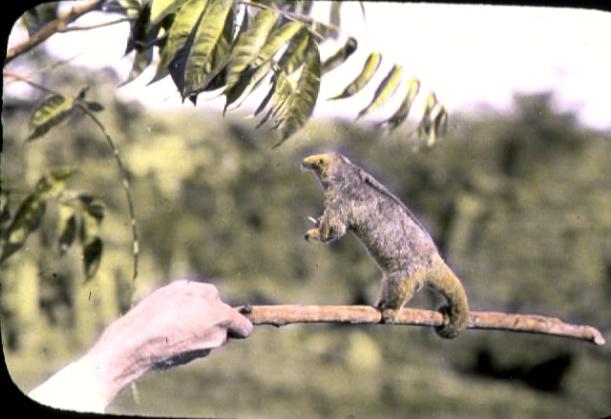
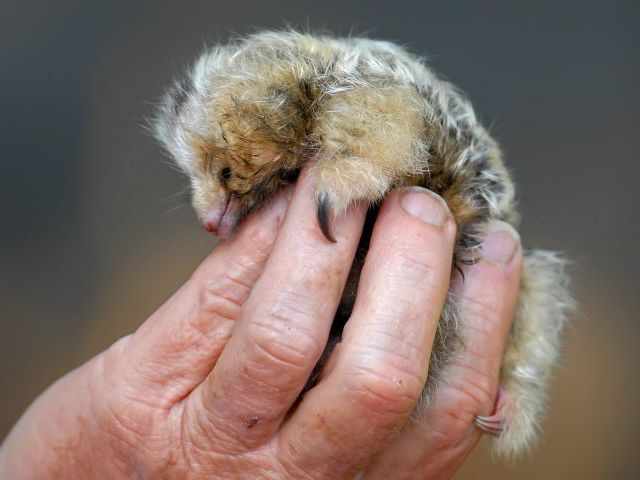
Isn't it adorable? That's a Pygmy/Silky Anteater (Cyclopes didactylus). Silky anteaters are native from Mexico into northern South America. It is a nocturnal, arboreal creature (could've fooled me with the good photos). As per the name and general grouping, it feeds mostly on ants.

The Silky Anteater is the smallest anteater in the world. At most, it is a foot and a half (450 millimeters) long. It has a prehensile tail, soft fur, and other traits that make it look like it should be a stuffed animal. Other than its size, it thinks it's a bigger anteater. As the pic above shows, Silky Anteaters will stand on their hind legs and raise their claws when threatened, even though it looks silly coming from something so cute. Those claws can probably do damage to things that aren't ten times bigger, though.


At that size, the Silky Anteater has a lot of predators.  Harpy eagles, the largest eagles in the world, would love an anteater to go. The anteater thus spends most of its day curled up in the tops of trees, looking very much like a seed pod. Of course, when we do find them, we find this furball adorable.

And now, for the section you've all been waiting for...yes, you can keep anteaters as pets, Silky Anteaters included. This does not mean that an anteater is for everyone. They require a lot of attention, a snazzy enclosure, and, believe it or not, walks. Aside from ants (which can be lapped up on walks), anteaters like a variety of greens, including spinach, avocados, and thyme. They'll even eat blue cheese! Avoid sugar, however. Anteaters apparently love to play, so try finding some vids on YouTube if you think anteaters suit your fancy.