Showing posts with label new zealand. Show all posts

Tuesday, August 27, 2013

Tunicate Week: Sea Tulips.

Back to tunicates. Tunicates are sessile chordates that make everything else go "WTF?" with their sheer bizarre lifestyles. They start as tadpole-like larvae, find a place to settle down, then, umm, reabsorb their primitive spinal chords and brains. They also use cellulose to build the advertised "tunic." In fact, if they didn't eat things and have larvae, we'd be darn sure tunicates were plants.

Apparently linked to Calvinism, somehow?


...weird plants that prove that Hell is probably underwater. Yep.

Those strange, stalky things are sea tulips. Like all tunicates, sea tulips are effectively spineless vertebrates, siphoning in plankton through one hole and pushing water out through the other.  If you wish to tiptoe through the sea tulips, head to the waters around Australia and New Zealand. Sea tulips are actually among the friendlier things there, so please watch out for the other toxic fauna instead.

Sea tulips are the largest individual tunicates out there. They can get up to a meter (roughly a yard for us Americans) long. It's worth noting, however, that some free-swimming tunicates can form longer chains. For something without a true spinal cord, a meter is still pretty impressive.

Clearly the easiest underwater photograph ever. Source.


Sea tulips are symbiotic with another strange, sessile animal: the sea sponge. Many sponges, including the symbiotes present on these tunicates, have predator deterrents - bad taste, poison, and so on. Remember that both sponges and sea tulips lack teeth, so chemical defense is the best bet for both of them. These sponges also provide a lovely array of colors for your viewing pleasure.

Indeed, that seems to be the main purpose of these things: They look really neat. They also lend some credence to the ancient idea that everything on land has a counterpart somewhere in the ocean. If nothing else, sea tulips make for a neat, living bit of undersea scenery that should really be used more often. Even the fields of the sea have strange, filter-feeding flowers.

Tuesday, July 2, 2013

A Week of Hogwash: Kunekune Pigs.

Pigs are one of the more common domesticated animals on the planet. They have been kept by humans since at least 11,400 B.C.E., and have had two independent instances of domestication. Able to eat almost anything, the Chinese used them almost like a garbage disposal for table scraps. With all that history, we have to have at least one weird pig breed out there...right?

Source. With piggies for sale.


Ta-da! It's a bunch of Kunekune piglets! They are all members of a rare breed from New Zealand. The breed supposedly spawned from Asian pigs brought to the Maori in the 19th century. They are known for being fuzzy, easy to handle, and surprisingly colorful for swine. The word "kunekune" means "fat and round" - an apt name for any pig, really.


Less charming as adults.


There are two main features of the Kunekune: its fur and its wattles. Unlike the more common farm swine, Kunekune are furry like wild pigs. They come in a variety of colors, including black, ginger, and white with black spots. Some Kunekune pigs also have fleshy protrusions called piri piri. They're reminiscent of the wattles on goats, but are kinda rare in pigs.


As this video from Animal Kingdom indicates, Kunekune pigs are very popular at petting zoos. They can also live just fine on grass, as opposed to foraging and tearing up lawns. It helps further that they are miniature by pig standards- they weigh 240 pounds, tops. Yes, that is indeed small for a pig. It also makes them one of the ideal pet pigs if you are so inclined.

Alas, as far as pigs go, Kunekune pigs are rare. The breed went nearly extinct in the 1980's. Breeding programs in New Zealand and the United Kingdom are the only reason Kunekune pigs are still around. If a prospective pig owner can find one, great - they're intelligent (like most pigs!) and easy to train. Just be prepared, unlike a certain member of the Simpson family - Spider-Pig does not a good pet make. 

Sunday, November 18, 2012

Creature Feature: Giant Weta Bug.

You know what people like Greenpeace say about protecting the rainforest? That there might be a million different species there that we've never seen before, and some of them might cure cancer or whatever deadly disease have you? They're right. 100% right. New species are discovered every day, and while it's not likely that one will magically have a cure for AIDS or whatnot, there is always that one weird species that will break records.


This bug is a Little Barrier Island Giant Weta (Deinacrida heteracantha). She is infamous for potentially displacing the African Goliath Beetle for the title of "world's largest insect."  All wetas are native to New Zealand, and this girl is no exception. Giants wetas in general are highly endangered. They fill the niche of rodents where native; you decide which is scarier.

First off, what is a weta, anyways?  There are roughly 70 different kinds of weta, all of which are native to the islands of New Zealand.The name is Maori for, umm, this particular type of bug.  They used to be much more plentiful, with fossil records extending into Eurasia. Now, the island weta are under threat by rats and other introduced mammals brought by European settlers.

The giant weta in particular is the largest, or at least heaviest, insect in the world. It weighs 71g, tops. For those of you who either hate metric (why?) or need a better idea of how heavy that is...that's three mice. For something that doesn't even have a spinal cord and lives on land, that's pretty big. Yes, this is yet another example of insular gigantism.


This particular female giant weta broke records in 2011. She's the chart-topper at 71g. Granted, she was carrying eggs, but giant wetas in general are still pretty big bugs. Most adult Goliath beetles top out at around If any bug steals limelight from Africa's Goliath beetle, it'd be a giant weta. If nothing else, it's the largest weta. Goliath beetles still average 80g as larvae.

 The good news? This bug is a vegetarian. Or, at the very least, the heavy female found in 2011 had a particular fondness for carrots. Giant wetas are seriously docile; even when food is not present, they will allow themselves to be handled. There are a lot more "perfectly safe" creatures in New Zealand than in Australia, and this giant, cricket-like creature is among them. Funny how that works, isn't it?

Oh, and then there's Weta Workshop....but more on one of their works tomorrow. ;)

P.S.- In honor of Thanksgiving, "They Actually Eat That" will take place on Thursday of this week instead of Wednesday.

Saturday, January 21, 2012

Creature Feature: Haast's Eagle.

My current Environmental Sustainability professor specializes in invasive species. He was on the committee for the update to the Lacey Act that covered Burmese and rock pythons alongside the yellow anaconda. Here in Chicago, we also have Japanese beetles and Asian carp. For some reason, we do allow mutant rats with shirts to run around the streets like crazy, but I digress.

A lot of people overlook what happens when humans become an invasive species. Let's not even count the animals that humans bring with. In gaming terms, humans, as a species, are broken - that is, overpowered. Even amazingly cool things can be disrupted by the presence of one human tribe. Humans rarely travel alone, after all. 

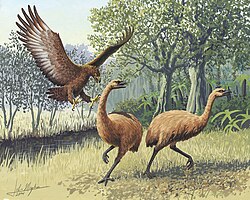
New Zealand and Australia were among the hardest places hit by human invasion. The moa, one particular type of ratite found on New Zealand, was the main prey item of a very, very, very large eagle:


The Haast's Eagle (Harpagornis moorei) was the biggest eagle that ever lived. It had a 2-3 meter wingspan, was approximately a meter and a half from head to tail, and stood higher than most dogs. The wings were actually a bit short for a bird that big, but they allowed the eagle to maneuver in its forest habitat. Regardless, it came down so hard and fast upon moa that they did not know what hit them. It was said to attack as fast as 80 km/h (or 50 mph). Big, fast, and deadly, this thing would make a good "deadliest animal" opponent versus, oh...a lioness, maybe? Wish I had a simulator.

Hell, if Maori legend is correct, this bird may have killed humans. There are no confirmed reports, but if it can take on a bird many times it size and possibly eat the whole kill, it could certainly kill off an idiot with his iPod. Gandalf's eagle? Yeah, it was kinda like the Haast's Eagle, and still native to New Zealand.

NOW I know why white mages can use necromancy. Nicely done, Gandalf!
 

The reason for this bird's extinction was the introduction of men who did not yet have iPods to distract them. Even without modern tech, humanity effectively wiped out the moa, the Haast's eagle's main source of food. Moas were the rough equivalent of deer or other large herbivorous mammals on other continents. There were several species, all of which were completely wingless. This is entry is not about them, but bear with me.

The arrival of humans was a two-pronged attack on the moa population: one, moa were about as intelligent and delicious as giant chickens, and two, the Maori needed to clear the forest for slash-and-burn agriculture. Deforestation and hunting moa were what killed most of the species off in less than a century. This was done by one of the 'innocent' native tribes, remember. No Europeans were involved, but to be fair, they did not help the New Zealand ecology any. 

Europeans were the unnecessary crotch kick to the bird-based ecology of New Zealand. We, the Caucasians, likely contributed to the moa going extinct - and, by extension, the Haast's Eagle by 1400. We also brought over small mammals, which screwed things up further. To be fair, we also realized that the kakapo were adorable and endangered, so the white man gets a few brownie points.


One predator so efficiently killing off the moa doomed the Haast's Eagle to extinction. Had this been in any other era, there would be wildlife federations protecting this bird. They could totally have used the Lord of the Rings series to raise awareness that, yes, New Zealand did in fact have giant eagles. Also, there is a high chance that someone would have figured out how to domesticate moa, and thus we would have wingless chocobos. "Giant eagles and chocobos" sounds like a good time. 

Saturday, October 1, 2011

Creature Feature: Land Planarians.

As you all (hopefully) well know, the authoress of this blog finds planaria to be among the cutest creatures in existence. Some people are freaked out by simple earthworms, but what's there not to like about cross-eyed flatworm? Heck, they even look like they're smiling if you catch them on a good day. Even without that luck, they are eternally cross-eyed, which is pretty amusing itself.

ETERNAL DERP.


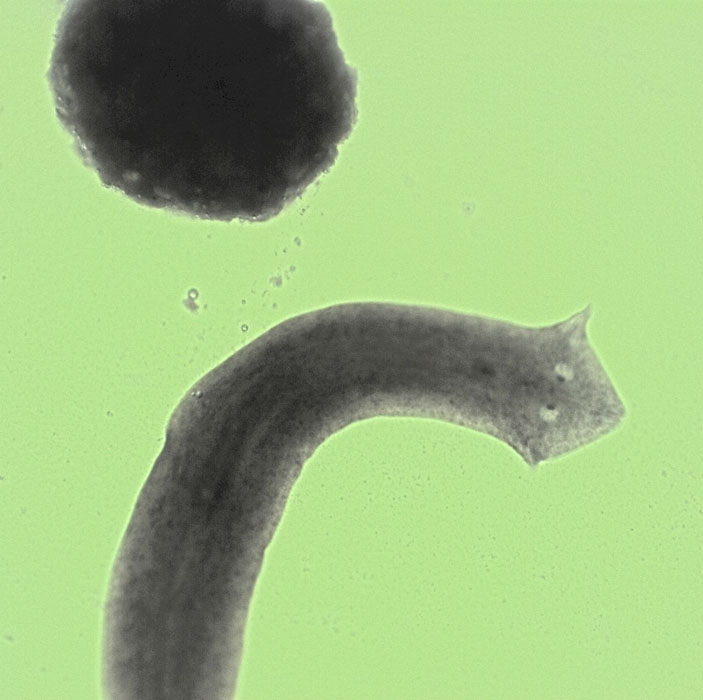
Then there are land planarians. Yes, flatworms can go on land. Did you think you were safe just by avoiding the water?

Land planarians (family Geoplanidae) are a lot less cute than their water-bound counterparts. They look a lot more like nudibranchs that made it onto land. These worms come in trippy colors and are definitely predatory, eating any invertebrates smaller than themselves. They cannot live outside of rainforest regions. When they do have the right environ, they do well enough to cause problems to native invertebrate fauna.

TRIPPY! Credit is on the pic. :3
 

The way these land-bound planarians hunt is quite ingenious: Many invertebrates leave a slimy trail in their wakes as they squish along. As soon as night falls, the planaria come out and follow the chemical trails to find slugs, snails, and their favorite foods, earthworms. They are also cannibalistic, showing that even flatworms can be quite vicious!

Land planarians are so successful in the right environment that they have been used to curb invasive snail species in Hawaii and the Pacific Isles. On the flipside, they also threaten any native snails. Somehow, land planarians have caused issues in the British Isles - how they survive there, we do not know.

From Whatsthatbug.com. Go there.


Unfortunately, not many people are looking into these exotic worms. Despite their flashy colors and ecological significance, land planarians remain one of the least studied invertebrate groups in existence. This must be fixed.

Saturday, September 10, 2011

Creature Feature: Stephens Island Wren.

One of the cries against exotic pets is, frequently, that they will become invasive species. The biggest, baddest anti-reptile bill recently was HR669, a bill that forbade ownership of any animal that was not a cat, dog, fish, or farm animal. This bill was, of course, shut down by herpers and ferret lovers alike. It does not make sense to make an "environmentally-conscious" bill while leaving off swine, cows, and cats and dogs. The most domesticated animals are often the most damaging to a local ecology. Let's not even get into humans as an invasive species.

Mind, the origin of this bill was a lady in Guam. Guam is an island that is technically U.S. territory,  but not quite Illuminati enough to make it into the United States. Island ecologies tend to be a zero-sum game when it comes to animals, exotic or otherwise, living on the island. Either the invading fauna kicks the island's ass or everything on said island is out to kill you. Yes, koalas, we know you have extremely sharp claws.

Australia's smaller cousin New Zealand was not as lucky when it came to tolerating human settlers (it took Hobbits much better). Australia had vicious predators with teeth that would make humans piss themselves, spiders that would kill you in your sleep, and kangaroos that, though herbivores, could definitely beat you at kickboxing if challenged. (That last one would be your own fault. Apologies to anyone drunk enough to try that.)

New Zealand had...birds. Very strange birds.


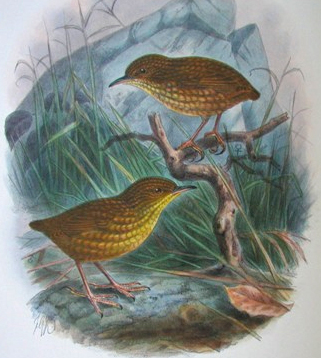
If it were still alive, we would ask you to meet the Stephens Island Wren. It was not really a wren, more like a member of an extinct group of flightless songbirds. Only in New Zealand would that EVER work. All of New Zealand's ecology was based on birds.

Then an unknown Western ship came over with a cat on it. Do I really need to say more?

This without the cage, for those of you without imagination.
 

The Stephens Island Wren is a legend among animals going extinct. Word has it that the cat of a lighthouse owner single-handedly wiped out every "wren" on the island. The owner's assistant, David Lyall, brought the strange looking bird to the scientific community's attention after seeing what the cat (nicknamed "Tibbles") was doing. It was too late; the wren was down to the last few members of its species. The species had probably gone extinct in the winter of 1895.

This is very unlikely. The far more plausible causes for the "wren"'s extinction were being eaten by the Maori as unfried KFC and the introduction of a pregnant cat on board an unknown ship. By the time "Tibbles" emerged, there would have been several feral cats already around the island, picking off lesser birds like people at a buffet.  There are no "exotic" pets to blame here - just humans, cats, and several very lazy birds.


And if you don't think dogs can be damaging? Dingoes. Just...dingoes.

Wednesday, March 16, 2011

Creature Feature: Black Swan.

Ah, swans. Is there anything more romantic, pure, and graceful than a swan? Sure, it's a lot like a large goose with white feathers and is really aggressive as hell, but swans have been a symbol of love ever since the ancient Greeks.

A black swan was thought to be impossible to find for millennia. All European swans were white; it was considered an avis rara, a rare bird, by the ancient Romans. Since nature had selected swans to be white for whatever reason, there was no way a black one could exist, right?


Oh, wait. The laws of nature fall flat on their face in Australia. Not only do black swans exist down under, they are plentiful.

Black swans (Cygnus atrata) are native to New Zealand and Australia.  They have black feathered bodies with some white on the wings. Their beaks and eyes are both bright red. They have a wingspan around 6 feet (2 meters) and have a longer neck than most swans. They are also strictly monogamous; like emus, both parents take turns raising the young.

When the Europeans brought back a few black swans, the reception was less than stellar. Like many black animals, the black swan was deemed a possible familiar and thus messenger of Satan. Gee, I wonder why? Could the red beak have something to do with that, too?

But does it breathe hellfire? HRM.


Most of us know of the black swan from Tchaikovsky's famous ballet, Swan Lake. In Swan Lake, the princess Odette is turned into a swan by the evil sorcerer Rothbart. The spell can only be broken by eternal love. Naturally, it's love at first sight when Prince Siegfried's swan hunt is interrupted by the sudden transformation of Odette. Rothbart thought that the curse would be enough to keep Odette from ever loving, but after dancing in the dark with Odette, he invites her to a royal ball.

Rothbart turns to plan B: He makes his daughter Odile look exactly like Odette. They go to the ball together. The prince thinks nothing of Odile's black clothing and falls in love with her instead of Odette. Odette warns him in swan form, or, depending on the version, Rothbart himself shows Siegfried where the real Odette is. After realizing his mistake (because, hey, a swan pecking at the window is bound to get someone's attention), Siegfried and Odette commit suicide together, saving Odette's harem friends from their own swan curse. (Nice plot hole, Tchaikovsky: why were they all cursed to begin with, again?)


If anything plays off of Swan Lake, the black swan usually shows up as well. Since Odette the Swan Queen and Odile are played by the same dancer, Odile is often dubbed the "black swan."This is a step above being Satan's (!truly monogamous) wife, but nonetheless appealing to goths.


Australia has its own use for the black swan. It features prominently in several Aboriginal legends, including one explaining the red on its beak as a battle wound. In Western Australia, the black swan is on everything - coat of arms, flag, you name it. They use it as a symbol of Australian individuality. Why not? The black swan is, after all, a European bird that proved distinctly and uniquely Australian.

Tomorrow: Ever wonder what Scolipede is based off of? The answer will do more than stun you.

Wednesday, November 10, 2010

"They Actually Eat That:" People.

Come now, after Soylent Green at the start of the week, what made you think that "They Actually Eat That" would be safe?

Yes, this week's entry is on cannibalism. The term "anthropophagy" can also be used to describe eating people in general, but cannibalism specifically refers to a member of one species eating another of the same.  It can be seen as a practical solution to world hunger and overpopulation.

If you think that human sacrifice sounds like a cool idea, bear in mind that sacrifices are usually eaten. The Aztecs were notorious for offering human sacrifices to their war god, Huitzilopochtli. After removing the heart, the nobles would then eat the cooked human flesh. They were particularly fond of the hands and thighs.


Suddenly, the rising interest in Mesoamerican culture is a little disturbing.


They Actually Eat That?!

Willy Wonka: Do you like my meadow? Try some of my grass! Please have a blade, please do, it's so delectable and so darn good looking!
Charlie Bucket: You can eat the grass?
Willy Wonka: Of course you can! Everything in this room is eatable, even *I'm* eatable! But that is called "cannibalism," my dear children, and is in fact frowned upon in most societies.

~Charlie and the Chocolate Factory.

 Well, in most cases, they actually ate that. Most of the "cannibal" cultures are either secluded or dead, and 'civilized' people will only eat human flesh out of insanity or necessity.


It's only a matter of time.

There is a perfectly rational, sane reason for not eating people: You know that you can get tapeworms from eating poorly-cooked pork or beef. There is only a mild chance of that, but with human flesh, you are almost guaranteed to get something from your food besides nutrients.

In cultures were cannibalism is prevalent, diseases quickly take hold. The Fore tribe in New Zealand, one of the few remaining cannibalistic tribes, has its own disease called "kuru." Kuru is caught only by eating the brains of another human. The main symptoms are hysterical laughter and shaking limbs.


 For those curious, kuru is a prion, a pathogen that is just a protein (making it even less complex than a virus). Mad cow disease is also a prion; all of these little bastards attack neural tissue and they are all 100% fatal.

So, despite how tempting it may be...please do not eat people. It's bad for your health.

Friday, October 22, 2010

Creature Feature: Tuatara.

Nature often creates things that have more to them than meets the eye. This is one of them:


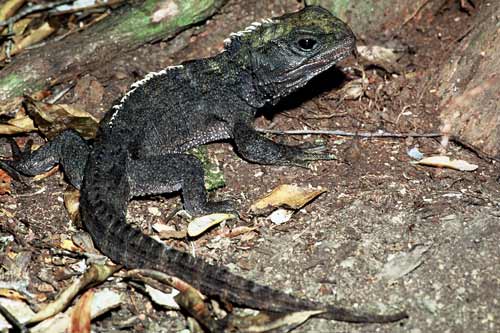
What? Were you expecting something more spectacular? That is a tuatara, which is, in itself, a whole new group of reptiles (order Sphenodontia). That makes it about as close to lizards as crocodiles and snakes. They're an old line of reptiles. A really old line.

Tuataras are not living fossils. Despite being of a distinctly ancient lineage, tuataras have changed a lot since the Mesozoic. They are, however, the most unspecialized living amniotes; they have hearts and brains like amphibians, only one chamber to their lungs (if you have ever taken a look inside the human body, you KNOW how significant that is), and move more like salamanders than lizards.

They also have surprisingly uniform skulls when compared to their fossil record. Unlike lizards, they do not have ears; they hear more like turtles than anything with external ear holes. Their spines are linked more like that of a fish than that of a reptile. Speaking of, the little spikes on their backs do look classy, don't they?

In other words, the tuatara is one of those things that looks like a duck, but does not quack like one or walk like one. Or have organs like one.


As if tuatara were not freaky enough, they have third eyes. You have a third eye, too, but it is not nearly as sophisticated as the tuatara's. I want you to do something very simple before I go on: Find you pineal gland.


(If you can't find that but know where the third eye chakra is, that's cool, too.)

Right there (relatively, of course), many reptiles have something called a parietal eye. In most species, the eye does very little besides detect light. In the tuatara, it has rods, cones, a retina and other structures your eye doctor probably told you about if you have ever gone in for an eye exam. It probably came from a real third eye. Of all the things to do with a third eye, the tuatara uses it to gather vitamin D from the sun.


I seeee you.


Fascinating though they may be, tuataras are vulnerable. Many of them were wiped out thanks to Polynesian rats. Get the image of a rat in a grass skirt out of your head; rats are a serious invasive species that tends to cause a ton of ecological damage if previously unestablished.

Alas, tuataras are nigh-on impossible to breed in captivity. One of the requirements for a species to be considered domesticable is a reasonable breeding period relative to humans - that is, a higher maturation and reproductive rate than people. The tuatara takes ten years to become sexually mature; they can breed well into their 60's and live over a hundred years. That's right, when humans are having trouble reproducing, the tuataras are having no problems at all. No Viagra necessary!

Thursday, October 14, 2010

Creature Feature: Kookaburas.

At some point in your life, you have heard this laugh. It is often part of the standard "jungle noise" track. Many people probably assume that it is some sort of loud monkey call.

Nope. That was a bird up there:


The Laughing Kookaburra (Dacelo novaeguineae) is a carnivorous bird native to Australia. As its form would suggest, it is closely related to kingfishers, but hunts land-locked prey like rodents instead of fish. These vocal birds are a dime a dozen in Australia; due to their hysterical calls at dawn and dusk, they have sometimes been called the "Bushman's clock." Other names include "giant kingfisher" and "Laughing Jackass."


They're cute once they have feathers, too.

All kookaburras 'laugh.' The Laughing Kookaburra is by far the most notorious. Although it sounds happy to humans (enough so to merit a children's song), these calls are usually territorial. There are several kookaburras in one territory that form the chorus, but like boy bands, they are otherwise trying to outsing each other.

Once they get more members, they will call themselves the Backstreet Birds.


These are probably the most friendly carnivorous birds one will ever meet. They willingly accept handouts. Hell, if you do not give them your barbeque meat, they might just take it.


Why so serious?

Sunday, August 22, 2010

Creature Feature: Kakapo.

While searching for elephant bird information, I came across some comments along the lines of this: "The natives kept the population up just fine;" "It wasn't until Europeans came along that the elephant birds started to go extinct;" "it's a cultural issue, not a problem with humanity." Basically, there was a whole lot of white guilt concerning the elephant bird.

Guys, no. Stop treating natives like they are/were some sort of holy people that can do no wrong. Yes, white people have backhanded everyone at some point in history. We're douchebags. Most of us feel some level of 'sorry' for the crimes that came along with our skin color. There, happy?

That does not in any way absolve the natives from their own crimes. They make/made war just like white people do/did. They kill animals and make awesome clothes out of them, just like rich white people. Ever wonder why the mammoths died out LONG before Europeans got to the U.S.? 'Natives' got them all.

They are humans. Therefore, they will kill flightless birds that are basically really large chickens, messing up the ecology just as much as any other race out there.

New Zealand used to have a bird that could give the elephant bird a run for its money called the moa. Moas were wingless ratites that, before the advent of man, had no natural predators besides a giant eagle. It was like Alfred Hitchcock's The Birds meets Jurassic Park.


They revived a couple of Haast's Eagles just for Gandalf.

Then the Maori - considered native people by the Europeans - came with dogs and wreaked havoc on the bird-dominated ecosystem. When they talked about moas and the Europeans wanted to see some, an awkward "uuuhhh..." probably followed.


This is not about the moa. This is about a rare parrot so desperate for some lovin' that it humped a photographer's head:


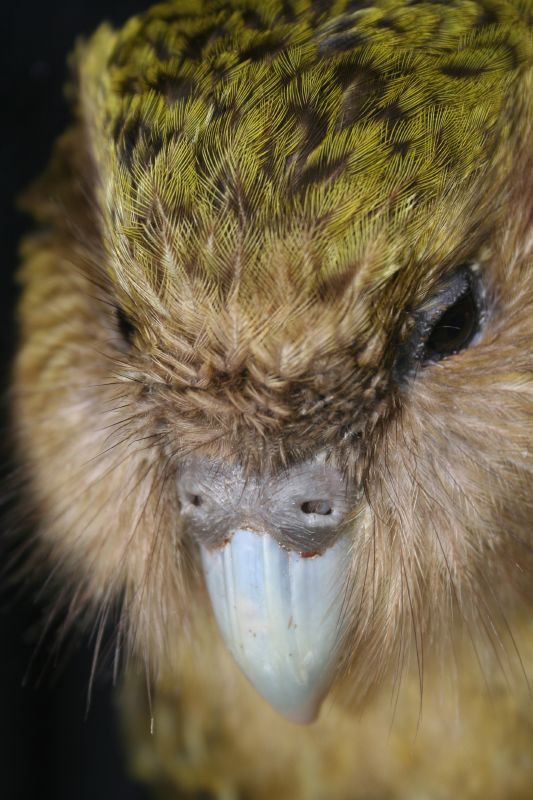
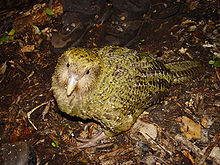
The Kakapo (Strigops habroptila) is a huge, flightless parrot native to New Zealand. It is nocturnal, herbivorous, and can live for up to 120 years. For a bird, it has an exceptional sense of smell and gives off an odor itself. The Kakapo is the only parrot that engages in lek mating, which you can see more about in the hammerhead bat and prairie chicken entries for if you so desire.


As with the elephant bird and cassowary, these guys are excellent seed dispersers. Whole 'kakapo gardens' have been made where the birds reside.

When humans first came to the island, the kakapo was considered the third most common bird on all three islands of New Zealand. As of right now, there are only 122 kakapo parrots remaining.

Not 10,000. Not 9,001. One hundred and twenty-two birds. Each and every one has a name.


That is a really small number. To put things in perspective, the current amount of giant pandas in the wild is 1,590, with the possibility of a thousand more unchecked individuals. You could fit every single Kakapo out there in a room. The birds are currently on two predator-free islands.

You have probably guessed by now that humans were the cause of this bird's sudden decrease in numbers. As previously stated, there were no mammalian predators at all before humans came to New Zealand.


(We won't even get into what the hobbits did.)

The Kakapo, despite looking dorky, cute and helpless to us, was remarkably well-adapted to avoiding the native predators on New Zealand. For starters, it evolved nocturnal behavior; the only nocturnal predatory birds are owls. Its feathers camouflage it well against the forest floor, and if it senses that it has been spotted, the Kakapo will promptly freeze like a deer caught in headlights. This works wonders when your main enemies are visual predators looking for movement.

For those of you who know absolutely nothing about how mammals hunt, dogs rely more on their senses of smell and hearing than vision. Also, they can hunt at night. Shit. (Later, cats and weasels were thrown into the mix, too. See, the Europeans didn't help the issue, but they were not the first people to screw New Zealand up.)

Wait a minute, these dogs belong to the natives, right? Surely they must be doing something for the Great Spirit above by hunting flightless parrots.


Too cute to die.

Uh...no. Not really.

To be fair, there is not much food on an island like New Zealand. The Kakapos were one of the few sources of good meat. They were also apparently a good source of decorative feathers for capes and, disturbingly enough, had their heads used as earrings.


No luck with the earrings.

So Kakapos were made into capes, earrings, and food. Lovely. How innocent are 'native' humans looking, now?