Showing posts with label raptors. Show all posts

Sunday, February 24, 2013

Wild Fest 2013 Coverage!

Today was the 2013 Wild Fest! I had no idea how to get there or how big it would be. It turned out to be relatively easy to find and a small exhibit that fit into a Sunday afternoon nicely. A lot of wildlife centers in IL were present. So, without further ado...pictures!


SOAR (Save Our American Raptors) had a booth at the show. FYI, "raptors" here means "Birds of prey" - let's not go Jurassic Park here. They had a lot of owls, a peregrine falcon (the fastest animal in the world) and a bald eagle. While we were not allowed to touch the raptors, they were still awesome to see. How often do you get up-close and personal with a bald eagle, after all?


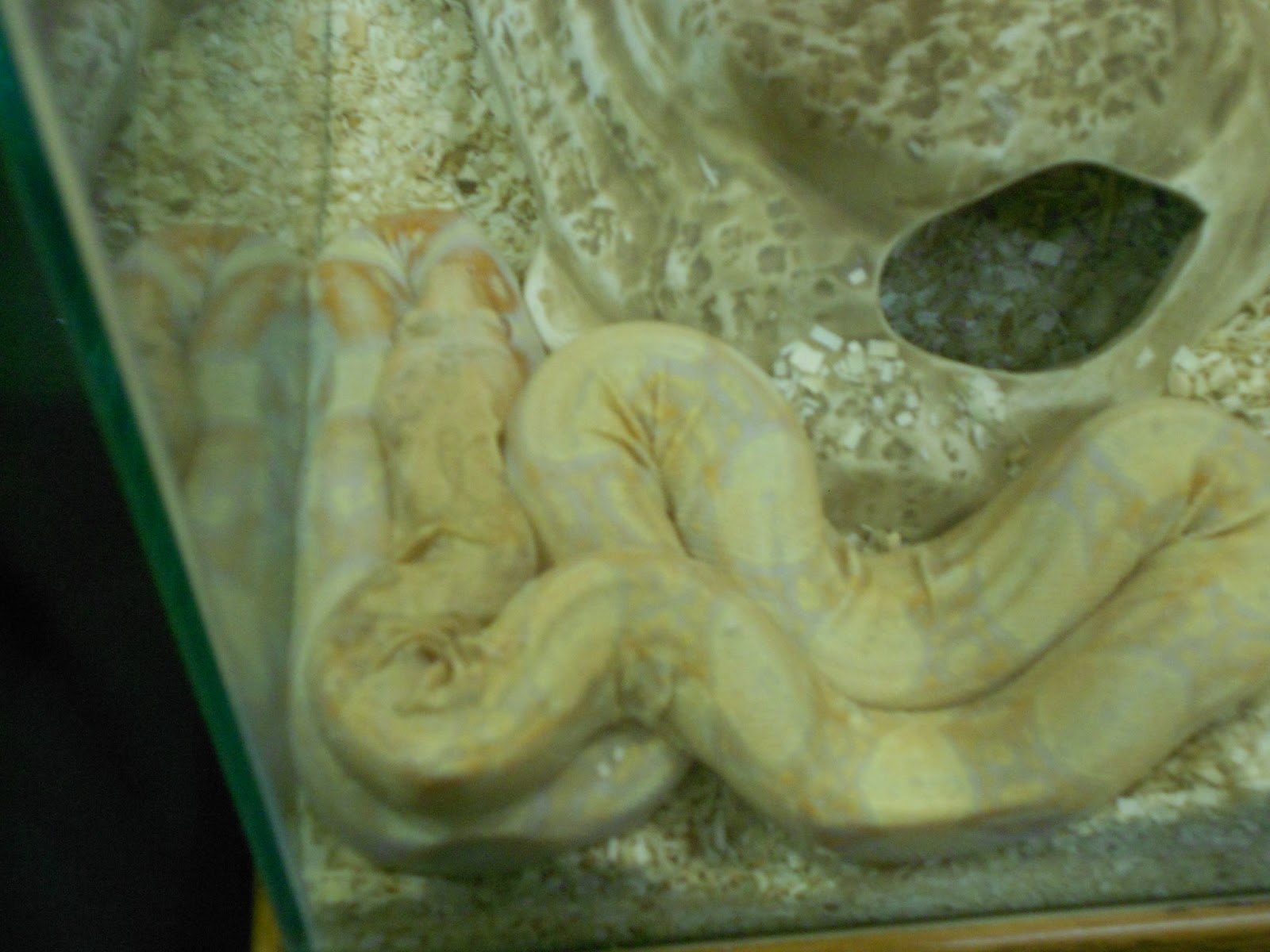
Animals for Awareness had a lot. Parrots, hedgehogs, and an albino male boa were pretty much par for the course. What I did not expect was the kinkajou - a smallish Central and South American mammal related to raccoons. She was very active, so unfortunately, my pictures sucked. Fret not; I will call them about volunteering opportunities.


Incredible Bats was just that: A bunch of awesome fruit bats that people could see right in front of them. Both species (Egyptian and Straw-Colored) were from Africa, which is usually not praised fro its fruit bats. Alas, bats are nocturnal, and these guys were not very interested in the fruit we offered them.


Jim Nesci is something of a legend among reptile people. He uses exotic reptiles for a lot of educational shows and appears regularly at ReptileFest and NARBC. We just missed his big display involving an albino Burmese python. BUBBA was there, too; check out the little girl getting a ride on an alligator's back!


Finally, Big Run Wolf Ranch made it to this awesome exhibition. Neither Shanoa nor Zeus wanted to show up; instead of the standard gray wolf, we got to see Canuck (sp?), a British Columbian wolf. These wolves are actually the ranch owner's favorite, sparting dark coats, brilliant yellow-green eyes, and a white mark on the chest. It's a shame I couldn't figure out how to get my camera to shoot right. Kirby II was there as well.

This was a pretty awesome event, if small. With only so much space to work with and so much time, it's pretty easy to see everything in an hour. Stick around for a show; you won't regret it.

Sunday, December 16, 2012

Creature Feature: Harris Hawk.

When we think "pack hunters," or even "social animals," wolves are usually the first things that pop into people's heads. Next up are dolphins and, by a stretch, Velociraptors. Sure, our image of the Velociraptor has changed over time, but we're still pretty sure they hunted in packs.

But wait a sec. Raptors -the dinosaurs, not the birds - used to be extremely effective pack hunters. Dinosaurs evolved into birds, right? Why aren't there any birds who hunt like that?

Source.


The good news is that there is one type of hawk, the Harris's Hawk (Parabuteo unicinctus), that hunts as a family pack. It is native from the southwestern  U.S. of A. down to Chile and Argentina. The name comes from Edward Harris, a friend of the famous John James Audubon. Birds of a feather flock together, yes?

Harris's hawks are nicknamed "wolves of the sky." They are the only birds of prey that hunt in groups. By that, I do not mean that they mob an animal and call it a pack hunt. We're talking actual, calculated attacks that even groups of humans have trouble pulling off. Here's a look at one hunt courtesy of National Geographic.


Let's look at a little play-by-play of this video: First, one Harris's Hawk sees the jackrabbit. The same hawk then chases the rabbit out of wherever it's hiding. By some clever signaling, another hawk knows exactly where that bunny will run, and has its razor-sharp talons ready and waiting. Bravo, let's have dinner.

Compare this to the lupine strategy. Both wolves and the Harris's Hawks will make their prey run. The stamina of a wolf allows it to run prey down until it is exhausted; the Harris's Hawk knows exactly what direction its prey will flee in. Your mileage may vary on which is more impressive, but I will say this: the genes for pack hunting have been with archosaurs a lot longer than they have been with canids.

Worry not, Jurassic Park fans. Your intelligent, group-coordinating Velociraptors are alive and well. That same cunning and coordination has, as with many traits of dinosaurs, taken to the skies. If you're looking into falconry, yes, Harris's Hawks are easily tamed and very popular; you can get a raptor of your very own.

Tuesday, November 13, 2012

Creature Feature: Burrowing Owl.

Aside from being nocturnal, owls are often depicted as the most human of birds. They have forward-facing eyes and round heads, just like people. Hell, they look almost like natural anime characters with their big eyes and tiny beaks; what's not to love? Sure, the Romans thought they were bloodsucking vampire birds of doom, but at the same time, they were a mascot of Athena/Minerva.


Burrowing owls (Athene cunicularia) have to be the cutest of the cute owls. They are only slightly bigger than a robin - a large-ish songbird, for those of you not in the States. That said, they are still predators, feeding on rodents and invertebrates. Burrowing owls can be found anywhere in the Americas, so there's a good chance you can find adorable owls near you.

These owls are exactly what they say on the can: owls that live in burrows.  More specifically, they form monogamous family units and raise babies in burrows. Instead of digging their own burrows they move into the homes of ground squirrels and prairie dogs, or whatever small burrowing mammal happens to be in the area. They will also use man-made objects such as pipe as a home. If push comes to shove, yes, they can dig their own burrows. They are nothing if not adaptable.


Although no species of burrowing owl are properly endangered, the arrival of Europeans did not treat them well. Cats and dogs are the greatest enemies of earth-dwelling owl. Nonetheless, the owls have adapted well enough to live on golf courses and airports.  They are tough little birds, even if their range has gotten a lot smaller.

Although burrowing owls frequently make cameos, the book/movie Hoot is all about them. In Hoot, a group of schoolchildren discovers a colony of burrowing owls on the site of a pancake restaurant, and the kids try to save the owls from being killed by development. They have also appeared in Guardians of Gahoole and Rango. Popular little birds indeed, but still not as ubiquitous as Hedwig. Ah, well.

Friday, July 15, 2011

Creature Feature: Snowy Owl.

The epic Harry Potter movie saga ended last night at midnight. For those of you curious about the movie, the only thing I will truly spoil is that there were a surprising amount of plotholes and cuts for a movie that took two parts to complete. Also, R.I.P. Nagini - you were one helluva fine reticulated python.

This is not about Nagini. This blog has already covered reticulated pythons. It's about Harry Potter's beloved owl, Hedwig, who died in the last movie.

R.I.P., Hedwig, poor victim of Rowling's axe-craziness.
Snowy owls live all over the Arctic circle. They are most prevalent in Canada, Alaska, and Eurasia. They are Strigiformes, meaning that they are related to horned owls and have one of the most awesome family names known to science. Like all owls, they eat rodents, and are large enough to eat rabbits and raccoons as well. Lemmings are their favorite prey items. See? If all lemmings jumped off of cliffs, these majestic birds would be short a food source.


The most distinctive trait of snowy owls is, of course, their feathers. White dominates the color palette of snowy owls just as it does for many Arctic animals. Even the feet are covered in soft, white feathers. Females have more black mottling on their bodies than males and are also heavier. Yes, this means that Hedwig was always played by a male owl in the films.

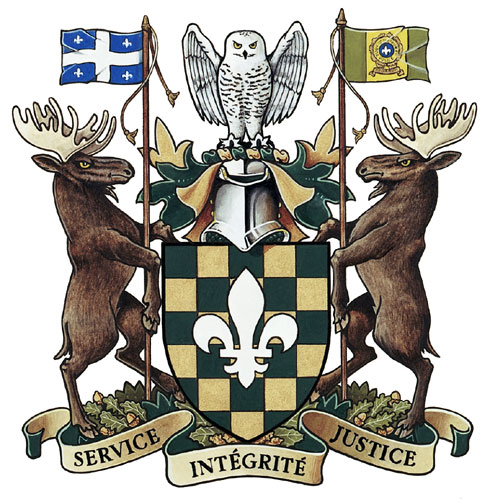
The snowy owl is the official bird of Quebec, a chilly, French-speaking region in Canada. It has appeared on coins and paper money. A snowy owl also adorns the Quebequiose coat of arms along with a pair of moose.


Farewell, Hedwig, and farewell most awesome franchise. I'll miss Harry Potter. Sort of wonder what will replace it on the bookshelves after the fad dies off...

...on second thought, do I want to know?

Tuesday, July 12, 2011

Creature Feature: Barn Owl.

Let's get back on dry land for a moment, shall we? After all, there are plenty of perfectly strange things on our surface world.

Owls always have an interesting place in human culture. In Japan, they are carved everywhere because the word for owl sounds like one of the words for happiness. The Romans thought owls were vampires ("striges;" thus the term "strigiformes" for the order of owls) even though they were also the sacred bird of Athena/Minerva. The overall impression is of a nocturnal, intelligent bird with a cute little beak, an oddly human face, and the ability to scare the crap out of people. In modern times, the association with witchcraft still stands.


You've got mail, Harry!

The Barn Owl (Tyto alba) is one of the most common owls in the whole world. It is so named because it often hangs out around barns to eat the tasty little mice therein. It has a pale, heart-shaped face, excellent hearing, and wings that are almost silent in the night.

The Barn Owl in particular also gives one perfectly good reason to believe that owls are true night spirits. They have a very humanlike face that gives them an 'uncanny valley' feel, which puts some people off. Some rural communities go so far as to call Barn Owls "Death Owls," "Demon Owls," and "Ghost Owls." A lot of the birds die because of the association with evil. There may well be a reason for this:


OK, y'know what? Somebody needs to use that screech in a movie. That is one of the single most intimidating displays you will ever see from an owl. It's even more intimidating when combined with bobbing, a motion used to make the owls look scarier, and beak-clicking. Well, their scare tactics are working:


...Yeeeeaaah, this thing should replace the black cat as the usual witch's familiar. Look forward to another owl on 7/15 - the release date of the last Harry Potter movie! MIDNIGHT SCREENING FTW!

Monday, July 4, 2011

Happy 4th of July: Bald Eagle.

For those of you living in the U.S.A...HAPPY 4TH OF JULY! For those of you in Britain, we have been guilty of tax evasion for a very long time, and we're not sorry.

What better way to kick off a week of Creature Features than with America's national bird? It's big, its bad, it's beautiful: It's the Bald Eagle (Haliaeetus leucocephalus).


The Bald Eagle is native to the United States. All over. If you live in the U.S., you can see bald eagles somewhere in your state. They range all the way from Alaska to northern Mexico, placing the bulk of the population smack in the good ol' U.S. of A. It is most clearly distinguished by its striking white head (which was how the bald eagle got its name) and large size. Females are heavier and larger than males.

Bald Eagles are sea eagles, meaning that they are adapted to hunt fish. Naturally, they prefer habitats along coasts, lakes, rivers, and other bodies of water. Their favorite fishes are trout and salmon. Even evolution isn't foolproof- sometimes, a bald eagle will fall into the water and die of hypothermia in an attempt to catch a large fish. Bald Eagles are in constant competition with mammalian predators and the Golden Eagle, another, far more versatile eagle.


Oh, and man. Can't forget man. Bald Eagles have always been very sensitive to human presence. Recently, there was an event that really drove this sensitivity home.

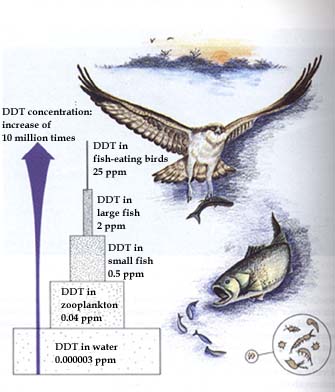
Bald Eagles (and all other North American raptors) were hit hard by the pesticide DDT. DDT was originally invented to keep mosquitoes at bay. Trace amounts of this pesticide spiraled up through the food chain via an effect called biomagnification. Small animals had small amounts of DDT in them, meaning that bigger animals had even more DDT! The result was a sharp decrease in the viability of the eagles' eggs (weaker shells, sterility, take your pick).
Not a Baldie, but you get the point.

By the 1950's, there were only 412 nesting pairs of Bald Eagles in the whole continental U.S.The bald eagle was put on the Endangered Species List in 1967. The eagle population rebounded after a ban on DDT in 1972, and it was finally removed from the Endangered Species List in 1995. The Bald Eagle is currently considered to not be under any threat, but there is still a safety net of legislation protecting it.

We almost made our national bird extinct in favor of wiping out mosquitoes. Nice work.
You have got to be kidding me.

Now for the big question: Does the Bald Eagle really fit what America stands for? In that it is a powerful apex predator, maybe, but apex predators are favored as mascots and emblems in any case. The founders specifically chose an eagle to facilitate comparison with the Romans. Perhaps Benjamin Franklin was onto something when he suggested that we pick the turkey instead because it wasn't as much of a dick. What are your thoughts (even though I'm a day late on this)? Post your comments below!

Friday, February 18, 2011

Creature Feature: Lammergeier.

Wow. The title of today's entry sounds like it should be on a Rammstein album. If I told you that this bird fed primarily on the bones (not the meat - the bones) of other animals, it would probably sound like some gothic wet dream (or Greek mythology...but more on that later). It is very real, and just as hardcore as it sounds.


The Lammergeier (AKA "bearded vulture" or Gypaetus barbatus), surprise, surprise, has a decent range in Europe. It also lives in Asia and Africa. Its closest (and only) living relative is the Egyptian vulture, who will get an entry for its very own one day. Both members of this particular order of raptors are sufficiently unique to warrant their own entries, so enough about taxonomy. The main distinguishing trait these two birds share is a strange, elliptical tail visible when the bird is in-flight.

Lammergeiers, like many vultures, circle above dead prey before eating them. They live primarily off of carcasses, but will also eat live tortoises. In both cases, it has a rather bizarre way of getting to the sweet, stem cell-breeding bone marrow that comprises 90% of the bird's diet. Besides swallowing the bones whole, that is.


Both the Egyptian vulture and the bearded vulture like getting into tough prey; the Egyptian vulture uses rocks to crack open hard ostrich eggshells, an impressive instance of avian tool use, and the Lammergeier, when it encounters bones too large to swallow, flies up and drops the bones from above to crack them. It will also do this with live tortoises. Smart bird; compare crows using electric trains to crack open hard-shelled nuts and shellfish.


The Lammergeier's habit of dropping tortoises from the sky may have caused the death of Aeschylus, a Greek playwright. Aeschylus was a tragedian; among his most notable works are the Oresteia (a trilogy containing the Agamemnon, The Libation Bearers, and The Eumenides), The Persians, and Seven Against Thebes. His death is notorious; although it is usually said that an eagle dropped the infamous tortoise upon his head, the Lammergeier does this on a regular basis. There just so happened to be a human in the way at the time. Either that, or the Lammergeier preferred comedies.


Tomorrow: A squirt-gun sniper.


Sunday, September 26, 2010

Creature Feature: Secretary Bird.

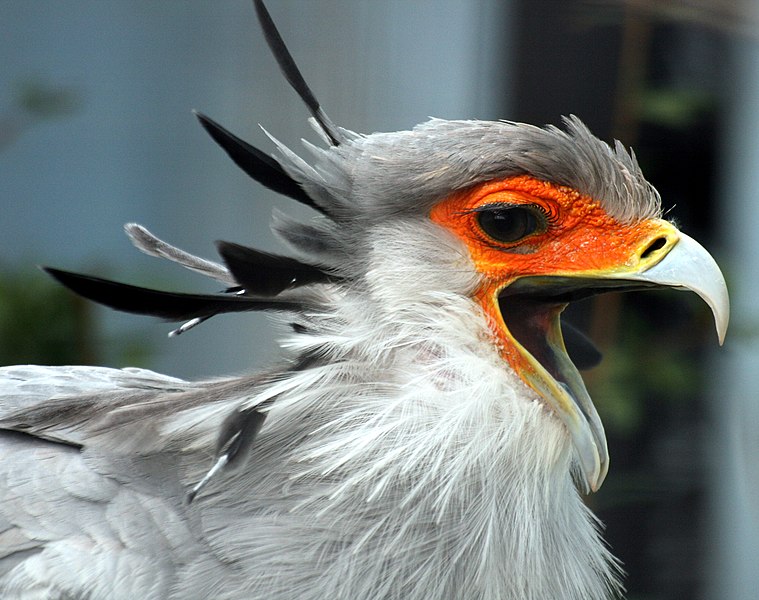
Oh, hey, speaking of things that look like dinosaurs but aren't, here's a secretary bird.


If you want evidence that birds came from dinosaurs, look no further than the secretary bird (Sagittarius serpentarius). This cursorial hunter (remember the Java green?) is native to the plains of Africa. No, it does not take notes for you; supposedly, the name comes from the quill feathers on the bird's head. Its generic name is Sagittarius, "archer," also relates to the bird's head feathers resembling a quiver of arrows.


Disney, you could've shown one of these off in The Lion King. Most badass secretary ever.


This thing is a raptor in both senses of the word: It is both related to birds of prey (called raptors) and looks like a feathered dinosaur. Specifically, secretary birds are related to kites, buzzards and vultures.

The secretary bird is renowned (and, of course, praised) for killing snakes. Unlike the crested serpent eagle from China, secretaries do not just kill snakes - they stomp them. They even go nuts with fake snakes.


Call me crazy for linking a Spanish vid if you like...damn if the baby secretaries aren't cute, though.

The secretary bird also has one of the weirdest bird calls I have ever heard in my life. It's not a whistle, screech or song. It's...it. It sounds almost like a very large frog croaking and I cannot find a single soundbyte of it.