Showing posts with label Big in Japan. Show all posts

Sunday, January 29, 2012

Big In Japan: Shirohebi.

Final entry of the week! After sooo many mammals, it's about time we did something at least slightly creepy, no?

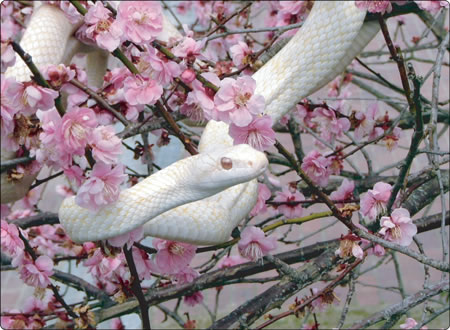
Property of www.shirohebi.com.

...What? Some people I know are terrified of snakes. They will not come anywhere near Eros, my snow corn, who looks like she was pulled off of a Valentine's Day card. Color means absolutely nothing to ophidiophobes. Culture, especially Asian culture, would tend to disagree with such people, especially in regard to white snakes.

Even though snakes are usually vilified, there are two that tend to be exceptions to the rule: cobras and pure white snakes. Cobras have the badass hood (and king cobras eat other snakes for breakfast); white animals in general have this sense of holiness attached to them, in part because white animals rarely last more than two seconds in the wild. White snakes are no exception. China and Japan both love them.

The DVD cover for a box set of a TV series retelling the story of "Madame White Snake" - a Taiwanese folktale that evolved from a horror story to epic spirit romance. Not Japan. Still a kickass white snake.


In Japan, white snakes are considered lucky. They are seen as messengers of the goddess of love and fortune, Benzaiten, who was adapted from the Hindu Sarasvati. Depending on who you ask, Benzaiten either has a dragon (read: magic snake) as her consort or slew him (if you follow the Sarasvati tradition). Regardless, the close affinity between her and various serpents led her to be pictured with a white snake on several occasions. Seeing a white snake is almost as good as catching a leprechaun in Japan...only better, because Iwakuni, a small town near Hiroshima, is chock full of them.

Shirohebi are an albino variation of the Japanese rat snake (Elaphe climacophora). The regular E. climacophora, or aodaisho ("blue general") is one of the most common rat snakes in Japan- sort of like their version of the corn snake. (I have, however, seen it mistranslated as 'garter snake.')  Iwakuni is the only place with 'official' Shirohebi, although one can still buy albino climacs from Kunisir Island. Nobody quite knows why the white population has flourished (there are still a LOT of cats there), but having the misty atmosphere from Lord of the Rings is a good start. I call divine intervention.

So, what is one to do with a town full of white snakes? Make it a tourist trap, of course! I have personally been to Iwakuni, the only place in Japan with a wild albino Elaphe climacophora population, and they love their white snakes. The Shirohebi charm I got there still lives on my phone. Businessmen really do go there to pray to the snakes. They even have Shirohebi parades. Snake-lovers, Benzaiten has heard your wishes.


Shirohebi are nationally protected. Like the Iriomote Cat, they are listed as a national treasure. People are not supposed to take the white snakes out of Iwakuni, but they do anyways. This protected population is shrinking (again). There are still some wild Shirohebi, and captive breeders are doing their best, but please do not take anymore out of Iwakuni. Steal from that little island that's not quite Russia instead.
Go to Russia or face Kanako's wrath. (BTW, anyone know who drew this?)


Saturday, January 28, 2012

Big In Japan: Iriomote Cat.


Japan is notorious for many things: A hard language (which really ISN'T that hard), animated porn, sushi, giant robots, more animated porn, and decent beef, to name a few. One of the lesser talked-about aspects (usually within animated porn) is catgirls. Catgirls have come up a few times on this blog, usually as "what has science done?" examples. That, and the author finds them kinda adorable.

For today's animal, however, the catgirl serves a different purpose: Ichigo, the almost nauseatingly-cute catgirl above, is based off of a very rare Japanese wildcat. After looking into it a bit more, the author of this blog found that Ichigo just barely looked like the Iriomote Cat, but making a tribute to such a rare animal was still a lovely gesture. Apparently the same cat also made a cameo in Azumanga Daioh with more accurate markings. 

IRIOMOTE CAT


And here's a real one.


The Iriomote Cat (Prionailurus bengalensis iriomotensis) is a small wildcat that does, indeed, look a lot like a regular housecat.As its name indicates, it is found exclusively on the (tiny!) Japanese island of Iriomote. It is an opportunistic predator that can usually be found near water. (Unlike domestic cats, they love water and catch their own seafood.) The Iriomote Cat looks a little strange, but it'd be easy enough to confuse one of these kitties for somebody's pet.

The Iriomote Cat may look like a normal house cat, but don't let size fool you. The Iriomote Cat is, genetically, probably one of the first felids to ever walk the earth. It has weird teeth and non-retractable claws as well. It has been called a "living fossil" and sports the status of "national treasure" along with tomorrow's creature. Precious cat is precious.


Unfortunately, the Iriomote Cat is getting more and more elusive. There are less than 250 individuals alive today, meaning that it definitely merits its "Critically Endangered" status.  That number is only shrinking as feral cats mate with these wild cats, diluting the gene pool. Human habitation and road-building are also causing problems. There is no captive breeding population, so, like the panda, this cat has an extremely low chance of surviving past this century. Maybe an Iriomote Catgirl is not such a bad idea after all...just watch out for those claws!

Thursday, January 26, 2012

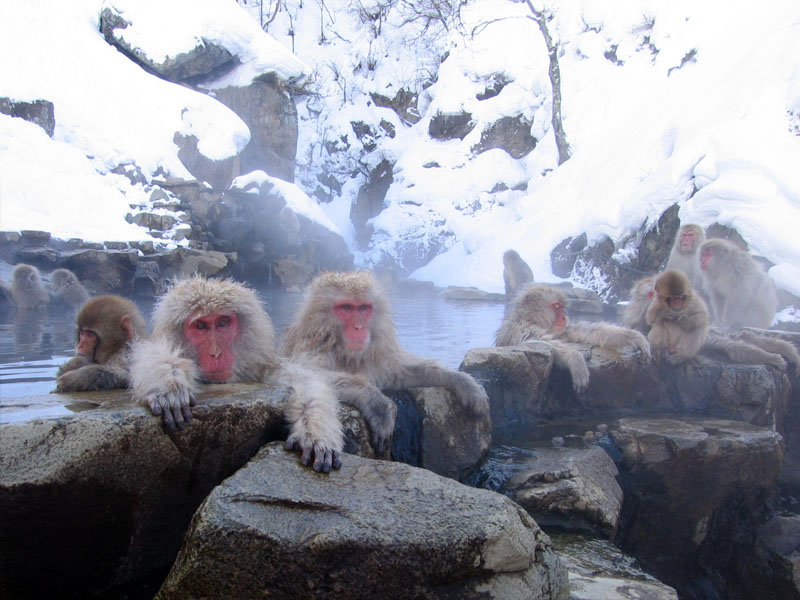
Big In Japan: Japanese Macaque.

We've said it several times: This blog does not have enough monkeys. The author is not particularly fond of most of them. So, when an interesting monkey comes along, you know it had better be a darn cool monkey.


The Japanese macaque is, in fact, the coolest monkey. Besides being from Japan (which is already pretty cool), it is not on the endangered list, can eat almost anything, and enjoys plenty of popularity in Japan's native culture. Yes, we know the Chinese Zodiac was made in China, and so was Journey to the West- the basis for the ever popular Dragon Ball series. They are, however, featured in a few Japanese folktales and can be used to describe particularly affectionate or horny people.

Japanese macaques are the only primates native to a cold climate. Aside from humans, no other primate lives as far north as the macaques. (Seriously, look on a map - Japan is pretty far north compared to Africa and the Amazon, two other places famous for monkeys.) Japanese macaques can be seen huddling together in blizzards for warmth, although we are pretty sure that having fur helps, too. The constant use of their wintery image has sometimes led to them being called "snow monkeys."

The snow monkeys also happen to be super intelligent - even by monkey standards. They have been observed washing food like raccoons - repeatedly. Groups of macaques mere miles apart can have amazingly different dialects. As play is a sign of intelligence, these monkeys have been known to roll in the snow and make snowballs (which are far more sanitary to throw than certain other things). By the way, these monkeys also like hot springs in winter- just like people!


Much to the delight of feminists everywhere, Japanese macaque groups are matrilineal. Everything in a macaque clan centers around the female. When time comes to mate, the female decides, making, ah, nonconsensual sex apparently nonexistent. They can and will mate with multiple males when the time is right.  They're even more vocal; like women at a beauty parlor, these monkeys will chatter to each other while grooming. Before you ask: Yes, these monkeys do have lesbians.

Prior to WWII, the biggest threat to these monkeys was habitat loss. As civilization continues to expand, humans will encroach upon the territories of these monkeys. Macaques on the edge of civilization have completely lost their fear of humans. There was one instance of a monkey living in central Tokyo for months. Whether this newly-found proximity is a good or bad thing remains to be seen. Let's hope that they do not become as naughty as the Japanese crows...

Wednesday, January 25, 2012

"They Actually Eat That:" Dolphin.

Japanese schools used to have a fine diet plan: "Something from the mountains and something from the sea." Japan does "something from the sea" wayyyy too well for its own good. If it is from the sea, they have tried to eat it. We've already covered fugu and eel, probably the weirdest things that Japan is known for eating...


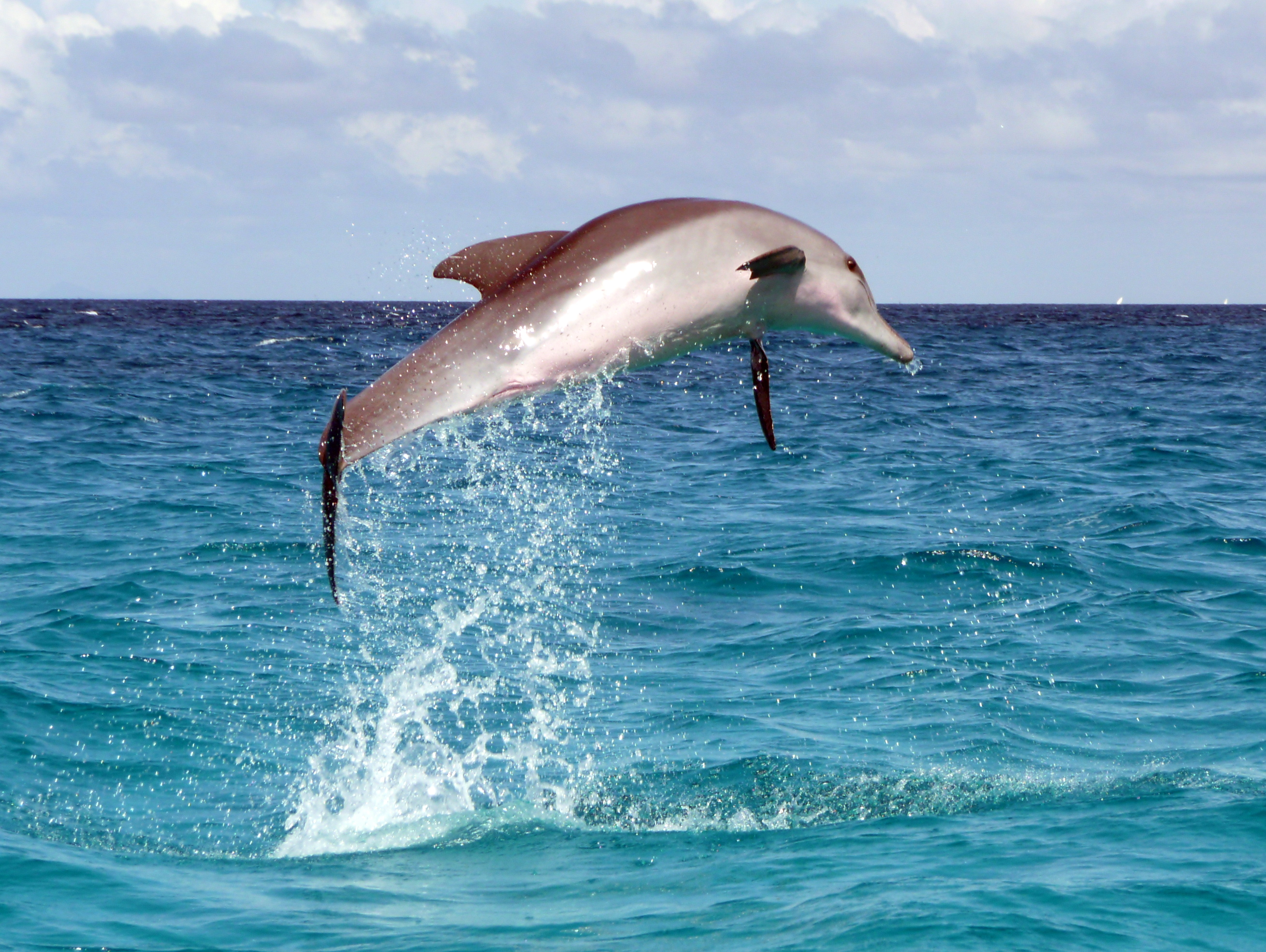
Oh, right. Totally forgot about dolphin. Yes, there are some people in Japan that treat the stars of "So Long and Thanks For All the Fish" as yet another thing from the seas to be eaten. Just to be fair, Peru and the Solomon Islands also hunt dolphin. Dolphins can be either netted by accident or driven onto beaches by boats. Either way is pretty sick, so feel free to use your imagination on this one...although the latter is more common for systematic slaughter. 

The good news: The practice of eating dolphin is not widespread in Japan. Only a few poor fishing regions eat dolphin on a regular basis. Even then, dolphin is not cuisine by any means. It is certainly not shark fin soup. It is really only popular in one place, but people outside of that place love dolphins so much that pics like the one below are all over.


Exactly one town, Taiji, is enthusiastic about hunting dolphins to the point where they tried to popularize it. There were a number of reasons that they failed, the least of which is that dolphins are the most adorable rapists ever. Eating cetaceans is such a big thing for them that they have dolphin sashimi and humpback whale bacon. The kids in Taiji grow up with favorite dolphin and whale meats. They see dolphins as swimming beef, basically, and are irked by foreigners who do not respect the traditional Taiji diet. Most other people in Japan are horrified at what goes on in Taiji - assuming they learn about it at all.

However.

Some seafood companies, likely netting a few unfortunate dolphins by accident, figured out that  dolphin meat could be passed off as a cheap substitute for whale meat, which is more frequently consumed and quite expensive. This is probably as low as such companies can get. Oh, and consuming dolphin or whale meat is potentially dangerous.

Yep, screw humanity.


Cute factor aside, dolphin meat is not even safe to consume. Not only is the sea around East Asia horribly polluted, but dolphins have a lethal amount of mercury in their bodies thanks to bio-accumulation. (We do not know how the Taiji people are still living; they had 6 times the amount of mercury in their systems as the average Japanese person.) DDT, the same pesticide that pushed raptors to the brink of extinction, has also been found in dolphin and whale meat. Karma? You tell me.

Tuesday, January 24, 2012

Big In Japan: The Japanese Wolves.

Is there any animal more overrated than wolves? We mean this in the best and worst senses: either wolves are the meanest, nastiest, most powerful nemeses around, or they are sweet, gentle, timid creatures that were as unfairly persecuted as Native Americans. There is no middle ground. Oh, and by the way, Balto lied to us as kids on so many levels. (When we make an entry on wolfdogs, we will cover him more thoroughly.)

Now, to be fair, wolves are among the few animals that humans have attempted to eradicate. Teddy Roosevelt unleashed a mange-carrying parasite among American wolves that quickly spread from one wolf to the rest of the pack. (Among other animals with systematic eradication policies are snakes (many people down South will kill a snake on sight - regardless of species), invasive Australian rabbits, and the Tasmanian Tiger (which we realized was awesome too late.)) "Wolfaboos" will often cite eradication of wolves as evidence for us to love them. We have to admit: Infecting a lot of them with sarcoptic mange was pretty mean. Now we know how important wolves are. Get off our backs about it.

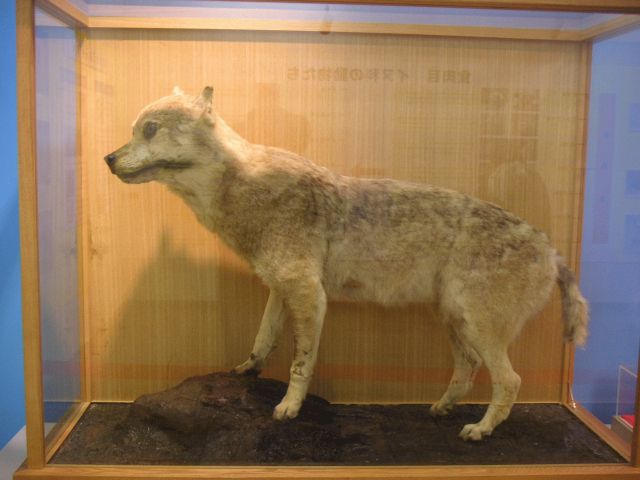
In present-day Japan, wolves are darn near divine. This is largely because both of the wolves Japan had are officially extinct (although the shrines to them likely predate at least one extinction). Calling the wolves ookami (a homophone for "great god") is their way of saying  "we're very sorry."

Did we mention Japan loves homophones?


Unlike the Western Big Bad Wolf, the ōkami is generally a benevolent spirit. If dealt with wisely, it can be an honest, pure creature that protects its new friend from other wolves. Other wolves that encounter stupider humans may become the same man-eating monsters as found in Grimm's fairy tales. People protected by the ōkami will generally leave it an offering of beans and rice. Disclaimer: THE AUTHOR DOES NOT ENDORSE TRYING THIS WITH CORPOREAL WOLVES AND IS NOT RESPONSIBLE FOR ANY LIMBS LOST.


We do, however, admit that both of the Japanese wolf subspecies were hunted down like their American counterparts. The reasoning is also similar to the situation in the U.S.: ranchers had issues with the wolves eating their animals. In the Meiji Period, the government officially used chemical warfare against the Hokkaidō Wolf (C.l.hattai), which was already suffering from habitat loss. It was officially declared extinct in the late 1800's.


The other Japanese wolf, the Honshū Wolf (C.l.hodophilax), was a much smaller variety and is considered the Japanese wolf. Hardly a threat to ranchers at a little over a foot high, environmental threats pushed it closer and closer to human habitation. Farmers still shot the mini-wolves if they got too close. Many of them also acquired rabies in 1732. The chibi-wolf was officially declared extinct in 1905. It lives on in spirit, but not in body. In other words, Wolf's Rain already happened.

Not too sure about the human form thing, though. Or the albino chick.
 

As with the sightings of the Tasmanian Tiger, there exist sightings of Japanese wolves. This entry is not about saving the wolves, however; as long as we aren't eradicating them, they will be just fine. Relax.

Monday, January 23, 2012

Bio-Spot: The Meguro Parasite Museum.

Hello, Monday! Monday is Bio-Art day, but this Monday also starts "Big In Japan Week." That means every single entry will relate to something from Japan. This entry is no exception. (I decided to change it from "bio-art" to "bio-spot" for this one simply because not everyone would consider gift shop trinkets and a folded giant tapeworm artwork.)

As Bogleech rightfully pointed out, Japan is more fascinated with life than any other nation I've been to. Both the adults and kids were excited to see "Lion-san" at the Ueno Zoo. Apparently, they have a stronger science curriculum as well, covering all sorts of life forms that schools in the U.S. will not touch. They also possess the world's only known parasite museum. 


 Meguro is a suburb of Tokyo that has spectacular cherry blossoms every year, but the Meguro Parasitological Museum by itself attracts attention. It was established entirely by doctor Satoru Kamegai in 1953. Since then, it has been grossing out Westerners while proving one of Japan's most popular date spots. Only in Japan would they consider posing near a giant (8.8 meter) tapeworm an idea for a good date.


The museum is divided into two floors. The first has maps showing where certain parasites come from, as well as a general overview of parasites. The second sports all sorts of parasite specimens, showing their various life cycles and, sometimes, fully-preserved hosts. Somewhere, there is also a cafeteria with sushi. We do not think they deliberately put anything in there to go along with the theme, but after seeing the sorts of things that live in fish, it may be better not to eat the sushi. No offense meant.

So, where does the 'art' come into this? Parasites are extremely hard to take care of in a laboratory setting. That means that many specimens have to be mounted, which Japan happens to be good at. That tapeworm is more impressive folded like that than it would be in a jar, right? Plus, hey, they made a tapeworm T-shirt and sealed actual parasites into plastic. Stop making me want to go back to Japan, Meguro.

As the official site says: "Try to think about parasites without a feeling of fear, and take the time to learn about their wondrous and resourceful way of life." Good advice!