Showing posts with label Freak Week III. Show all posts

Sunday, September 25, 2011

Freak Week III: Ankara Kedisi.

Ah, time for the hardest part of Freak Week: that one last entry to round it all out. Since last Freak Week, I have found a lot of breeds that would have made for interesting entries. The two candidates for today's entry were another cow and a certain very precious type of cat.

That said, have a kitten snapped with my own camera:

Before you gasp at how inhumane it is to put a cat in a cage like that, that little white kitten is very special. He and his cagemates are pure white, and considered precious and rare enough that the Ankara Zoo has a breeding program just to keep the cats alive. If the name "Ankara" was not enough of an indication, yes, that little fuzzball will one day become an elegant Turkish Angora cat.
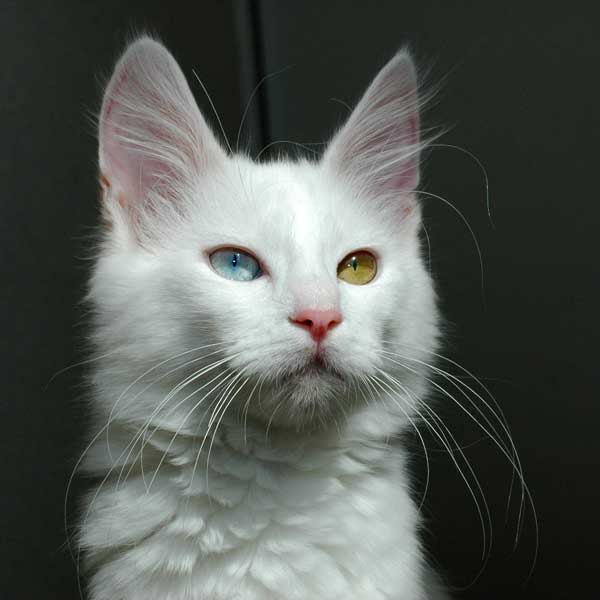
 

The Turkish Angora was developed in central Turkey sometime between the 14th and 16th centuries. This cat is most known for its long, silky coat and plumed tail. It was bred with Persians (those longhair cats that look like they have run face-first into brick walls) to the point where the breed almost died out. They were recognized as an official breed in 1973.

Although Angora cats can come in almost any color, for a long time, only the pure white Angora was showable. If you have been keeping up with my 'white animal' entries, the usual drawbacks to being white include deafness, impaired vision, or both. Some Angora cats are deaf; in cats with heterochromatic eyes, only the side with the blue eye will be deaf. Many Angora cats can hear just fine, and even deaf Angoras can lead perfectly normal indoor cat lives. (The same CANNOT be said of Dalmatians, by the way.)

These cats are actually creepy after a while.


The Turkish LOVE their Angora cats. White cats like the kitten at the zoo have been considered a national treasure by the Turkish government since the 20th century. Especially prized are those cats with one blue eye and one eye of another color. All over Ankara, there are giant statues of furries Angora cats, all white with odd eyes. Even the logo for Ankara exemplifies its unique cats.


At least they know how to market themselves.

Saturday, September 24, 2011

Freak Week III: Egyptian Mau.

"Thousands of years ago, cats were worshipped as gods. Cats have never forgotten this."-  Unknown. 


Most people who like cats know that the Egyptians loved cats. Along with being the first people to 'domesticate' the cat, they had a cat goddess named Bastet. Keenly aware that the cat was still a wild animal, Bastet had a dark side, the lioness Sekhmet. Say what you will about the incest in their pantheon, but they had cats right on the money. 


Without getting into hybrid cats, Egyptian Maus are easily the most exotic-looking breed of cat around.  They are the only naturally spotted breed of cat, possessing cheetah-like spots even beneath their fur. They also run like little cheetahs - up to 36 miles per hour, which, for reference, is about as fast as a giraffe. 

Besides a nearly unchanged look compared to ancient Egyptian depictions, the Mau has several genetic and behavioral differences that suggest a wilder ancestry. The Mau distinctly prefers hotter temperatures, much like its native climate. Besides meowing, Maus can also chirp and chortle. Like ancient dog breeds, Maus are very loyal and intelligent, but usually only bond with one or two people. Finally, they are excellent ratters - as well as snake-hunters if the image below is any indication.


Like most breeds of animal, Maus can be put up for show. However, only the bronze, silver,and smoke can be shown (because markings must be visible). The eyes must be green. Black and pewter are still used in breeding. If you want a cheap, but still classy-looking Mau, go for a black one. It will look more like the modern perception of Bast - spotless. 

Friday, September 23, 2011

Freak Week III: Shar-Pei.


Wait. Wait. You said Thursday would have a tough dog, right? That is not a big, mean, tough dog like a Rottweiler or pit bull. That is a giant Beanie Baby made real.

Actually, the Shar-pei is one of the most ancient dog breeds in existence. As the name might suggest,  this breed originated in China, and has a black tongue like the Chow Chow. Shar-pei are known for their baggy skin (especially as puppies), courage, and rarity. This does not mean that there are no puppies waiting to be hugged.


Adorable though those wrinkly puppies may be, they still show the Shar-Pei's fighting lineage when playing. The loose, rough skin of the Shar-pei allows the dog to bite back if the skin is grabbed, giving it an advantage in the dog pits. Fighting Shar-pei was reserved for the upper classes in China; among peasants, the Shar-pei was used as a guard dog, cowherd, and boar hunter. That thick skin has multiple applications!

The Shar-pei's unique skin is a mutant form of the gene coding for hyaluronic acid, a substance found in the skin, connective tissues, and brain matter.  A similar malfunction can occur in humans, also leading to excessive wrinkles. This sounds like the best job ever .

As one might imagine, overbreeding for wrinkles causes considerable problems. The "Western" Shar-pei is known to have its own disease, Familial Shar-Pei fever, due to overbreeding for adult wrinkles. They are also notoriously allergic to any grain-based dog foods, again probably due to that strange skin. It is important to find a good Shar-pei breeder if you wish to acquire one of these strange dogs, so research research research!

Wednesday, September 21, 2011

"They Actually Eat That:" Truffles.

Forgive my lateness. Had to stay up at campus a little later on Wednesday, but don't worry, I would never miss a chance to show you all some seriously weird food. This is a little bit hard during Breed Week - whoever would admit that certain breeds are good for food? Even if they are, most of them are not remotely weird. (The Belgian Blue is an obvious exception.)

So this is something different and tangentially-related to domesticated animals.


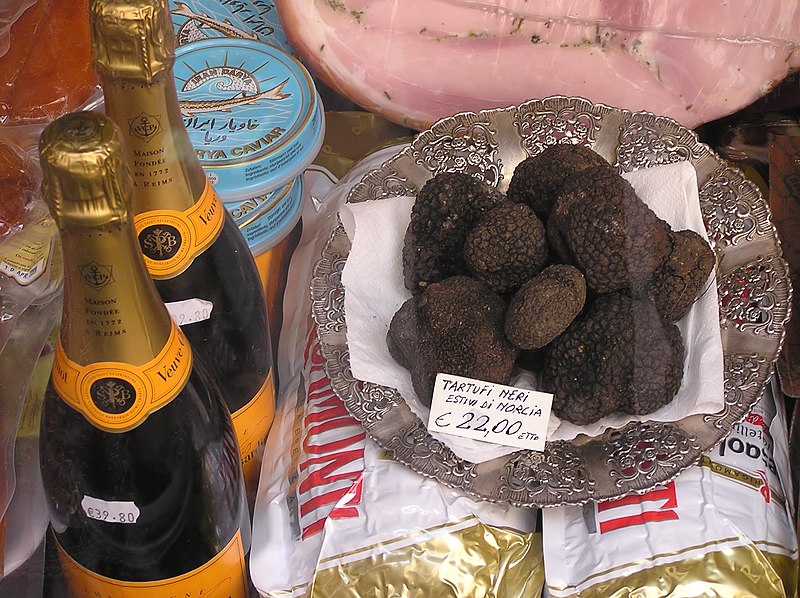
Connoiseurs of my blog have probably heard of the fungi called truffles. Besides being a delicious chocolate treat, truffles are a type of fungus usually found near the bases of various trees, particularly oak, beech, hazel, and pine. The European black and white truffles are delicious, but very, very expensive. Chinese truffles are often used as a cheap substitute.

Truffles are not domesticated, per se. They can be farmed (Australia has had the best luck), but are not sufficiently differentiated enough from their wild counterparts to be considered breeds. Truffle fields return to wildness easily, sending the search for easy truffles back to square one. These things are so hard to find that humans need special animals just to discover them, thus explaining the price tag...


...even though piggies can find them no problem.

The classic way to find truffles is to get a healthy sow and take her out for a little walk. Since truffles smell like a horny boar's saliva, the pig's sensitive nose will pick up the scent. Sows can smell the fungi up to three feet underground. We can only imagine that her desire would be doubled if she herself wanted some lovin'. As one might expect, pigs do sometimes eat the truffles. If your Playboys came with a hamburger inside the pages, you probably would, too.

Japan has the right idea.


Of course, pigs are not the only animals with a keen sense of smell. Dogs, specifically the Lagotto Romangolo (Romagna Water Dog) can also be trained to sniff for truffles. The Lagotto breed has been in the business for only 100 years, which is a short time compared to ancient Roman truffle hogs.

You can also tell it's hypoallergenic because of its poodle-ish fur.


For the record, yes, I have actually eaten truffles. If you want to try some good ones, they have truffles in everything in Piazza Navona, a certain square in Rome. They put truffles on pizza, in fettucine, and have a godly gelato called tartufo- no real truffles involved, just using the name. Truffles are delicious, but I personally would not go into any pig sties after eating them!

Tuesday, September 20, 2011

Freak Week III: Pit Bulls.

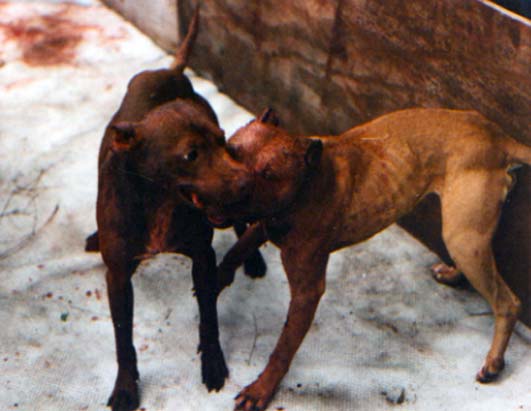
Pitting animals against each other has been around since the dawn of man. It probably started when one man said, "dude, let's start placing bets on what ram's gonna butt the other harder" or some such similar wager. Soon this evolved into putting domesticated animals against each other in high-stakes matches. Modern examples include monkey fighting, various types of bug-fighting and cockfighting.

Oh, and dog fighting. Can't forget that.


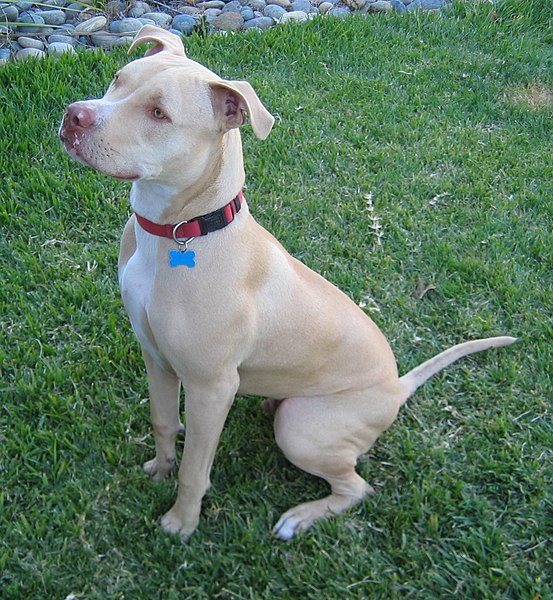
The American Pit Bull Terrier has become the Western world's poster child for dog fighting. Although the title says "American," the founding stock is from the United Kingdom. The term "pit bull" can technically vary in meaning depending on the area, ranging from the APBT to any dog in the molosser group. For now, we will be discussing only the APBT, which is most easily identified by its bigger-than-average head.

My head's not big!


In its early stages, the pit bull breed was used in bull- and bear-baiting. "Baiting" of these animals consisted of many dogs ganging up on the larger, enraged beast, which was usually tied to a pole just to be sure the dogs would win. After these sports were effectively outlawed, rat baiting and dog fighting became more popular, resulting in the pit bull we see today. Pit bulls have also been historically used for herding and delivering messages in both World Wars, and can be fine, loyal, perfectly gentle family pets.

Pit bulls, even mixes, have a reputation for being vicious. After their popularity as pets declined, their reputation as fighting dogs skyrocketed. This is not entirely unjustified; pit bulls and pit bull mixes take home the dubious award of having the most dog attacks to their name (and this year isn't over!). If pitties scored higher than Golden Retrievers on temperament tests, we sure don't want to get in the way of a Golden.

This does not mean that they are bad dogs. 


 I have met pure pit bulls. They act just like every other puppy as puppies. Even the adult pits I have met were not bad dogs. As per Wikipedia, fighting dogs are bred to be gentle around humans, but vicious towards other animals - emphasis on "gentle around humans."  This more or less coincides with my own experiences with pits and pit mixes.

Alas, it's not that simple. Pit bulls were bred to fight, and, although it is fine if you do not raise yours to fight, realize that some people buy pit bulls because they were bred to fight.  For example: The one pit bull I did see with a full butcher shop was owned by a guy sporting tattoos and piercings. I am not saying that he was a professional dog fighter or anything, but he certainly wanted to look tough. (I have also heard that some people refuse to neuter their pets because it feels like they are castrating themselves.) The owners of (pure) pit bulls may well be looking for tough dogs, whether they intend to fight them or not.

Go ahead. TRY and ban this face!
 

This coincides with "there are no bad dogs, only bad owners." Pit bulls used to be perfectly fine to keep as pets, but after their popularity declined, they became seen as fighters more than lovers. The reputation that pit bulls currently have is enough to make one worry around them - especially if one sees a pitty with his junk still in tact (there are a number of rather unsavory explanations for that). It's not that the dogs themselves are bad, but one must wonder what the owners intend for them.

Banning will not stop anything that supposedly comes with pit bulls. There will always be blood sports, no matter what legislation you make. There will always be people using their dogs to prove that they, as people, are superior. Even if pit bulls were banned, chances are that things like Rottweilers would become their replacement as a "tough dog" with aaaalllll the strings attached.  

Well, Rottweilers...or Thursday's furry freak.

Monday, September 19, 2011

Freak Week III/Bio-Art: The Breed (2006)

Heeeey! Guess what time it is? Freak Week III time! That means we're going to be looking at vicious, strange animals made not by nature, but by...MAN! Yes, Freak Weeks are all about the crazy breeds made by humans. They are usually inbred as all get-out for traits not normally found in their wild counterparts, so yes, all breeds are freaks by definition.


What better way to kick off this week than with a look at a movie titled The Breed? True to the title, The Breed centers around a special breed of dog selected for aggressive behavior, not to mention being genetically-enhanced. The project is soon abandoned by the military, leaving the island desolate and the dogs running wild.

Some time later, a group of college students decide to crash on the island for a few days. No sooner are they all settled in when a vicious, angry beast attacks them...


...AWWWWWW! At least, that's the general response from the college students until the puppy's pack members find it and shit hits the fan. The rest of the movie is the college students running from the dogs, which are honestly way smarter than even a wolf pack would be. We're talking dolphin-level smart. Either that, or the humans were bigger idiots than I first thought.


According to the director, the point of The Breed was to make the audience see dogs in a new way. One could argue that Cujo had already done that. The point of both was to make something familiar and normally docile, Canis lupus familiaris, into a terrifying monster even worse than the wolf. Since mythology had been doing this for centuries, I was keen on seeing a modern take.

The dogs in The Breed look like one would expect aggressive dogs to look: Pointed ears, big, not fond of being held, and no flashy piebaldism. The vet-to-be confused one of the feral puppies for a large German Shepherd. Some of them almost looked like African Wild Dogs at first. They all looked like dogs bred for kicking ass and eating it, too, even if they were a little variable for one breed. Kudos to whomever picked the attack dogs for the movie!

This is not one of them; this is a wolfdog.


To demonstrate exactly how much the dog has been bred down, several people have bred wolfdogs. Add the smallest drop of wolf into a doggie gene pool and dogs start to go crazy. They howl. They become more intelligent. They are more curious, and thus more destructive. Overall, they are not predictable. The Breed made its point: All it takes is one breeder (or animal abuser) to bring back the wolf in the domestic dog. If only college life was not in the way!

Just because it struck me as passably interesting does not mean it was a good movie. The writing in this thing is terrible. Seeing college students being college students while killer dogs are roaming an abandoned island does not make a good movie. (Maybe that's me; I have ZERO sympathy for college students whose sole aim in life is to get wasted and laid.) It still manages to make its point, especially since someone did get injured while making the film. Cujo probably does it better. Watch it for kicks - nothing more, nothing less. I would love to see Film Brain tear this apart.