Thursday, November 11, 2010

The Human Freak: Hutchinson-Gilford Progeria.

Even without knowing Greek, you have probably heard of "old kids" - people that are really in their single digits, but look like they should be in a home. It was hinted at when Bart Simpson got a driver's license and said that he had "that disease that makes you an old man" and claimed that he took too much medicine to reverse it. It sounds like BS, but "old kids" really do happen.


"Progeria" is exactly what it sounds like: Early aging. Growth and weight gain are limited from day 1, and the face looks smaller than usual. Like regular old people, progeria victims experience hair loss. The end result looks either like an old person or a real version of the stereotypical alien.


Stack up all the progeria symptoms together and you get E.T.

There are actually a number of diseases that can cause accelerated aging by a failure to repair DNA, but progeria is not among them. Instead, it is caused by a simple switch of one nucleotide (cytosine to thymine) at one specific point, making a defective Lamin A protein. Think about that the next time you take a biology exam; one nucleotide wrong and you wind up an old man.


It is also not heritable like those other diseases for one simple reason: The people with progeria never live long enough to have kids. The mutation occurs spontaneously in all forms but one (and that is a subtle inheritance, not like the family of wolf people). Progerians rarely live beyond 13 years of age. Most of them die from heart attack, stroke, or other such diseases.

There is no cure for progeria. You can treat some of the symptoms, but ultimately, this was yet another case in which Mother Nature said "no." Sorry, but if you have this, it is fatal. Growing older is never a good thing.

Wednesday, November 10, 2010

The Human Freak: Microcephaly.

(TERRIBLY SORRY that these next few entries are late; I have had HORRIBLE luck with assignments this past week.) 

Y'know those weird shrunken heads that you see in occult shops and such? Wouldn't it be weird if somebody was born with a head that small?


It happens. People with microcephaly have small heads. As in, they're tiny compared to a normal person's. Basically, after a certain point in life, their heads simply stopped growing. This is caused by some disturbance in the growth of the nervous system and may or may not be apparent at birth. The face often gets too big for the skull, causing wrinkles and sags that even Botox will not cure.

For those of us with normally-sized heads, don't worry; you have to be born with microcephaly to get it. People blame the usual culprits: diabetes, alcoholism, and radiation as well as rubella and chickenpox for microcelphaly. I bet this is the first time you have seen chickenpox on a blog page about a related disease besides shingles.


Given how much chickenpox sucks, the other two adventures must be something special.

Humans like big heads. A big head usually means that somebody is smart or at least healthy. People with microcephaly not only look like freaks, but also will not live very long: they are retarded, to put it bluntly, and often have seizures or other neurological disorders that shorten their lifespans. 

This does not stop them from being sported as freaks throughout North America and Europe. They are more ritualistically stigmatized in India (as "rat"-people) and Pakistan, being either exiled to monasteries or just plain exiled. No offense, but this particular microcephalic does look quite a lot like a rat:


Hey, humans already reproduce like rodents.

"They Actually Eat That:" People.

Come now, after Soylent Green at the start of the week, what made you think that "They Actually Eat That" would be safe?

Yes, this week's entry is on cannibalism. The term "anthropophagy" can also be used to describe eating people in general, but cannibalism specifically refers to a member of one species eating another of the same.  It can be seen as a practical solution to world hunger and overpopulation.

If you think that human sacrifice sounds like a cool idea, bear in mind that sacrifices are usually eaten. The Aztecs were notorious for offering human sacrifices to their war god, Huitzilopochtli. After removing the heart, the nobles would then eat the cooked human flesh. They were particularly fond of the hands and thighs.


Suddenly, the rising interest in Mesoamerican culture is a little disturbing.


They Actually Eat That?!

Willy Wonka: Do you like my meadow? Try some of my grass! Please have a blade, please do, it's so delectable and so darn good looking!
Charlie Bucket: You can eat the grass?
Willy Wonka: Of course you can! Everything in this room is eatable, even *I'm* eatable! But that is called "cannibalism," my dear children, and is in fact frowned upon in most societies.

~Charlie and the Chocolate Factory.

 Well, in most cases, they actually ate that. Most of the "cannibal" cultures are either secluded or dead, and 'civilized' people will only eat human flesh out of insanity or necessity.


It's only a matter of time.

There is a perfectly rational, sane reason for not eating people: You know that you can get tapeworms from eating poorly-cooked pork or beef. There is only a mild chance of that, but with human flesh, you are almost guaranteed to get something from your food besides nutrients.

In cultures were cannibalism is prevalent, diseases quickly take hold. The Fore tribe in New Zealand, one of the few remaining cannibalistic tribes, has its own disease called "kuru." Kuru is caught only by eating the brains of another human. The main symptoms are hysterical laughter and shaking limbs.


 For those curious, kuru is a prion, a pathogen that is just a protein (making it even less complex than a virus). Mad cow disease is also a prion; all of these little bastards attack neural tissue and they are all 100% fatal.

So, despite how tempting it may be...please do not eat people. It's bad for your health.

Tuesday, November 9, 2010

The Human Freak: Hypertrichosis.

If mermaids are not up your alley, how about werewolves?


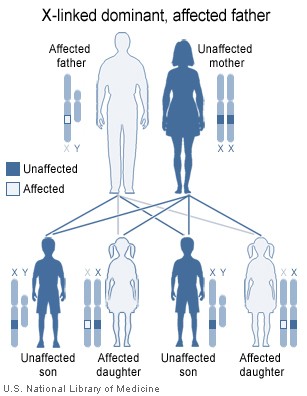
 Kidding, kidding, that guy was not bitten by a rabid wolf or anything of the sort. There is a condition called hypertrichosis that causes hair to grow abnormally over one's body. It can be inherited genetically in several ways, but can also be triggered by eating disorders, cancer, or drug abuse. It is more common in women, especially in one form that is carried on by the father (X-linked). It can be misidentified as hirsuism, the disorder that causes beards in women and children; that is simply caused by a high testosterone level. So, yeah, the full spectrum of furry fetishes will be covered this week.

 
He looks more like a pig than a wolf, here. Not a patient, by the way, just an actor with makeup.


Humans are weird as all-get out when it comes to hair. Not only are we mostly naked as animals, we have at least three different types of hair. Even the lice think we're weird - humans are the only mammal to not only have two different types of hair, but two different types of matching lice. Hypertrichosis is diagnosed and named based on what type of hair got overgrown; languo hair (a type of hair typically shed in the womb) is sometimes present on offspring with genetic hypertrichosis. 

Hyperthrichosis is a fairly recent disorder. Although there are legends of beast-people around the world, the first formally-recognized case was that of Petrus Gonzales in 1648. That's pretty late, given that we have records of Siamese twins since ancient times.


 The Wookies are among us.


Like I said earlier, yes, hypertrichosis can be hereditary. There have been whole families of werewolves. In Burma, one family had four generations' worth of hairy members. All of the hairy people had perfect teeth, but all of the ones with fur had dental issues. Weird; it's the other way around in dogs.


Now let us never speak of the Chinese Crested again...even though some of them still look ALIVE.

Unfortunately for furries, this disorder is rare. There have been only 50 recorded cases since the Middle Ages. When it is found, it generates quite a lot of hubbub; people with this condition can  become very successful "beast-man" freaks. You can still get fur through drug abuse, but I am not about to encourage that.


These kids do not even need Halloween costumes. They can trick-or-treat any time of the year.

Unlike Siamese twinning or sirenomelia, nobody has ever died of hypetrichosis; they just make really, really good wolf-people for movies and handing out Halloween candy. Despite the social stigma that comes with being hairy, these people can lead rich, fulfilling lives. Depending on how severe the case is, one might even be able to fulfill the childhood fantasy of joining the circus. Hey, it's better than risking your organs in some expensive surgery.

Monday, November 8, 2010

The Human Freak: Sirenomelia.

It's hard not to like mermaids. We have all seen The Little Mermaid at some point (you in the back, don't lie), and inaccuracy to the original story aside, it was an okay movie. If you have not seen it, a mermaid named Ariel wants nothing more than to leave her ocean home and be with a human prince named Eric.


He was vain enough to get his own statue...not really a good sign. Ditch him while you can, girl.

But y'know what Ariel's problem was? Humans are bipeds. (They also have lungs, but that's another issue entirely; complex marine biology has no place in a Disney story.) That is the problem that people with sirenomelia have. You're not crazy; this disorder did get its name from the tail of a mermaid:


Please don't make me Google this again.

Sirenomelia, also called Mermaid Syndrome, is a condition in which a baby's legs are fused together into a single appendage resembling a mermaid's tail.  It is 100 times more likely to occur in identical twins than in any other sort of birth; otherwise, it has the same likelihood as Siamese twins.


I'll take the two-headed goat from yesterday, thanks.

Besides having deformed legs, people with sirenomelia also have bad organs. The system containing the bladder and kidneys is often highly damaged in sirenomelia victims. Some of them also have very weak hearts. Surgery may or may not be possible on a case-by-case basis; fixing it is not a simple matter of just tacking another leg on. Nature has said "...yeeeaaah, sorry, humans are supposed to have two legs" pretty clearly.

[Millions of deformed babies + one morbidly obese survivor who died anyways = Kuro could not Google any more pics. GO LOOK FOR THEM YOURSELF, sorry.]

Survivors of sirenomelia are rare. I mean rare as in "Wikipedia only mentions three," and one of those three has already passed on due to another disease. It takes top-notch care and hours of surgery to have a baby with sirenomelia live past two days, let alone two years. Even then, the three survivors were lucky enough to not have some of the complications associated with the disorder. The longest-living sirenomelia victim was born in 1988 and is still kicking with new, albeit weak, legs. One really has to wonder if the surgery is worth it; another victim in Peru, though living, suffered severe trauma (to the point of losing her speech capabilities) and still has 10-15 years of surgery and rehab to go.

Contrary to what Disney told you, mermaid stories RARELY have happy endings. Even the original Little Mermaid sucked balls for Ariel. (Also, NOW do you see why I object to limb fusion, furries?)


In the original story, the Prince ditched her for a chick whose legs WEREN'T fused at one point, and she had to do a good deed every day for 300 years (and then some). You know, for kids!

Sunday, November 7, 2010

The Human Freak: Siamese/Conjoined Twins.

Everybody has heard of Siamese twins. Siamese twins happen when, for whatever reason, two people are literally joined at the hip or some other location from birth. They are so named because P.T. Barnum had a Siamese pair of conjoined twins (Chang and Eng Bunker) in his show for a good long while. I would call them "conjoined twins" from here on out, but since when has political correctness ever caught on?


Sorry, guys. 

Siamese twins go way back before P.T. Barnum, of course. The earliest reports of Siamese twins come from Peruvian pottery dated from 300 C.E.  They have a loooong history in Europe; a pair of Armenian twins were deemed an act of God, Mary and Eliza Chulkhurst of England were the first named conjoined twins, and a French couple put their conjoined girls on display in Paris for all eight months of their short lives. Barnum is not the only one who liked showing this off; the record of conjoined twins is remarkably well-documented, especially in Europe. They pretty much make news whenever they happen (1 in every 50,000-100,000 births; somewhat higher in Southeast Asia and Africa).


One of them likes Starbucks, the other likes Caribou. How DO they share a body?

Despite the condition's publicity, nobody is really sure what happens to Siamese twins in the womb. There are two competing theories as to what causes the fused bodies: In the "fission" version, the fertilized egg simply does not completely divide; in "fusion," the egg completely separates, but because stem cells seek similar, the twins' stem cells bind to each other. Occam's Razor says that the simplest solution is probably the correct one, and incomplete fission sounds hella simpler.

Speaking of fission, it is not always a good idea to separate Siamese twins. Remember how I said that conjoined twins can be joined anywhere? No kidding; although the popular place is usually somewhere on the body, Siamese twins can be merged in any number of places. Some of them are attached at the skull, making surgery exceedingly difficult; others have one twin as a parasite, i.e. the one twin CANNOT survive without the other. Many of the times, they share organs. These different types of twins all have very long Greek names that I will not hurt your brains with and, usually, have bitchingly complex surgeries to match. The survival rate of Siamese twins is approximately 25%.


By the way, this can happen in animals, too. There are a few stories floating around about a duck with six legs or snakes with two heads. Polycephaly (that is, multi-headedness) is most common in turtles and snakes, but can theoretically occur in any animal species. There are also a lot of fake PhotoShop jobs of such things. When it is real, it's the same deal as Siamese twins.

Only a multi-headed dog would look more like a chthonic horror.  Those exist, by the way.

The Human Freak.

This next week will cover an animal so freaky, so bizarre, it takes an entire week to cover it. It spreads like a plague. It reproduces like a rodent. It is intelligent, an omnivore, and can be found all over the world. It threatens to destroy the entire world if we do not do something about it.

What is this animal of ultimate horror? Look in the mirror. Yes, I'm talking about you - Homo sapiens sapiens.

Humans are the most terrifying of all animals on the planet. We have killed more species than all the predators in the world put together. The biggest threat to the status quo of the world is overpopulation; even though we have a nine-month gestation period like cattle, we have become SO successful that the Earth will not hold us all as long as we keep reproducing. That's what made Soylent Green plausible.


AAH, it's got TRANS-FAT!

Perhaps the most disturbing part of this is that nature doesn't give a sh*t. Humans are not vital to the ecology. Anywhere. We try to justify our existence in various ways, but there is really no reason that a species should be so successful that it unbalances nature's scales. Trust me, nature would be just fine if humanity died - she'd probably be better off, if anything.


This guy would probably have gone extinct a lot sooner if humans had not thought him cute and cuddly.

This week will be devoted to the deformities, parasites and viruses that show the freakish side of Homo sapiens sapiens. These are the specimens that you see preserved at Ripley's Believe It Or Not! or in traveling freak shows. We wish we were not covered in almost arboreal warts or joined with a twin at birth. We can laugh and gawk at those people because, hey, it did not happen to us.

It could. Brace yourselves for High Octane Nightmare Fuel in a shot glass.