Tuesday, April 17, 2012

Creature Feature: Palm Cockatoo.

Aww, parrots! Pirate references aside, there are few things that have the charm of a rainbow-colored, bright-eyed hookbill. There is very little bad to be said about parrots (unless you try owning one - then you get dust issues). Overall, they're happy, brightly-colored, intelligent, fun-loving birds.

Then you remember they have beaks. Parrots have strong, heavy beaks that can crush nuts with ease. Seriously, your finger is screwed if a large parrot bites it. If only they had the aggressive look to match that badassery...

(From thepetwiki.)


....yep, perfect candidate for "heavy metal parrot," there.

The Palm Cockatoo (Probosciger aterrimus) is probably the best parrot-y logo for a band ever. It crushes nuts for food, which is a good threat to anybody's masculinity.  It is native to Indonesia, New Guinea, and northern Australia. Unlike many of the creatures in that range, the palm cockatoo is nowhere near endangered. This is somewhat of a miracle, but more on why later.

Palm cockatoos are in a class all their own. No, really; they're the only members of their genus. Molecular testing says that they're distantly related from most other cockatoos.  If any cockatoo is an ancient cockatoo, it's probably the Palm.
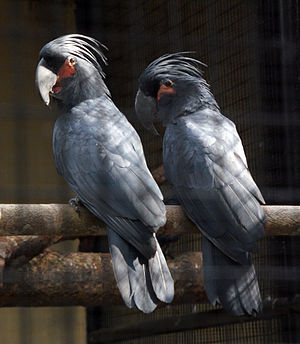


Genetics talk aside, palm cockatoos are impressive birds to look at. They're the largest species of cockatoo in the world. Those red patches get brighter if the cockatoo gets stressed, making them one of the few birds that can change color. Their bill size is second only to that of the hyacinth macaw. Again, please think about that before you piss one of these birds off. (Is this guy nuts?)

These cockatoos have one of the neatest-sounding behaviors in the world: they drum. As in, they take a seed pod or heavy stick and drum it against a dead tree. Nobody really knows why they do this - dress rehearsal, perhaps? Their vocal repertoire isn't lacking, either, sporting a large vocabulary, a variety of whistles, and a call that sounds like a human's "hello." These guys truly are the rock stars of the parrot world!
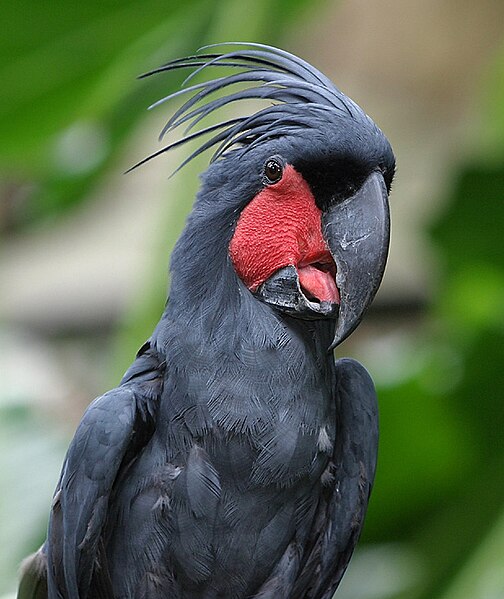
You lookin' at me?


Palm cockatoos are available in the exotic pet trade with a price tag over 5,000 USD (I've seen snakes worth more). I'm honestly surprised they are not worth more; one of the candidates for "good pet" is a relatively fast breeding rate compared to humans. Some palm cockatoos do not breed until their 30's or 40's. They also live into their 80's, so if you do happen to be able to afford one, be sure to provide for it in your will.

Also...they can eat meat.

Monday, April 16, 2012

Bio-Art: Insect jewelry?!

Among the things one can get at ReptileFest, a few trinkets will always be related to insects and other arthropods. There was the framed cicada I showed you yesterday, but also jewelry with scorpions,  beetles, and other such things imprisoned in lucite for better viewing.

Yes, you read that right: Jewelry with real dead scorpions in it.


This is an especially stunning scorpion pendant from eBay seller china_custom_5000. People can get very creative with sticking insects into clear plastic. This one almost looks like it's trapped in amber, and that setting is just to die for.  Of course, given that the Chinese sellers of such things love advertising that they're from Tibet, I'd think twice. Still a very nice piece of jewelry. I also like the ones that glow in the dark. 

Scorpions not your thing? How about beetle bracelets, then? The seller there is where I got my own rose chafer bracelet from; now I wish I'd gotten the chafer bracelet linked above! (Glow in the dark things make Kuro very happy). A lot of their things seem like Chinese repacks (you'll notice a lot of bug jewelry sellers located in China/Hong Kong), but they're cheaper, ship from the U.S., and have tons of cool packaging. Check 'em out at www.realcoolbug.com if you're not into eBay. They do good work!

Now for one of my personal insectoid covet items on eBay: a glow-in-the-dark cicada computer mouse. There's also a clear one, but again, the glowy one is fine for sampling. A lot of these things come in multiple colors, so if you have an outfit that a scorpion would look great on, by all means get one that matches. Hell, my chafer bracelet has alligator pleather on it; this stuff can work.

Along with being eaten, making insects into accessories seems to be the new 'in' thing. There also used to be green rose chafer clocks, but I can't find them anymore. If you want to invest in these, the sellers in China adore wholesalers, and will gladly sell you dozens for roughly 40 bucks. Have fun!

Sunday, April 15, 2012

Reptilefest '12!

Whew! Lots of neat things at Reptilefest this year! In particular, people were focusing on species of reptiles that could easily be caught in one's backyard. There were so many Illinois herps this year! Unfortunately, there were far fewer Burmese pythons and retics; the Lacey Act must have scared some people.

So, without further ado...PICS!
The snake-necked turtle that inspired yesterday's entry! I may have selected the wrong kind. There are some snake-necked turtles native to Argentina, too. Seeing as Australia has strict wildlife laws, this was probably the non-Australian type. Can any turtle freaks help me out here?


Here's a snapping turtle, just to make you pay attention. 


I wanna say this is an alligator, but the angle makes it a little hard to tell. Yes, we had gators and crocs, here.

And now for snake pics! These are black-headed pythons. Neat-looking, aren't they? 


Cottonmouth, one of the few venomous snakes found in the U.S. Easily the prettiest. *Gets mobbed by rattlesnake and coral snake fans.*

One of exactly three Burms I saw at Reptilefest this year. This one's a granite. It was so cute to see its owner petting it like a dog or cat (or cow). There was also someone with a shirt saying "savetheburms.org." I may have to check that out...


Although there were plenty of ball pythons around this year, this girl, who was named Persephone, was the only outstanding one. She's a bumblebee (spider x pastel) with a really photogenic personality. Beautiful snake!

Didn't see many Burms this year (and NO anacondas) but you know what I saw a lot more of? Carpet pythons and rosies! I'll be GIDDY if rosies catch on; Eclair, I love you. That doesn't mean you have to be my only rosy.


Bunch of average-looking rosies...but rosies!


Cleaner "normal" plus a cute albino.


House snake. Pretty sure it's albino. :) Good snakes for people who aren't into mega-killer-pythons...but so are rosies! 


Several normal JCP's and a jaguar morph carpet python.

Okay, last two, then I need to sleep:


Someone brought a siren. I'm starting to love them! :D


That's a cicada - the framer didn't know what species, though. Apparently Thailand has a lot of very interesting cicadas, for whatever reason. Just another reason to save pennies. 

Creature Feature: Eastern Snake-Necked Turtle.

ReptileFest is awesome. For those of you who aren't so into reptiles, ReptileFest is an annual convention in Chicago with snakes, lizards, turtles, crocodilians, and a ton of cool merch. It's not as hardcore as a breeder convention, and is a good crash course in reptiles for those of you who are just curious about scaly creatures. We certainly have plenty of people into reptiles, here, including some in-state Burm breeders!

That said, I was bound to find some good blog fodder there. My own photos will be up on this blog tomorrow, but for now, please make due with one of the very few turtles on this blog thus far:


Looking like a snake did it with a turtle, the common snake-necked turtle (Chelodina longicollis) is probably one of the freakiest  turtles on the planet. It is native to the swamps, lakes and slow-moving rivers of Queensland down to Southern Australia, the land where monsters are born. It eats any animals small enough to fit in its mouth, so mostly fish, insects, and worms.

Starting with the obvious again, that neck is probably the longest, proportionately, amongst turtles. It can stretch longer than the turtle's carapace - which is all of its body, by the way. It has to bend its head sideways to fit it into its shell rather than withdrawing completely.


Aside from its strange appearance, this turtle has at least one odd thing about it: It stinks. No, really. When threatened, snake-necked turtles musk like certain ratsnakes do. If their smell is anything close to what some snakes can produce, it is definitely worthy of the nickname "stinker."

It's really a shame I'm not more of a turtle person. I'm sure there are plenty of weird turtles out there, but I don't look at them enough to pick out the particularly outlandish ones. Fear not, turtle fans; vote on my next poll for a Turtle Week and this problem shall be remedied.

Thursday, April 12, 2012

Creature Feature: Silky Anteater.

Since the giant sloth entry, I've realized something: Xenarthrans are actually very, very cool mammals. They're weird enough that science is tempted to classify them separately from everything else with a placenta. They have wicked-looking claws and funny dietary habits.

Oh, and some of them are so cute they could be magical girl pets that aren't Kyubey. Yes, I know about Kyubey.


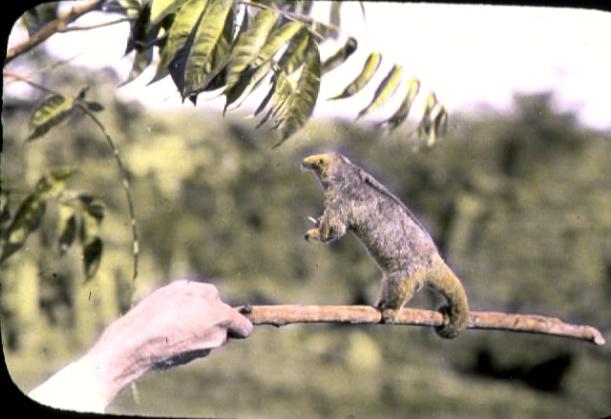
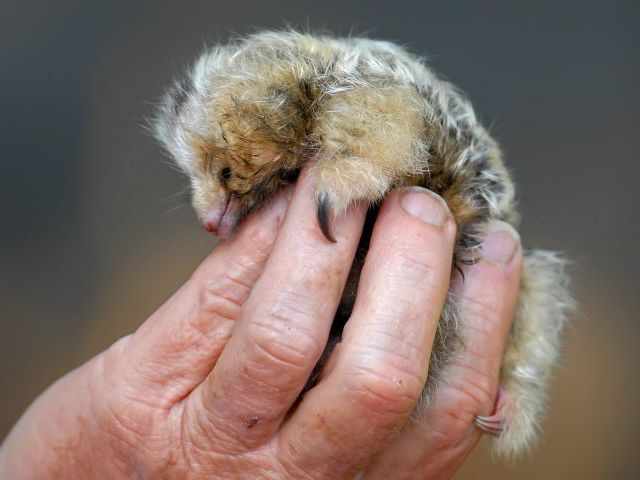
Isn't it adorable? That's a Pygmy/Silky Anteater (Cyclopes didactylus). Silky anteaters are native from Mexico into northern South America. It is a nocturnal, arboreal creature (could've fooled me with the good photos). As per the name and general grouping, it feeds mostly on ants.

The Silky Anteater is the smallest anteater in the world. At most, it is a foot and a half (450 millimeters) long. It has a prehensile tail, soft fur, and other traits that make it look like it should be a stuffed animal. Other than its size, it thinks it's a bigger anteater. As the pic above shows, Silky Anteaters will stand on their hind legs and raise their claws when threatened, even though it looks silly coming from something so cute. Those claws can probably do damage to things that aren't ten times bigger, though.


At that size, the Silky Anteater has a lot of predators.  Harpy eagles, the largest eagles in the world, would love an anteater to go. The anteater thus spends most of its day curled up in the tops of trees, looking very much like a seed pod. Of course, when we do find them, we find this furball adorable.

And now, for the section you've all been waiting for...yes, you can keep anteaters as pets, Silky Anteaters included. This does not mean that an anteater is for everyone. They require a lot of attention, a snazzy enclosure, and, believe it or not, walks. Aside from ants (which can be lapped up on walks), anteaters like a variety of greens, including spinach, avocados, and thyme. They'll even eat blue cheese! Avoid sugar, however. Anteaters apparently love to play, so try finding some vids on YouTube if you think anteaters suit your fancy.

"They Actually Eat That:" Turtle Soup.

If you have ever read/watched a non-Disney version of Alice in Wonderland, you might have heard of a little something called "turtle soup." In Alice's Adventures in Wonderland, a gryphon and a mock turtle (to be discussed later) sing about the joy that is turtle soup.

But that's just Alice in Wonderland's doing, right? That book has trials about stolen tarts and other crazy things. For all we know, turtle soup might be something Carroll thought up while on drugs. I mean, who would think that a turtle would be appetizing? Right?


Nnnnope! Turtle soup is unfortunately very real, and is enjoyed by almost every continent with access to turtles. Freshwater, saltwater, doesn't matter - if a place has turtles, there is a good chance it has turtle soup. It's usually made with the meat or blood of a turtle. Hell, turtle soup is one of the few foods the U.S. has in common with Europe and China.

That said, turtle soup is illegal in most parts of the United States (which is probably why it's so obscure here). Back before we cared about things like sustainability,  the ideal turtle for soup required a turtle that was around ten pounds in weight. When we say "turtle" in this case, by the way, we are usually talking about either snapping turtles or green sea turtles. Yes, those sea turtles are the exact same kind that you see burying eggs on nature channels. Most of them are endangered, and a lot of other turtle species are vulnerable to over-hunting. Now you know why this soup's illegal in the States.

China is a whole different story. In China, soft-shelled turtles are farmed more or less sustainably. Hard-shelled turtles are avoided in soup for a number of reasons, but can still be made into jelly. Turtle soup is popular in China and Singapore to the degree that China has over 1,500 registered turtle farms. They're probably more economical and ecologically-friendly than pigs and cattle, but don't quote me on it.


As for Europe, they not only have turtle soup, but also...mock turtle soup. Technically, the 'turtle' singing in the Alice story is a mock turtle. Although no good description is given in the book, the artist drew the not-turtle as a bizarre mix between sea turtle and calf. The reason for this? Mock turtle soup utilizes a calf's less-palatable parts, such as the brains, horns, and hooves, in its making:

"Mrs. Fowle's Mock Turtle Soup,:[3] "Take a large calf's head. Scald off the hair. Boil it until the horn is tender, then cut it into slices about the size of your finger, with as little lean as possible. Have ready three pints of good mutton or veal broth, put in it half a pint of Madeira wine, half a teaspoonful of thyme, pepper, a large onion, and the peel of a lemon chop't very small. A ¼ of a pint of oysters chop't very small, and their liquor; a little salt, the juice of two large onions, some sweet herbs, and the brains chop't. Stand all these together for about an hour, and send it up to the table with the forcemeat balls made small and the yolks of hard eggs." (Wikipedia. citing an old cookbook.)

Yeah. I'd take real turtle soup over that any day.

Tuesday, April 10, 2012

NIPAH: When a meme goes viral.

Raise your hand if you know at least one internet meme, You know, those pics, videos, and crazy phrases that get emulated over and over? That is what we mean.  Such memes are said to have gone 'viral' if they are played with enough.


Well, it turns out NIPAH! is an actual virus. Who knew?

OK, so technically, the Nipah infection virus (NiV) is a virus of the Henipavirus genus. The only other known member of this genus is the Hendra virus. Nipah is native to Southeast Asia (virtually all of it), India, and Africa,  and could get really dangerous really fast. Despite its cute resemblance to an internet meme, it is named after a village in Malaysia that we hope has gotten tourist business from its similarity to Rika's catchphrase. It was named in 1999.

Nipah virus is nowhere near as fun as its name might suggest. It all starts with contact with coughing (or "barking") pigs. Then it escalates into flulike symptoms of fever and muscle pain. Then it moves on to inflammation of the brain and, in worst cases, comas and death. Twirling and repeating the word "nipah" is not a symptom; if you experience this, I suggest checking for Hinamizawa Syndrome instead.

I wouldn't touch that pig if I were you.


The main vectors of the Nipah virus are fruit bats.  Every place in Southeast Asia, from India to Vietnam, has fruit bats, and Nipah could be in any one of them. The bats themselves have antibodies to the virus. The virus can also be found in the urine and saliva of fruit bats. It should be common sense to avoid fruit that's been partially-eaten by gods-know-what, but someone must be silly enough to try it. The bats were probably as close and contagious as they were thanks to habitat destruction; chalk up another fail tally for humanity.

Nipah virus is a real threat. It can spread from virtually any mammal to another. It has already hopped from bats to pigs, leading to million-dollar losses for the farming industry in Malaysia. It can cross from humans to pigs just as easily as it can from bats to pigs. Oh, and it's mutating - just like a real meme- so whatever we come up with might not work in the near future. This thing attacks anything with hair, remember.

Image (c) Higurashi.


Nipah!- the only meme that turns villages into ghost towns.