Showing posts with label madagascar. Show all posts

Tuesday, September 17, 2013

Creature Feature: Vasa Parrots.

Oh! A Creature Feature! It's been a while, hasn't it? Let's look at the weirdest parrot you've eeeeveer seen:


This long-legged, uncanny parrot is a Greater Vasa parrot (Coracopsis vasa). Vasa parrots of all species are native to Madagascar (AKA "that African island with lemurs that got a movie series." Yes, you can get them as pets, but please do your homework.

First of all, these parrots are black. Not gray like an African Gray, not iridescent - gray-black. It's not glossy black, like a crow, but more of a matte black - charcoal black, if you will. That's virtually the last color one expects from a parrot. The pinkish bill stands out, too, making for a striking bird on the whole.

Vasas are thought to be among the most primitive of parrots. Some of you who keep up with animal news might remember a deal a while back when it was found that not all "raptors" - that is, eagles, falcons, hawks, and owls - were related. In fact, parrots are quite closely related to falcons, and the vasa's got some pretty good evidence of this, starting with being a hunting parrot. Females are also larger and dominant, as they are in birds of prey. They also have another very primitive trait that I will get to later, but

Then these parrots start showing their mating colors. What, do I mean that the black suddenly erupts into multicolored plumage? Oh, I wish; vasa parrots have a much stranger mating patterns. Mating groups are open, to say the least, with any given female having 3-8 males in her non-exclusive manharem. The skin of the female turns yellow-orange beneath her feathers while she's tending young...and then she becomes bald so that everybody can see it:


Vasa are also the only parrots to have hemipenes. The cloaca, usually dickless, everts when the birds are mating. The lock can last for up to an hour. That's probably more than you ever wanted to know about parrot sex, but there you go. 

Tuesday, January 8, 2013

Creature Feature: Giraffe Weevil.

Insects are automatically nightmare fuel when it comes to creature design. With the possible exception of butterflies, there is no insect on the planet that cannot be made into an object of terror. Even harmless, annoying things can be magnified into monsters. Weevils, which are already terrifying if seen up close, reach the peak of their horror monster potential in this fellow:


This bug-meets-Apatosaurus creature is called a giraffe weevil (Trachelophorus giraffa) . It is native only to Madagascar, second only to Australia for the title of "World's Weirdest Island." They are herbivorous like all weevils, partial to seeds and fruit. New Zealand also has a "giraffe weevil," so just to be clear, this one is from the island with happy lemurs.

The giraffe weevil cannot help but stand out. That long neck on the males is 2-3 times the length of the females. It is almost an inch log - not the record for weevils, but still quite big for one. It has a striking, red and black palette. No, it is not poisonous as far as my sources know. Seeing a giraffe weevil in the wild must be amazing. The bright  color and long neck both make it unforgettable.


This long neck is for one very important purpose: Mating. Specifically, male giraffe weevils fight each other with their long necks. The females have much shorter necks, and referee the neck-fights between the two males. The winner gets laid. Fair enough.

This is not to say that the ladies of the species are not at all interesting. Unusually for insects, the female lays exactly one egg after mating. She then encases it in a tube cut from a leaf. The leaf is then cut such that two edges mesh together-  effectively, primitive Velcro. The leaf nest then drops to the forest floor, where the weevil will hatch, grow, and repeat the process.  Giraffe weevils: males look freaky, females invented Velcro before people.

Thursday, September 13, 2012

Creature Feature: Silky Simpona.

Y'know what this blog needs? More lemurs. They're primates, but so weird that it's hard to tell. Insular isolation has made them rather unique by primate standards. They still have muzzles, for instance...not that it makes them any less cute. Fuzzy is still fuzzy.
From Cactus Juice.


Is there anything weirder than a white lemur? Yes: a whole species of white lemurs. This particular lemur, the silky sifaka/simpona (Propithecus candidus), is almost entirely white. Like all lemurs, it can only be found on the African island of Madagascar, which is like Australia's little cousin in terms of how weird wildlife can get. It is wholly herbivorous.

Simponas have several different vocalizations. Their weirdest one by far is a "zzuss" sneeze. The "zzuss" is a general alarm call. It can also be used to locate other simponas that have strayed from the large group. Simponas also "roar," chatter, squeal, and hum. They are social to the point where most mature simponas take care of the babies, so of course they have a lot to chat about.

Dr. Erik Patel with a silky. Lucky guy!


This lemur is rare. It is considered one of the rarest mammals in the entire world and is definitely in the top 25 most endangered primates. This is largely because it is the primate that gets laid the least; unlike most animals which have a mating season, female simponas only mate one day a year, usually in December or January.  They give birth only once every year, if not once every two years. Oh, and deforestation doesn't help. There is also nothing stopping people from eating these lemurs. This is one of those species that will probably go extinct within the next ten years, so enjoy it while you can.

Insular species are always more vulnerable to extinction, but the simpona is an extreme example. A low breeding rate combined with habitat destruction and human predation make it one of the rarest mammals on Earth. They are already called "ghosts of the forest" because of their scarcity and white coloration. There may be fewer than 1,000 left. All animals are important; it helps that this one is cute.

Friday, July 8, 2011

Creature Feature: Blue Spotted Ribbontail Ray.


OK, so it's not as cute as we remembered it. Sue us. It's still one hell of a trippy ray, even if it is not necessarily cute.

The Blue Spotted Ribbontail ray (Taeniura lymma) is found throughout the warmer parts of the Indian and Pacific Oceans. It eats molluscs, sea worms (which are pretty cool in their own right), shrimp, and small bony fishes. Surprise, surprise, it's found in weirdness hotspots like Indonesia, Australia, and Madagascar. It usually stays on the bottom of coral reefs, and can also be found in tide pools and beds of seagrass.

Feeling a sense of deja vu? That's because this little ray has a lot in common with the blue-ringed octopus, another brightly colored creature that's toxic to boot. Although not as poisonous, the sting from one of these rays still hurts. Please stay away if you see a blue-streaked tail sticking up out of the sand.

Or you might be on drugs, in which case stay the eff out of the ocean. :)

Blue-spotted rays are one of many types of chondricthians (sharks, rays, skates etc.) that bear live young. These rays give birth by "aplacental vivipary." The baby rays feed on yolk and uterine milk (mucous, protein, and fat - essentially gourmet snotballs) until they are finally pushed out of mommy ray's belly. They look more or less like adult rays, only smaller. Aww!

Like tiny, acid-drenched pancakes that can sting you!


Pretty though these little rays are, do not try to get one as a pet. The ray is considered near-threatened due to toxic fishing in its area. Moreover, captive rays of this sort have notoriously short lifespans in captivity. Many of them die almost as soon as they are brought into captivity. Even rays that look perfectly healthy develop unknown complications and die. They have no less than five species of tapeworm associated with them, but remain one of the most common rays in the aquarium trade. Stick with lionfish if you want a really impressive aquarium; at least those have a lower chance of going belly-up.

Sunday, December 19, 2010

Creature Feature: Coelacanth.

Some people contemplate what it would be like if dinosaurs still walked the Earth. Such wishes lead to things like Jurassic Park, Dinotopia, and people believing that dragons once existed on land. *Is immediately shot by a million dragonhumpers for saying so.*

How about resurrecting something harmless first? Y'know, like a fish...


...oh, wait. Nature's already done that.

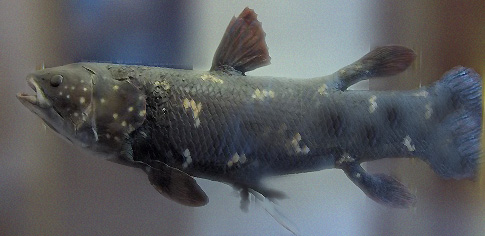
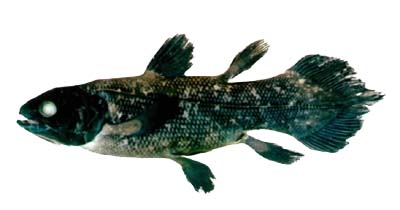
The coelacanth (genus Latimeria) is the most widely-known example of a living fossil. Up until the 20th century, it was thought that the coelacanth, a fish whose fossil record goes all the way back to the Devonian period, had literally died with the dinosaurs at the end of the Cretaceous Period.


An old coelacanth relative. MUCH older than any of yours, seeing as it's extinct. 

Then, in 1938, one was pulled up by accident off the coast of South Africa. More and more of the strange fish began popping up around that area, Madgascar, and, strangely enough, Indonesia. The African and Indonesian coelacanths are separate species, leaving at least one whole genus of coelacanth somewhere beneath the ocean. Ocean trawling may dig up more (but that's not a good thing; after all, it means more dead coelacanths and less live ones).

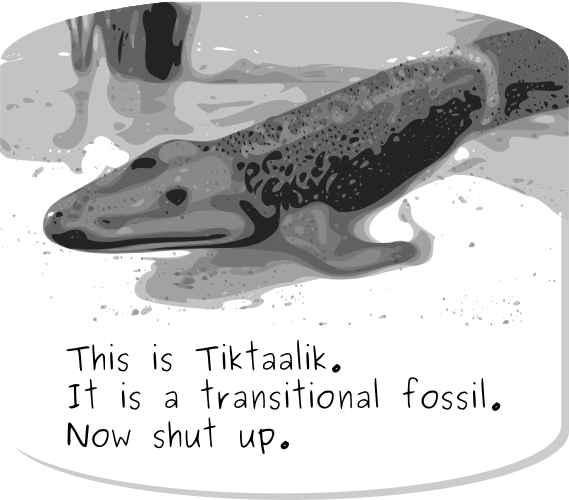
Besides being a living fossil, coelacanths are valuable missing links. Those fins look an awful lot like the beginnings of legs; coelacanths are closer to tetrapods (i.e. anything with a spine that ISN'T in the water) than ray-finned fish, and are related to lungfish. The only thing closer would be a live Tiktaalik.


Too funny not to link. Tiktaalik will get its own entry, soon.

Coelacanths have a number of other weird biological features that set them apart from other fish. Aside from the lobe-fins, they also sport a tail fin divided into three lobes. They have a number of other weird organs such as a brain case mostly filled with fat, a tubular heart, and a singular kidney. A strange electroreceptive body called a rostral organ on the fish's head allows it to swim upside-down and backwards in order to locate the soft-bodied sea creatures that they eat. To round off the weirdness, they also give birth to live babies.


If only we had more of these.

It would be great if people somehow found a way to breed these. Really, a million museums and aquariums would love to have an actual coelacanth specimen to work with. Despite being of HUGE interest to scientists around the world, very few places have a real coelacanth, dead or alive, on display. The fish is not good for eating, just for sticking in museums and zoos, but hooo boy would it make a mint for anyone willing to try. Like the tuatara, coelacanths' relatively slow reproductive rate (sexually mature at 20 years...just like the tuatara) makes them hard to breed in captivity. They would likely also outlive their breeders (again, like the tuatara).


Plus, it has its own Pokemon. And Castlevania monster.

Saturday, August 21, 2010

Creature Feature: Elephant Bird.


Birds are always the first species to die if humans come on to a crazy island. It happened to the moa, it happened to the dodo, and it happened to two whole genera of giant bird.

The elephant birds - genera Aepyornis and Mullerornis - were ratites (i.e. ostrich-like birds) native to Madagascar. The biggest and most-known elephant bird, Aepyornis maximus, stood about ten feet tall and weighed over 800 pounds. The eggs of this bird were huge - a little more than a yard in circumference (1 meter...stupid U.S. measurements, making no sense) with a length of up to 13 inches.


Pictured: Two eggs and one egghead.

If the name rings a bell, the term 'elephant bird' is also used to describe the rukh (AKA 'roc') from the story of Sinbad. The bird was supposedly large enough to carry elephants into its nest. (In all likelihood, Marco Polo saw a different giant bird, or perhaps assumed that the elephant birds were chicks of a larger, more airworthy bird. The guy mistook a rhinoceros for a unicorn, but was he really dense enough to think that elephant birds could fly?)


HOLY CARP that is an awesome roc! THANK YOU KOREA!

This bird, like the Komodo dragon, was a known case of insular gigantism. It is not at all uncommon for there to be either unusually large or unusually small animals on islands when compared to their mainland counterparts. (For an example of insular dwarfism, look up Jampea reticulated pythons.) Insular gigantism in particular results from a lack of mammalian predators - including humans.

This did not end well.

The presence of humans usually causes a sharp decline in megafauna. Sometimes, this is brought on by over-hunting. Other times, the fauna that humans bring with them kill off the indigenous life. Still other times, humans just speed up a situation that could have brought the animals under threat.

All three factors are thought to have caused the elephant birds to die out. Elephant bird eggshells are often found near old fires; chickens and guinea fowl may have spread diseases to the giant birds; given the widespread nature of these birds, climate change probably put extra pressure on them. This was not a case of stupid cavemen wiping out their giant prey animals, either; the elephant bird lived at least into the 17th century.


Why couldn't the natives have bred them into chocobos? Nobody would make those extinct. Nobody.

It turns out that at least one species of tree may have needed the elephant birds to help disperse their seeds, similar to how some trees in Australia need death machines cassowaries to bring about the next generation. Our bad, Madagascar.

Friday, August 20, 2010

Creature Feature: Dumeril's Ground Boa.


You can tell that I was trying to avoid this one. After all, unless the week dictates otherwise, you all are usually subjected to a dosage of at least one weird snake per every seven days. This often involves me going on some rant that only makes sense to herpetologists.

Unfortunately for you, Madagascar has no such limits. If I ever do an Australia Week (or two), there will be even more snakes. You're lucky getting off with only one when Madagascar is concerned.


Dumeril's Boa on Display by =KuroKarasu on deviantART


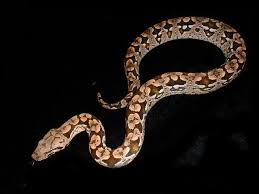
Photographs do not do the Dumeril's boa (Boa dumerili) justice. I have seen these snakes up close. They are amazing to behold; even my mom liked them! They have a floral pattern on their backs and real kanji tattoos decorating their sides.

I'm not even kidding. The pattern on the sides of a Dumeril's boa looks uncannily like the Chinese symbol (and Japanese kanji for) old.


Kinda creepy.

Dumeril's boas live in the semi-arid regions of Madagascar. They eat birds, lizards, small mammals and occasionally other snakes. As with all boids, females are larger than males. These snakes, like almost everything else on Madagascar, is threatened by habitat loss. Most captive specimens are at least somewhat inbred due to trade restrictions.


Besides being beautiful, Dumeril's boas are one of few Old World boa species. As a rule of thumb, boas are the only constrictors in the New World, and pythons are the only constrictors in the Old World. Africa is smack dab between the two areas; it should come as no surprise that it is home to both constrictor families. Exception to the rule is still exceptional.

Thursday, August 19, 2010

Creature Feature: Fossa.


As the Madagascar movie adequately highlighted, the island does indeed have a few familiar-looking carnivores. Nah, just kidding; they are just as weird as the lemurs, geckos, chameleons, and ground boas.


Fossas (Cryptoprocta ferox) are neither cats nor dogs. Like hyenas, they are more closely related to cats; boy does it show in that face! Again, they are fairly closely related to civets and mongooses. Even that is under scrutiny; nobody can seem to give the fossa a solid scientific classification.


I know what this is: DARN CUTE.

The video up top demonstrates the fossas' agility in the treetops. They are the only predator that can take down any species of adult lemur, even if the size and weight difference is huge. Half of the fossa's diet consists of lemur meat. There has been one detailed observation of fossas hunting in packs, but such reports are few and far between.

The fossa's species name, Cryptoprocta, addresses the creature's hidden anus. That's lovely, science; seriously, though, fossas have insane junk. Fossas have awesome enough balance to mate in the trees, a feat made easier with the male's spiked penis. Females get a similar development, albeit not as noticeably as in female hyenas. The mating lock is almost impossible to break once created. (I got a healthy dose of this in ZooBot class; now it's your turn!)


(If mating fossa noises aren't your thing, play "The Bad Touch" instead.)

Unlike lemurs, which are seen as ancestral souls, the fossa is treated a lot like the sneaky, greedy fox. People tend to avoid fossa meat because they do not wish to acquire its undesirable characteristics. Nonetheless, it is still hunted for bushmeat. Is this mortifying enough to merit a "They Actually Eat That?" Eh, well, it's not nearly as weird as the Chinese eating tiger dick.

Wednesday, August 18, 2010

Creature Feature: Ringtail Lemur.


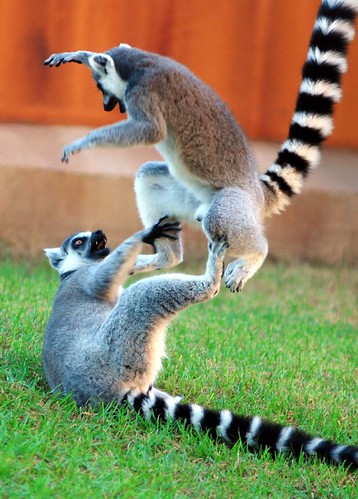
Madagascar Week would not be complete without a look at the ring-tailed lemur (Lemur catta). Common though they are as the poster-children of Madagascar, they are still weird in their own right.


These lemurs are particularly eccentric.

At first glance, these primates look similar to raccoons with very, very long tails. These long tails have a number of uses, from group communication to scenting. Scenting is more important for these lemurs than it is for predominantly-visual humans; these creatures even get involved in stink fights.

Ring-tailed lemurs are some of the most vocal primates around. They purr like cats mixed with a starting lawnmower when content; they make crazy clicks before shrieking when ganging up on a predator; they moan in a way that would make one classify them as ghosts, albeit comical ones.


Imagine this in one of those 'moo' toys. That's what the lemur sounds like.

Interestingly (and men, you can probably blame this on insular isolation), most lemurs, these guys included, have dominant females. Ladies get the first picks of food and therefore almost everything else. Somehow, they still wind up polygynous during mating time; humans have a loooong way to go when it comes to that level of understanding in relationships.

Despite not flaunting the tool-using skills key to the identification of primate intelligence in the wild, lemurs have proven surprisingly capable on other levels. They can select tools based on their functions, predict sequences and do simple mathematics. Hey, that's more than some humans can do.


They have also hacked the Matrix.

(Again, this was one of the harder ones for me to write about...)

Tuesday, August 17, 2010

Creature Feature: Satanic Leaf-Tail Gecko.

You didn't think that this whole week was going to be filled with cute fuzzy things, did you? Madagascar also has quite a few awesome Pokemo- I mean reptiles.


The model for Treecko was an actual creature called a leaf-tailed gecko. Three leaf-tailed gecko species are native to Madagascar; the fourth leaf-tailed species is native to Australia. You know, that other weird island.

All leaf-tailed geckos have flattened tails, leading to the generic name Uroplatus - literally, 'flat tail.' This leaf tail can be shorter or longer depending on the species. Some individuals even have notches in their tails that make them further resemble dead leaves.

Only one of the species endemic to Madagascar is called "satanic."


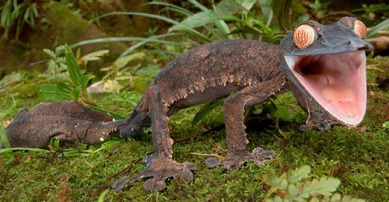
The Satanic Leaf-Tailed Gecko (Uroplatus phantasticus) is also known as the 'fantastic' or 'mythical' leaf-tailed gecko. Science acknowledges that these creatures are amazing right there in the name, and rightfully so: These geckos blend in so well that it is almost impossible to tell them apart from dead leaves. They are MASTERS of camouflage.


I will get one and name him Waldo.

So, why are they called "Satanic?" Probably the eyes.


Seriously, show one off around a Jehovah's Witness.

This does not, of course, keep people from keeping them. Would you let a silly thing like laws stop you from keeping one of the few lizards that comes in purple?

(On a completely unrelated note, expect this lizard to show up in a Lady Gaga video. THEN, expect the Illuminati buffs to pick on the gecko for being Satan.)

Monday, August 16, 2010

Creature Feature - Tenrecs.


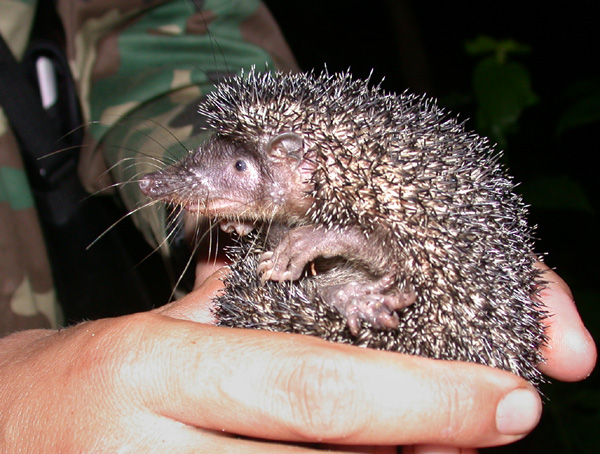
Wait...what? Hedgehogs live on Madagascar? Since when?!

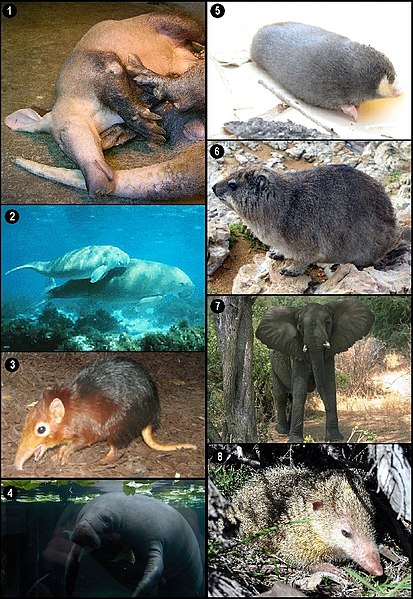
Haha. If the title of today's post did not spoil it, that is not a hedgehog. It's a Greater Hedgehog Tenrec (Setifer setosus). It is one member in a family of weird mammals called Tenrecidae. Of course, a fair amount of these guys are native to Madagascar, but they can also be found in other parts of Africa.

This is going to sound unbelievable, but tenrecs are not rodents. Tenrecs - the whole family Tenrecidae - has members that are all scarily similar to rodents, mustelids, and occasionally marsupials that we all know. There is one that looks scarily similar to an otter, and literally swims like a fish.


Best otter cosplay EVER.

Instead of being related to rodents, tenrecs are more closely related to a group of mammals called Afrotherians. Please tell me that you did not just picture that Hedgehog Tenrec up there with a rainbow-colored afro.

The group (people are still unsure of exactly WHAT kind of group)Afrotherians refers to animals such as the hyrax (obscure), the elephant shrew (slightly less obscure), the aardvark (just plain weird), manatees and elephants.

Hold the phone. A little creature like this is related to elephants? How? WHY? Did Africa suddenly start sharing some of Austronesia's weed?!


The tenrec's family portrait.

Of course, this would have been nigh-impossible to figure out without doing extensive gene sequencing. Tenrecs look a LOT like rodents, and have even more weird things about them. If you thought the hedgehog tenrec was cute, congrats- they're popular in the exotic pet trade, and are becoming more and more common as a research subject. The scientists would like to know WTF happened there, too.

Remember that really weird naked mole rat that got its own entry a while back? Tenrecs, although not as close to reptiles and insects as the mole rats, do have a body temp low enough to warrant not having a scrotum, and the females can have as many as 29 teats. They also lack different holes for reproducing and defecating; it's all done through one cloaca. That's how birds and reptiles do it too, BTW; your balls-having dragonsonas have NO place unless you consider dragons mammals (thus defeating the purpose of having a reptilian fursona).

Happy Monday- for real, this time.

Sunday, August 15, 2010

Creature Feature: Madagascar Week - Aye-aye.

Lemurs are, as I said in my explanation of this week, non-simian primates. They are not technically more ancient than monkeys, but darn if they don't look the part. There are many genera of lemurs; I am not going to detail all of them right now.

Their name comes from the word for a certain type of shadowy, Roman ghost exorcised during the Lemuria. (The same name was used for a group of criminals in Baccano!.) This practice was later moved from May 13th to October 31st, the day of our modern Halloween. Every culture needs a day for the dead.

The real lemurs have cries that sound like hysterical human laughter; many are nocturnal, and have glow in the dark eyes; they have human-like hands, but everything else about them is more raccoon than monkey. This, my friends, is the uncanny valley of primates incarnate.

Some of them are also just downright terrifying.


Whoops, wrong picture.


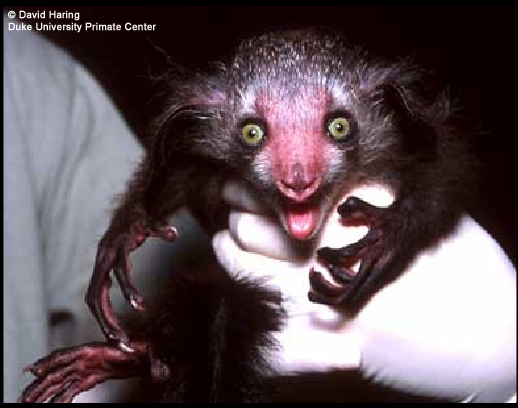
There we go. This is the aye-aye (Daubentonia madagascariensis), a fuzzball that is not even cute as a baby.
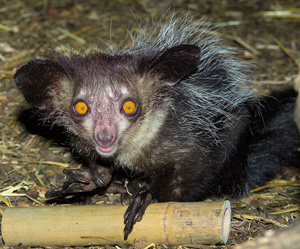


This would probably have been better for a Monday. I mean, really, this lemur looks like it had too much coffee. It's suffering from that horrible feeling towards the end of the work day when you've had too much coffee and want another cup, but the other five or so you've had today have already chewed up your metabolism and spit it out. I don't even work at an office and I am aware that this feeling is nastiest on Mondays.


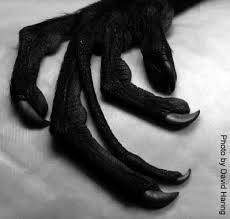
The aye-aye looks a lot like Ke$ha in lemur form. It has wiry hair, a tail that looks like a toilet brush, wide eyes, big ears, and long fingers a la something from your worst nightmares. Maybe a Gremlins movie would do it justice.


Do not feed after midnight. Did we mention it's nocturnal?

Some have suggested that its name comes from either the aye-aye's cry (which it...doesn't have), human screams or a pseudonym. The natives might have been so scared of it that they thought up 'heh-heh' instead of saying its name. It's like Voldemort all over again!


The-Lemur-Who-Must-Not-Be-Named.

Unlike most lemurs, which already look like raccoons or some other furry animal, the aye-aye has teeth like a rat. These teeth grow constantly just like a rodent's, leading early scientists to classify the aye-aye alongside rats, mice, and beavers. It would not surprise me if the aye-aye brushed said teeth with whiskey.

It also has a weird finger on each forepaw designed for picking grubs out of trees. It also flips a very mean bird. If this animal points at you with this middle finger, it is supposedly a death omen.


This lemur, like the chameleon, is viewed as universally evil by the non-scientists on Madagascar. Everyone on the island an overwhelming urge to get as far away from the aye-aye as humanly possible. Or just kill it. Or, in the most drastic cases, burn the whole village at the sight of it and move away.


Again, just like Ke$ha.

Happy premature Monday.

(...I kid because I love.)

Madagascar Week - An explanation.

Now, because I have absolutely NO idea what animal I'm going to be doing from one day to the next, I have decided to do a week of creatures from the African island of Madagascar.


Not that Madagascar.


As an island, Madagascar is home to some pretty weird stuff. It has monkeys that aren't quite monkeys; the basis for the Geico gecko came from Madagascar; some of the first coelacanths were found in its waters; probably only interesting to a reptile nerd like me, it is home to boas - a rarity in the Old World. It had giant birds until humans wiped them out.


I say, you really must stop doing that.

Lemurs are probably the most well-known creatures on Madagascar. The ring-tailed guy in the poster above is a lemur. Zoboomafoo is a lemur. They're kinda like monkeys, only a little more primitive...which, if I'm not mistaken, makes them the first primates I've ever looked over in detail.

Now, I'm not a mammal person, but some of these guys are pretty cool. Like hyenas, some lemur societies are matriarchal, and they have relatively little sexual dimorphism (sometimes tilting slightly in favor of the female). The natives have all sorts of lemur tales, ranging from the fuzzy little guys being ancestors incarnate (not a bad way to think!) to the aye-aye, a lemur so feared that the mere sight of one will cause people to burn their whole village down.

This is gonna be fun.

Tuesday, June 15, 2010

Creature Feature: Comet Moth.


Wow. This is the first thing I've done from Madagascar, isn't it? Expect a lot more; that little island is/was home to a million unique species that all deserve a moment in the spotlight. Most of you are probably well-aware of lemurs - the primates that look kind of like crosses between monkeys and raccoons. Perhaps a few of you also know of fossas, Dumeril's boas, and day geckos. Yes, the little Geico gecko has some cousins on an island dangling beneath the African continent.

Just like us, he refuses to talk about his in-laws. Shame; that could be a GREAT conservation plug!

Why, of all things, did I decide to pick on a moth? A friend of mine wanted me to identify a strange brown moth from the Amazon region. This led to a crash course in Lepidoptera, the order containing butterflies and moths. I want to say that I have narrowed it into the order Saturniidae, but cannot say for sure. I still have not found what it really is, but am definitely not giving up.

This moth was found in the course of my search. The moth in question had the tails typical of American luna moths, so that was one of the places I looked. I had no idea that the luna moth was related to so many other moth species that I had taken a liking to in my bug-studying days, and encountered quite a few new favorites (including, of all things, a moth with bright pink and yellow coloration. Sparklemoth!).

So, if this moth looks an awful lot like one you may have seen near your hometown, it should come as no surprise. Besides the name 'comet moth,' Argema mittrei is also called the 'African moon moth.' It is one of the largest moths in the world, with male moths sporting a wingspan of 20 centimeters and tails of 15. Males are larger and brighter than females.


Both sexes look pretty damn trippy, but the male is up top.

Sadly, the comet/African moon moth is highly endangered. The caterpillars of the comet moth feed only on fresh eucalyptus leaves, so deforestation is a big problem. Furthermore, their cocoons are not solid, but meshed to keep the metamorphosing caterpillars from drowning in their humid rain forest climate. As soon as the moth emerges, it has to go mate; it has a short lifespan of 4-5 days, and is only fertile the first day out of the cocoon.

Here's a moth that we do not want to exterminate. Appreciate its beauty while it lasts!